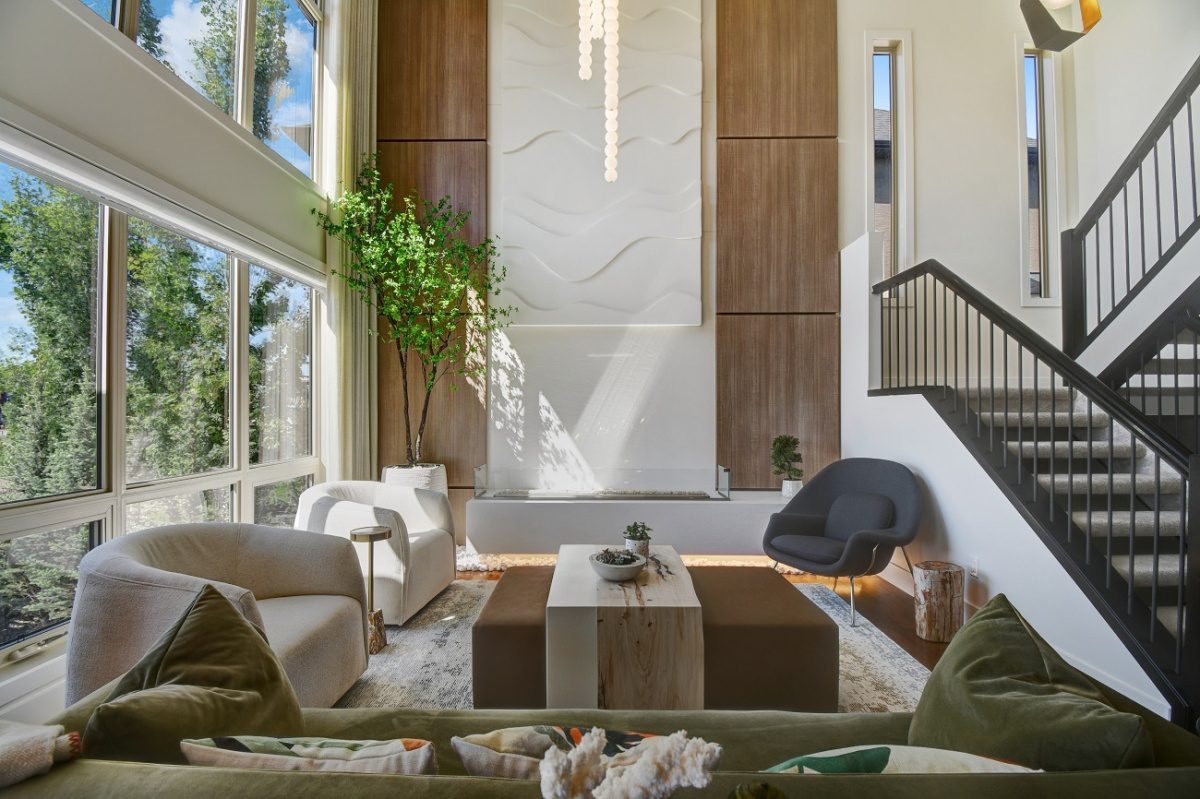
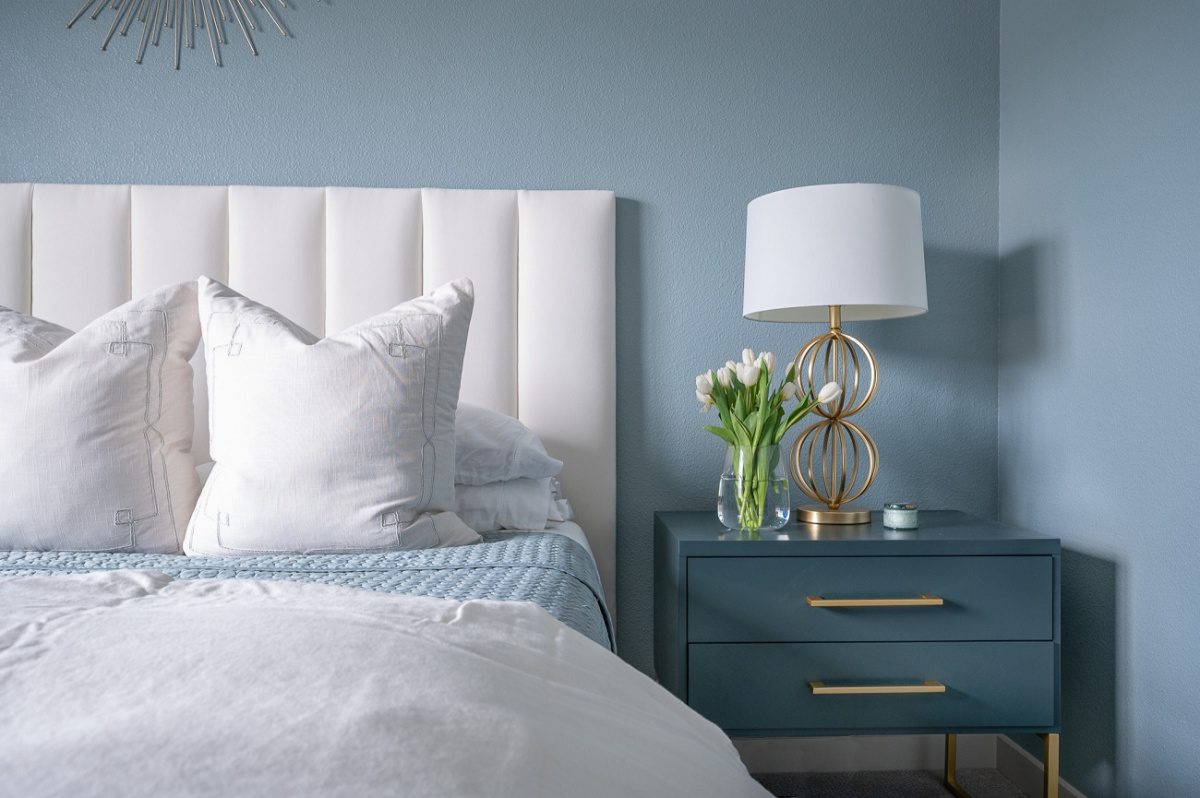
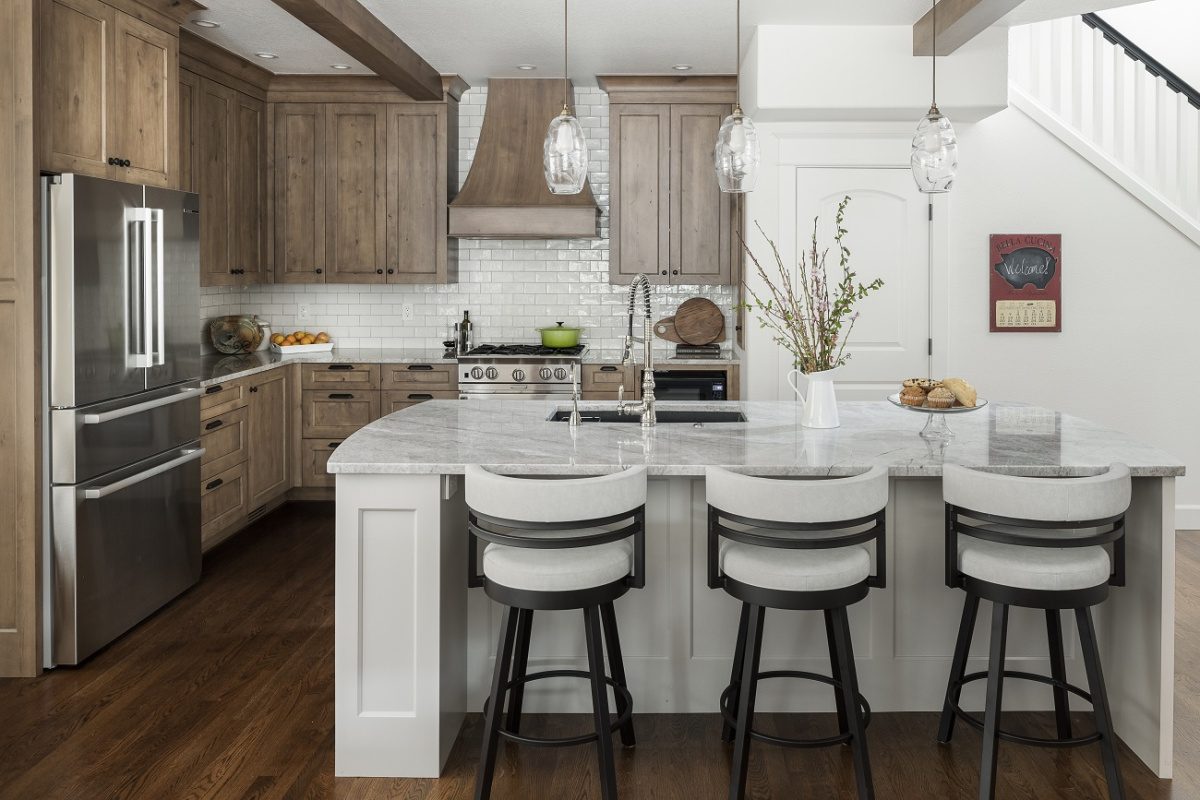
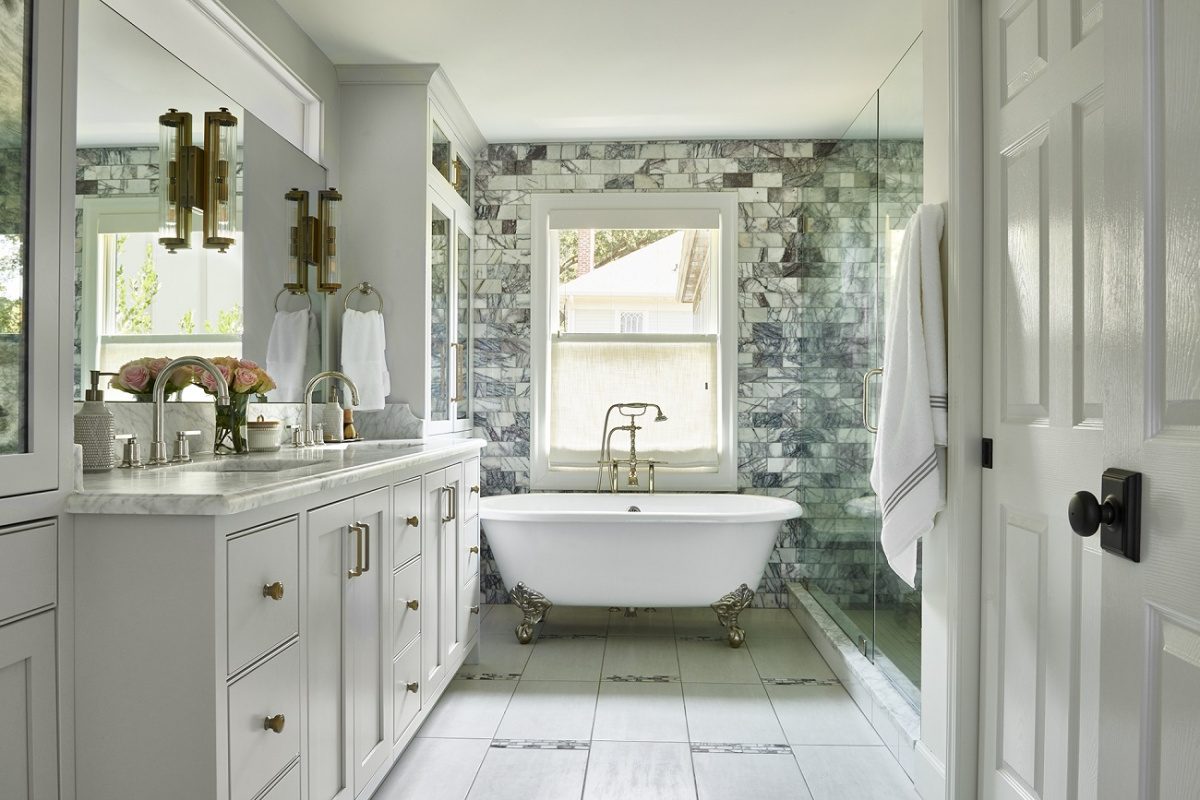
Say goodbye to the ordinary as home design moves toward the extraordinary with an extra-personalized aesthetic.
Homes today fulfill a lot more purposes, providing comfort, wellness and an eco-friendly and personalized space—all in a technological way. Home layouts are being reconfigured, too. Dining rooms have become nearly extinct, living spaces are being designed for flexibility, and wellness rooms are channeling more positive vibes.
Homes have been mostly dressed in white, contemporary designs with simplified living spaces. Nowadays, that crisp, neutral canvas is getting decorated with dramatic color, unexpected art, textured furniture and eclectic decor. Further, the expanding kitchen island has become the new dining room, and exterior spaces have become popular hangouts by the firepit or while playing a game of cornhole.
Here are some of the hottest trends to watch in 2024.
Functional Outdoor Spaces
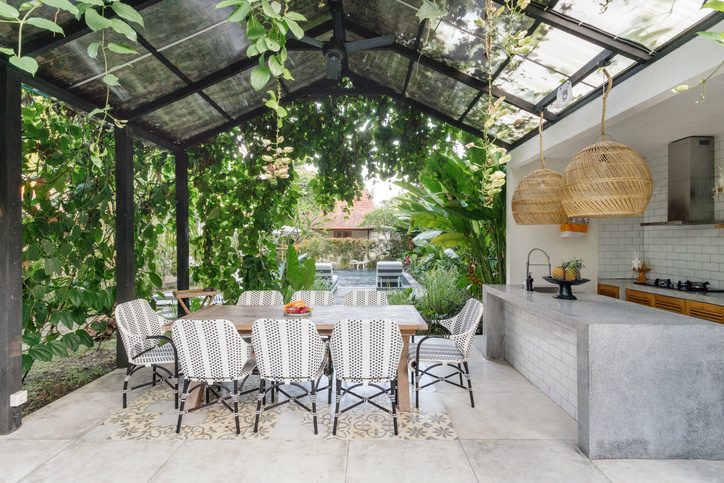
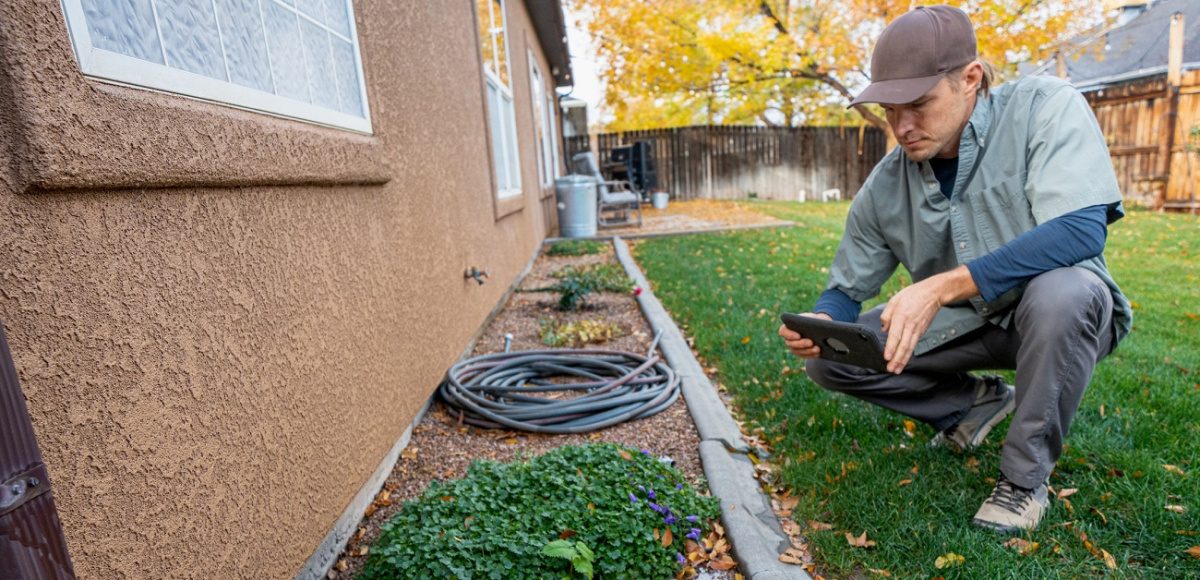
Functional exterior living spaces are growing more important and have become a valuable add-on to any home. Who doesn’t desire an at-home retreat filled with sensory gardens, lounging areas, a full kitchen and bar, outdoor TV and sustainable furnishings? It’s all about finding solitude and peace to create that “vacation at home” space.
Photo credit: Brizmaker / Getty Images
Plus, as windows get larger and larger, the views of the greenery outdoors are beckoning for more attention.
Photo credit: Brizmaker / Getty Images
Mixed Metals
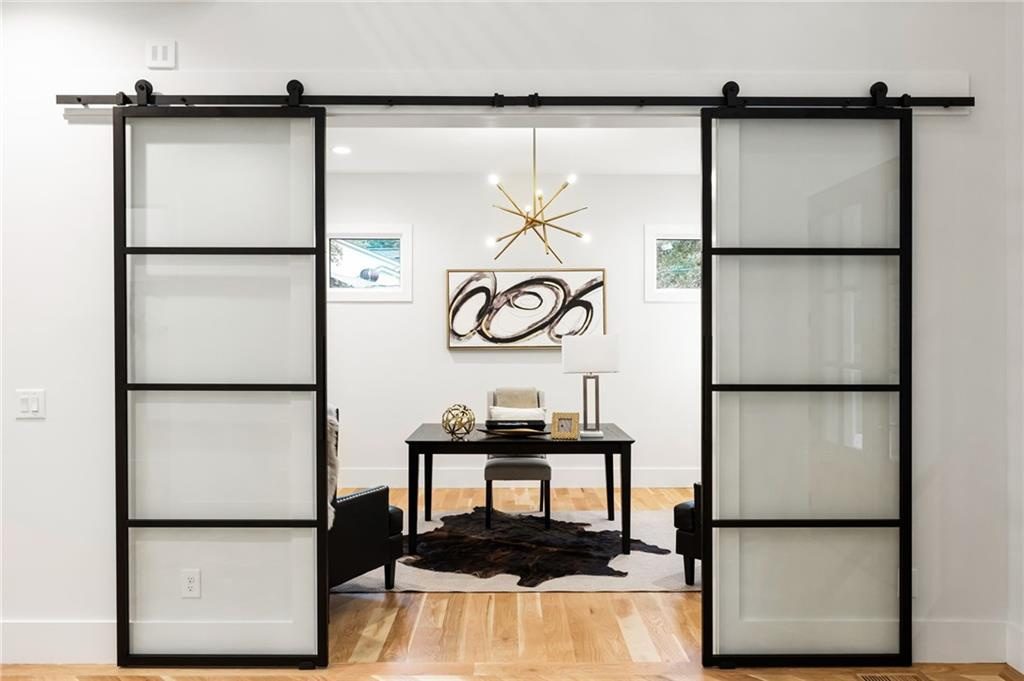
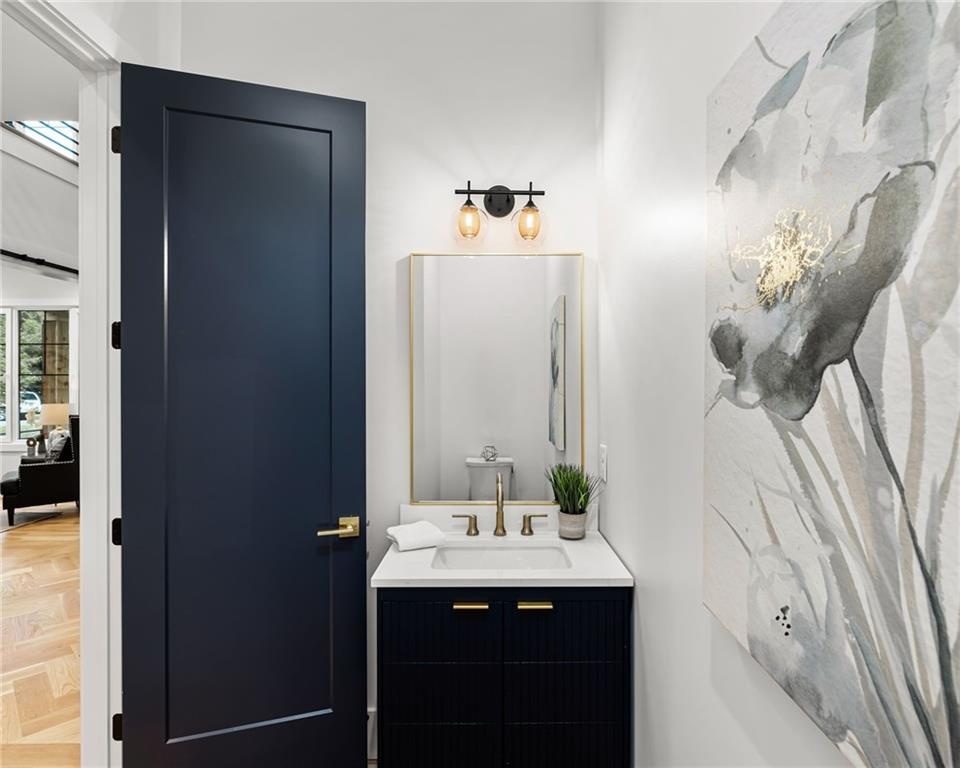
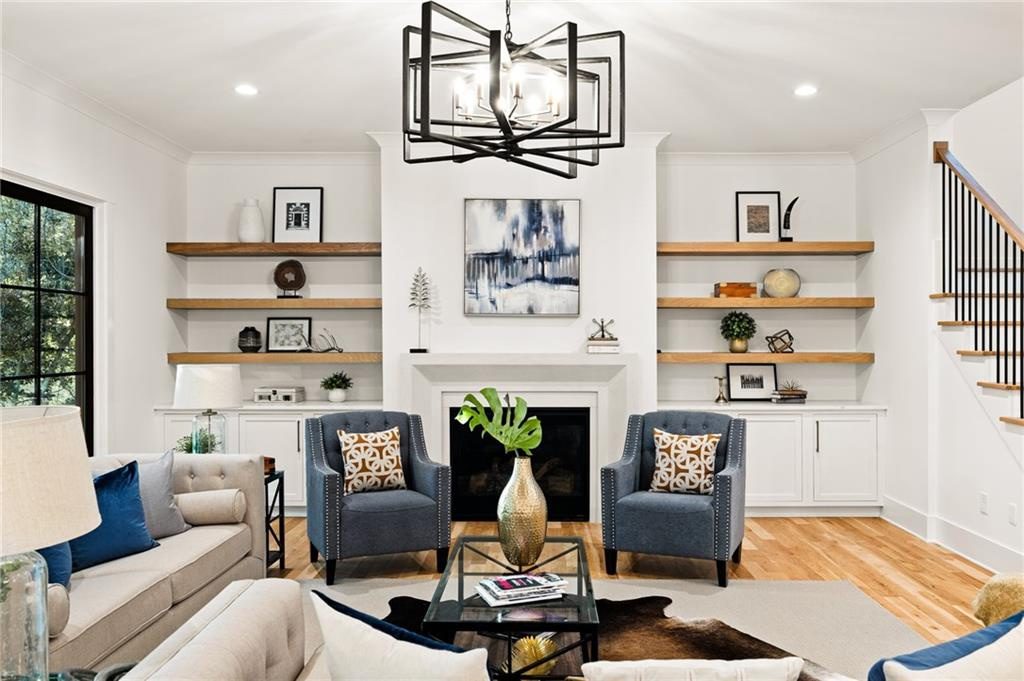
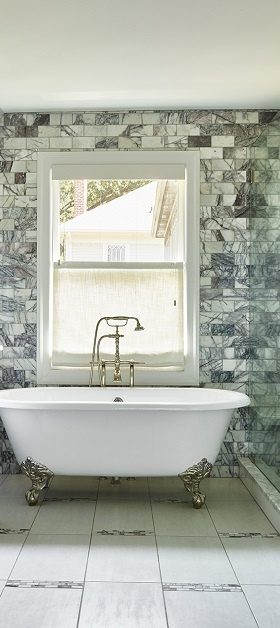
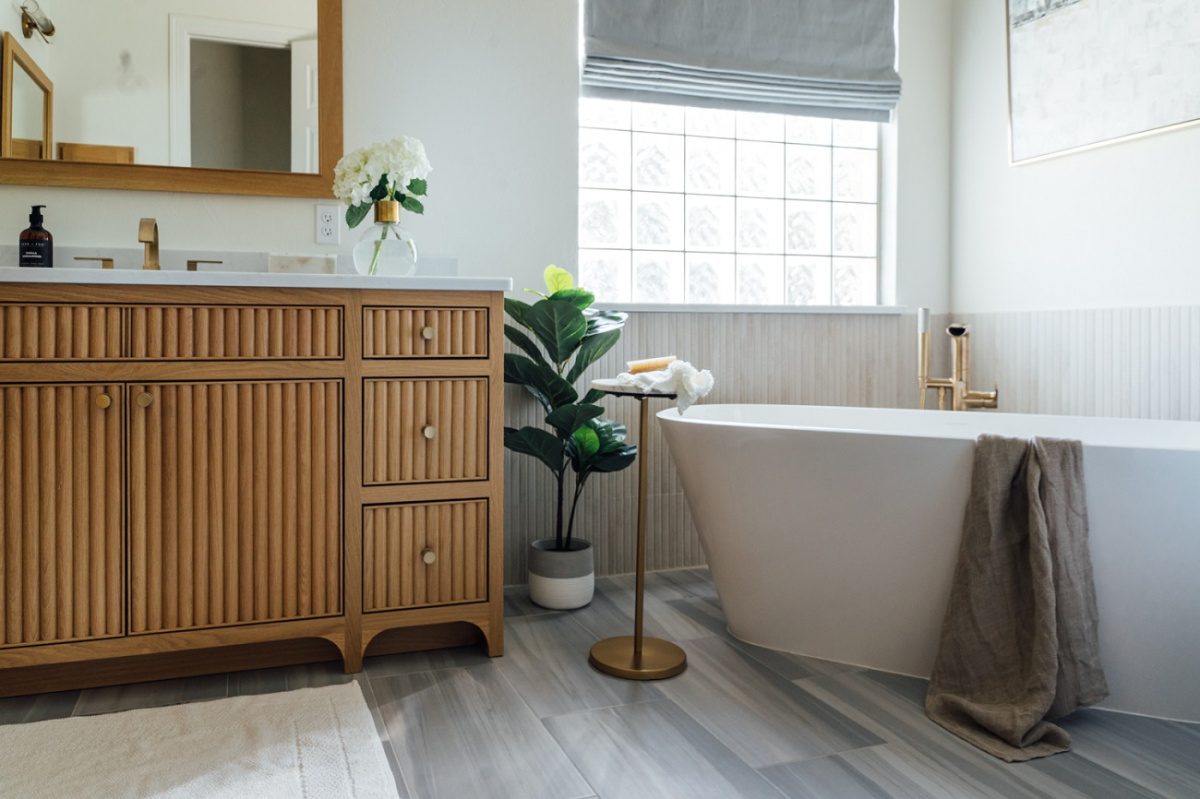
Forget matching: Mixing metal finishes remains on-trend. Metals are not just being reserved for the faucets and cabinet pulls but are being incorporated throughout the home. Warm metals like brass, and cool metals like chrome, are being mixed together to add visual interest and create depth in a room.
That said, expect over the years ahead for warm metals to slowly get pushed out more and more as a renewed focus on silvery hues pushes forward as an environmentally conscious choice.
Photo credit: Krisztina Bell, No Vacancy Home Staging
Photo credit: Krisztina Bell, No Vacancy Home Staging
Photo credit: Krisztina Bell, No Vacancy Home Staging
Maximalism & Personality
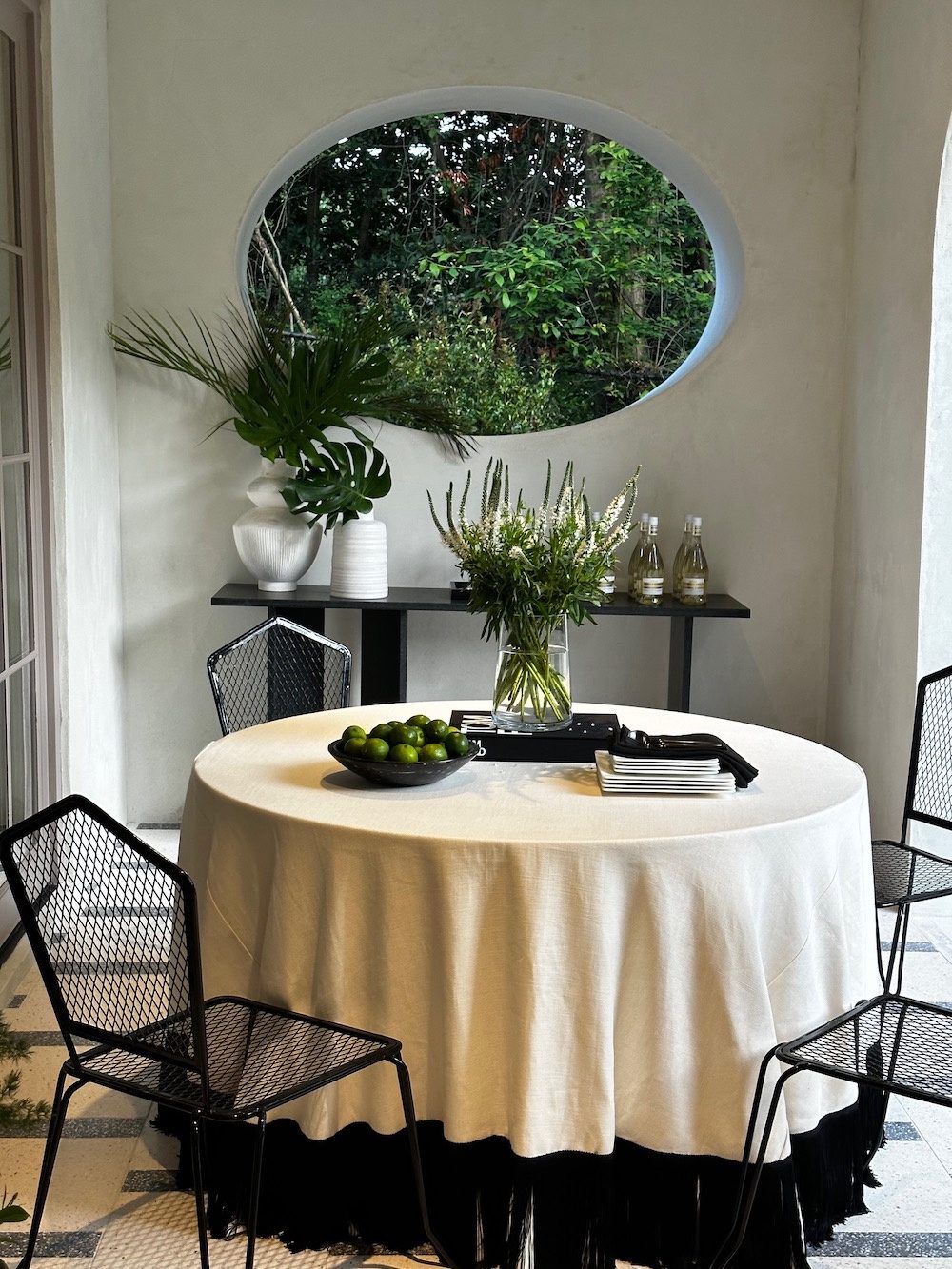
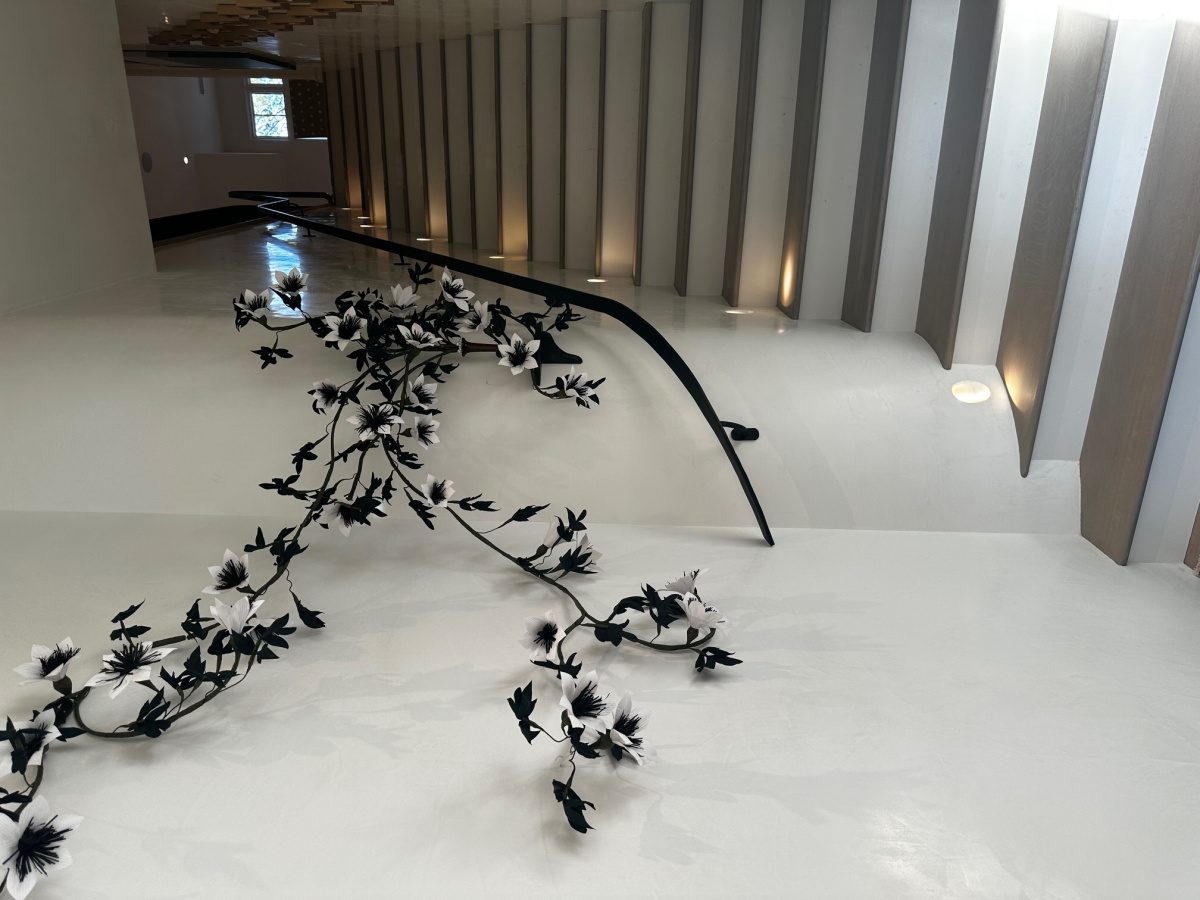
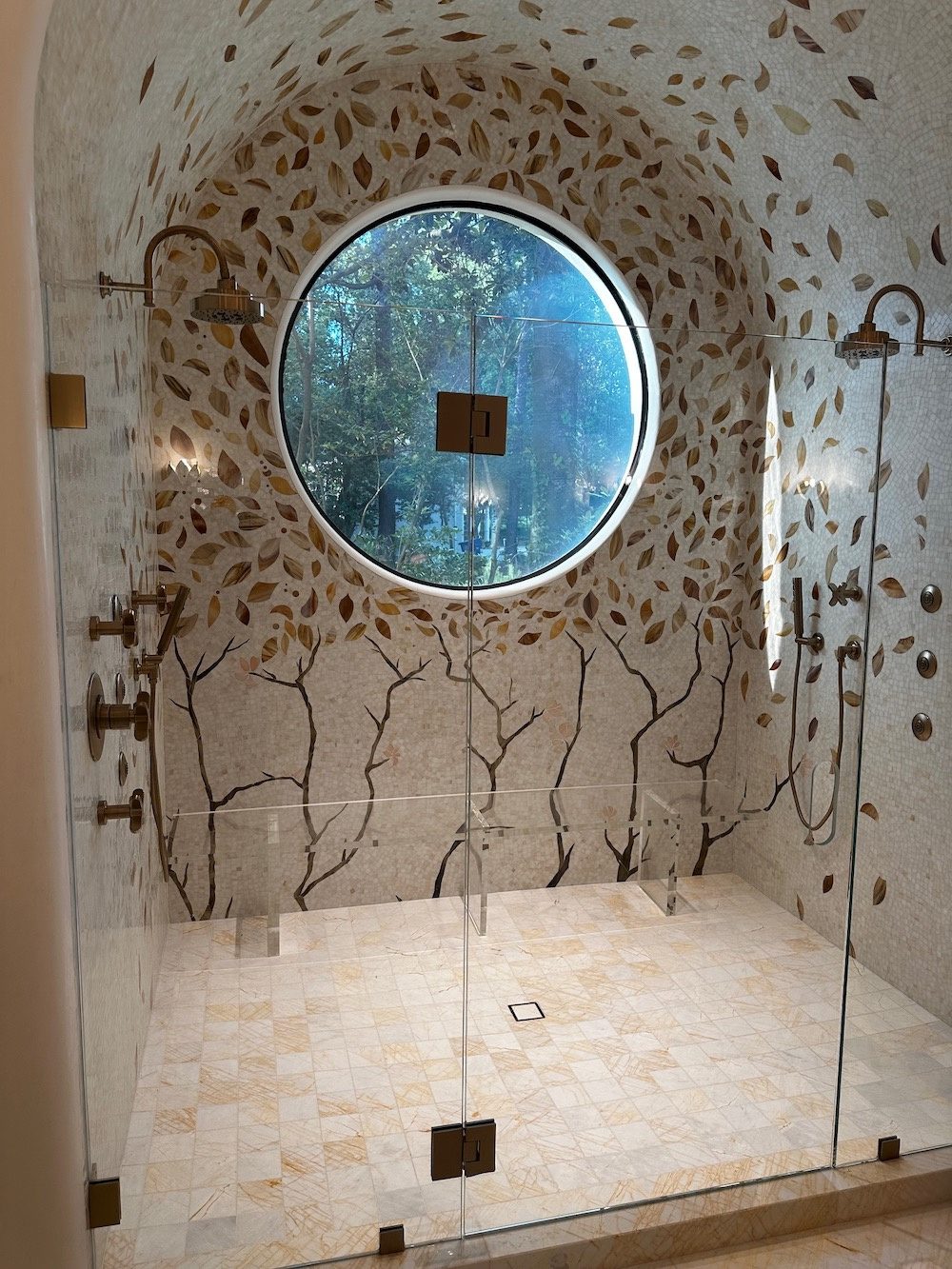
Consumers are showing a desire for color-drenching, rich textures and geometric patterns. Maximalism and personalization get extreme as more homeowners look to break the cookie-cutter layouts and venture into more expressive design.
This will be the year of “if you can dream it, go ahead and do it.” Designers and artists will push decorative accents in more adventurous ways. An entire space may look more like a work of art.
Photo credit: 2023 Southeastern Designer Showhouse & Gardens, Atlanta / Krisztina Bell, No Vacancy Home Staging
Photo credit: 2023 Southeastern Designer Showhouse & Gardens, Atlanta / Krisztina Bell, No Vacancy Home Staging
Eco- and Tech-Friendly
Sustainability is a way of life as we seek to live better and healthier lives. Smart homes with energy-efficient lighting, low-volatile paints, reclaimed eco-friendly furnishings and voice-controlled home devices throughout are in right now. The possibility of AI-powered home assistants is the wave of the future as eco- and tech-friendly pieces coexist.
Photo credit: Andresr / Getty Images
Homes are no longer about looking pristine but feeling cozy and catering to people’s aesthetic and emotional needs. Designers are embracing a powerful trio: nature, serenity and comforting design, as well as modern technology. They’re breaking away from tradition and moving into a forward-thinking adventure of unconventional design trends that are elevating the “art” of the home.
Picturesque Nelson, BC, is set roughly halfway between Vancouver on Canada’s west coast and Calgary in the Canadian Rockies. Nestled in the Selkirk Mountains and set on the west arm of Kootenay Lake, the city of 11,000 residents is home (and vacation home) to people who love life outdoors in all four seasons. Nelson’s stunning natural architecture is bejewelled by the town itself—its waterfront, some 350 heritage buildings, a restored streetcar, a thriving arts and artisan scene and a rich offering of restaurants and live music.
“It’s a small town, but it’s got a big town feel,” says Kevin Arcuri, co-owner of Coldwell Banker Rosling Real Estate in Nelson. “People are continually amazed with what Nelson, for its size, offers.”
We caught up to Kevin after a showing and got him to talk a little more about Nelson, British Columbia, and what makes it so attractive to the anglers, hikers, single-track bike riders, photographers, skiers, snowshoers, paddle boarders, kayakers, beachcombers, gardeners, wildlife lovers, mountain climbers, artists, artisans, foodies and mountain types who either call it home, or who are counting the days until they can get back.
What’s the feel of the place?
There is a definite lifestyle here. Everybody has to work and has to make a living, but there’s something here called Kootenay Time. If we get 15 centimetres [half a foot, or so] of snow, you’ll experience Kootenay Time. Some businesses will put a sign in their window saying Back at Noon, and they’re away to enjoy the skiing while it’s there to be enjoyed. Everyone understands it. It’s a little quieter here in Nelson. It’s a little more challenging to get to because we’re not on the Trans-Canada Highway, but that’s also what keeps it quaint and feeling the way it does.
What’s a perfect weekend day for you?
Well, of course, I am a realtor, so…. but a perfect day these days would be getting up early and going cross country skiing with my wife or taking a drive along the lake. In the summer, I love to fish, as well. There’s a popular trail out of Nelson called Pulpit Rock that is good in spring, summer, winter and fall. There’s a good growing season here, too, so a perfect day would include some time in my garden. I start my garden in early April and we’re still getting food out of it in October. The garlic will be up in the spring. Tomatoes, onions, peppers, potatoes, carrots, artichokes. You name it, we can pretty much grow it here.
So, sitting at home and watching TV, not so big in Nelson?
Not ideally, not unless there’s a reason for that!
What are the main industries?
Originally, Nelson was a mining town. It has evolved. It has had to re-invent itself from being just an industrial-type town. What they ended up doing was undertaking a heritage revitalization program. They stripped the facades from the original buildings and now Nelson is full of original heritage buildings. We’re not designated as a resort community, but tourism has become a main draw. I hear it from clients from out of town all the time. They’re just amazed at how a small town can have so many high-quality restaurants. I was with some people from California, and they could not say enough about the restaurants and the quality of the food. They were blown away.
What are the major modes of transportation?
Car, definitely. We have great city transit. We have a streetcar that runs along the waterfront. But it’s an active town, too. E-bikes have become huge in Nelson.
What’s a little known but cool fact about Nelson?
I’m not sure if you remember it but there was a movie back in the 1980s called Roxanne, starring Steve Martin and…
Daryl Hannah, yes!
…it was a re-creation of the story of Cyrano de Bergerac, and it was filmed in Nelson around the time of the whole heritage building transition. It’s great to be able to pick out the sites from the movie here at home.
Is Nelson affordable?
When I started in the business 16 years ago, the average sale price was, probably, you could find a house for $250,000 (CAD). That’s your average three- or four-bedroom, 2,000 to 3,000-square foot house on a 6,000 square-foot lot. Now, we’re taking $600,000-plus. So, things have changed. But we still are more affordable than many of the mountain towns that Nelson gets compared to, including Fernie, Revelstoke, Squamish or Whistler. Nelson has very little vacancy as far as rentals go. We’re always below one percent there and it’s been that way for years.
What do you want people to know about Nelson?
It is worth checking out, for sure. I can’t tell you how many times I’ve heard from real estate clients that there is just something about this place. Everybody is friendly. The food is great. It’s got a low-pressure vibe. I’ll go back to what I’ve said before: it’s the lifestyle.
Territory summary
Nelson is in the Selkirk Mountains on the west arm of Kootenay Lake in the Southern Interior of British Columbia. Along with Castlegar and Trail, Nelson forms the population and commercial core of the West Kootenay region.
Key Facts
Population (2016): 10,664 (area 25,000)
Population change 2011-2016: + 3.1%
Total private dwellings: 5,106
Age cohort percentage: 0-14 (15.1%), 25-54 (41.2%), 65+ (18.7%)
Major language spoken: English
Currency: CAD
Industry Facts
Median list price of homes in Nelson, January 2024 ($604,308). Source: Houseful
At first glance, the picturesque Alt Empordà region captivates visitors and locals alike with beautiful coastline and Catalan Pyrenees views. However, beyond the quiet countryside and blue horizon, the diverse Alt Empordà territory encompasses distinct characteristics. From quaint fishing villages near the French border, to the plains region filled with wineries in the west, there is no shortage of gorgeous scenery. Visitors can engage in cultural heritage sites and art museums (a Salvador Dali enthusiast’s delight), enjoy mountain activities and water sports, and savor culinary adventures. It’s easy to understand why tourists return and residents remain here.
What makes it so appealing as a place to call home? “Because every imaginable land and sea activity is possible. Living by the canal and mooring your boat in front of your garden or living in a house with a splendid sea view. It’s a real paradise,” shares Coldwell Banker Lux Real Estate CEO Jean-Charles Strahodinsky. He and his wife, Rose, who coordinates the three Coldwell Banker Lux offices in the area, speak incredibly highly not just of the landscapes but the architectural qualities of the homes themselves. Rose adds that “in the Alt Empordà region, each house is a living history: masías in Catalan villages preserve tradition, fishermen’s houses with moorings bear witness to the past, luxury villas with sea views tell of the Mediterranean Sea. Here, architecture speaks of past histories and promises unique futures.”
Read on to learn more about the beautiful region of Alt Empordà, home to Coldwell Banker Lux Real Estate.
Where do you live? I live in a coastal town in the Catalonia region of northeastern Spain, named Roses, in the Region of Alt Empordà.
What is the perfect weekend day like? A perfect day is to wake up and have breakfast enjoying the magnificent sea views. In the morning grab your bike and discover the nature and Natural Parks of the region of Alt Empordà. Then, put on your swimming costume and spend the whole afternoon on a boat discovering the beautiful coves that the Mediterranean Sea has to offer and do all types of activities. In the evening, go to a restaurant on the beach with your family and friends, eat tapas, and listen to music.
What are the common modes of transportation there? People usually travel by car or motorbike. It is also very common to walk along the promenade.
Tell us about the foods your area is known for. As the Alt Empordà is situated on the Mediterranean coast and touches the Pyrenees mountains, its cuisine is influenced by both Catalan and Mediterranean culinary traditions, and so it has a lot of variety of food. But Roses is mainly known for its rice dishes like Paella, as well as its fresh seafood like prawns. Here, we also love Bread with tomato (Pa am tomàquet). It is a simple yet flavorful dish that involves rubbing ripe tomatoes on bread and drizzling olive oil over it. It’s a staple in Catalan cuisine.
What is your favorite meal, at home or at a restaurant? I really like local products such as fresh fish. It is also very common and tasty with rice or noodles, adding even more flavors to the final result. But first, some tapas to share with friends such as ham or prawn croquettes, bread with tomato and ham or patatas bravas.
Where do you recommend someone vacation in your region and why? For an enriching vacation in the Alt Empordà region, where Roses is located, explore its diverse attractions catering to various interests.
Cultural enthusiasts should begin their journey in Figueres, the birthplace of Salvador Dalí, where the renowned Dalí Theatre-Museum showcases the surreal art of this iconic artist. Continue to Cadaqués, a picturesque coastal town with an artistic legacy and the Casa-Museo in Portlligat, offering insights into Dalí’s life. To delve into the region’s history, visit Empúries, home to an archaeological site featuring Greek and Roman ruins.
Sports enthusiasts can head to Roses. It’s a haven for water sports lovers, offering activities such as windsurfing, sailing, and scuba diving. Explore the Cap de Creus Natural Park for active adventures with hiking trails and stunning sea views. If you’re a cycling enthusiast, the bike paths around Boadella or Albanyà near Olot and Banyoles provide a scenic route for biking addicts. Golf aficionados can enjoy a tranquil round at the Golf de Peralada, surrounded by picturesque landscapes, or experience the challenging course at the Golf de Torremirona in Navata.
Nature lovers should explore the natural beauty of the Cap de Creus Natural Park, with diverse landscapes, hiking opportunities, and birdwatching. The Aiguamolls de l’Empordà Natural Park, a birdwatcher’s paradise with unique wetlands, provides a serene escape. For a mountainous retreat, Albanyà offers a tranquil setting with hiking routes and distinctive flora.
For a summer getaway, enjoy the sun and sea at the beaches of Roses, Cadaqués, Llançà, El Port de la Selva and L’Escala, perfect for relaxation and swimming in the crystal-clear waters of the Mediterranean.
For additional activities, explore the charming medieval town of Peralada, known for its castle and wine culture. For wine enthusiasts, the Empordà region offers a delightful wine tourism experience with visits to local wineries.
In conclusion I can say that the Alt Empordà region provides a diverse and engaging vacation experience, encompassing cultural richness, outdoor adventures, beach relaxation, and historical exploration, complemented by the tranquil settings of Golf de Peralada and Golf de Torremirona for golf enthusiasts. Whether you’re an art lover, sports enthusiast, nature seeker, history buff, or you just want to relax on the beach, this region has something to offer for everyone.
As far as accommodation is concerned, there is a wide variety of properties ranging from the most modern luxury to the luxury of the farmhouses named “Masía”. In the At Empordà you can find a villa with views of the sea and the Bay of Roses, a villa with mooring and swimming pool in the canals of Empuriabrava, a modern and renovated farmhouse or masía in the most historic villages of the region such as Castelló d’Empúries or a luxury house in the Golf de Peralada and GolfTorremirona.
What is your favorite recreational or leisure time activity? My favorite activities are sports and outdoor activities, connected with nature. In the Alt Empordà region you can practice all kinds of sports all year round. Activities range from swimming in the sea to skiing, as Alt Empordà borders the Pyrenees. During the summer I like to go running and cycling in the mountains in the Cap de Creus Natural Park, swimming in the bay of Roses, and at the end of the day, relaxing on the beaches of the Costa Brava. In winter, I swap open water swimming for skiing and winter sports. Apart from sports, I like to go out for lunch and dinner in the many restaurants in the region. Each time I discover new restaurants and flavors.
Is there a specialty your area is known for? The region is renowned for its wines, particularly those labeled as “Empordà.” The vineyards benefit from the Mediterranean climate, and the wines produced here, including reds, whites, and rosés, have gained recognition for their quality.
Olive cultivation is prevalent in the Alt Empordà region, and Cadaqués, in particular, produces high-quality olive oil. The local olive groves contribute to the production of extra virgin olive oil, which is a staple in Catalan cuisine.
Also, Anchovies of L’Escala. The local anchovy industry is well-established, and these salted or marinated anchovies are a sought-after delicacy.
Share a little known but interesting fact about the area/region: A lesser-known but interesting fact about the Alt Empordà region is its association with the surrealist artist Salvador Dalí beyond the well-known Dalí Theatre-Museum in Figueres. In the small coastal village of Portlligat, near Cadaqués, Dalí purchased a series of fishermen’s huts in the 1930s and transformed them into his eccentric home. The Casa-Museo Salvador Dalí in Portlligat is a fascinating insight into the artist’s personal life and creative process.
What makes this fact intriguing is the unconventional nature of Dalí’s residence, with its labyrinthine layout and quirky features. The house itself is a surreal work of art, reflecting Dalí’s eccentric personality and providing visitors with a unique glimpse into the mind of one of the 20th century’s most celebrated artists. The Portlligat house allows visitors to explore the spaces where Dalí lived and worked, offering a more intimate perspective compared to the grandeur of the Dalí Theatre-Museum in Figueres.
If you were to live in any other region where we have a Coldwell Banker presence, where would it be and why? Canada stands out as an ideal destination for me for a multitude of reasons. Beyond the fervor for sports, the country’s rich cultural tapestry, spanning from the multicultural streets of Toronto to the vibrant arts scene in Montreal, promises an enriching experience. The gastronomic landscape is equally diverse, offering a fusion of global cuisines alongside iconic Canadian dishes. With breathtaking natural beauty, a commitment to a high quality of life, and welcoming communities, Canada presents itself as more than just a residence – it’s an immersive and fulfilling lifestyle that I would like to experience.
Territory Summary:
The Alt Empordà region, nestled in the northeastern part of Catalonia, Spain, is a captivating blend of rich history, diverse geography, and a thriving economic landscape. Historically, the region has been shaped by various civilizations, evident in the archaeological treasures of Empúries or the Citadel of Roses, where Greek and Roman influences converge.
Geographically, Alt Empordà enjoys a strategic location along the Mediterranean coast, Costa Brava, boasting picturesque beaches in towns like Roses and Cadaqués. The Cap de Creus Natural Park showcases rugged cliffs and pristine landscapes, offering a stark contrast to the serene Aiguamolls de l’Empordà Natural Park, known for its unique wetlands.
Economically, Alt Empordà has evolved from an agrarian society to a region embracing tourism, agriculture, and viticulture. The vineyards of Empordà contribute to the renowned local wines, while the coastal areas attract visitors seeking sun-soaked beaches and water activities. The historical significance of the region, coupled with its natural beauty, has made Alt Empordà a cultural and economic hub within Catalonia.
Please tell us a little bit about the real estate industry in your region:
The real estate landscape in Alt Empordà features a diverse array of architectural styles. In the historic towns, you’ll find charming Mediterranean-style houses with whitewashed facades and tile roofs. In more rural areas, traditional Catalan farmhouses, known as masías, contribute to the architectural tapestry. Additionally, modern and contemporary designs have gained popularity, especially in newer developments and coastal areas.
Prices per sq. ft/meter: 2,379.98
Real estate prices in Alt Empordà can vary based on factors such as location, property type, and amenities. In coastal towns like Roses or Cadaqués, where proximity to the Mediterranean is a significant factor, prices per square meter may be higher compared to rural or inland areas.
In 2022, the average price in the entire Alt Empordà region was 2,379.98. In other words, the average price ranged between 1,800 and 2,500 euros per square meter, although in exclusive areas prices can exceed 4,000 euros per square meter.
Average Sale Price: 375.000 EUR
The average sale price of properties in Alt Empordà depends on the specific location and property features. Coastal properties, especially those with sea views, tend to command higher prices. Similarly, the condition and age of the property can influence the average sale price.
Average years in house/apt: 45 years
The average number of years people stay in a house or apartment in Alt Empordà can vary. Coastal areas with a higher influx of tourists might see more turnover, with some properties serving as vacation homes. In contrast, inland areas and historic towns may have residents with longer-term commitments, in average 45 years. This aspect can influence the availability of properties on the market.
Types of financing:
Financing options for real estate purchases in Alt Empordà are typically aligned with broader Spanish financing practices. Buyers often secure mortgages through banks or financial institutions. The terms and interest rates may vary, and it’s advisable for potential buyers to explore different financing options and consult with local financial institutions to determine the most suitable arrangement based on their financial situation.
Key Facts:
Population: Alt Empordà has 142,624 inhabitants. Roses, has 19,807.
Melissa Dittman Tracey Dec 6,2023Buyers may balk at lengthy inspection reports, but not every item is an emergency. Know what may—and may not—be cause for alarm.
The results of a home inspection can make or break a home sale, particularly if buyers are unsure about the items flagged in the report. They may panic at the sight of a long laundry list of repairs.
“No home is perfect,” says Adam Long, president of HomeTeam Inspection Service, which has more than 200 offices nationwide. “Every home has some safety concerns or issues that may need to be resolved—some right away, some later on. But at the end of the day, every home has issues, and every issue is fixable. It’s up to the buyer, seller and agents to decide what to do about it.”
A home inspection provides a visual review of the home’s structure and its key components, including the plumbing and electrical systems. Home inspectors provide a written summary of the inspection and should inform and explain to a client everything they find and respond to any questions, Long says. “They are not there to scare a home buyer,” he adds. “Some items they may find need to be replaced, budgeted for replacement later on or may be used to renegotiate on the price.”
Deciphering Potential Red Flags
These larger inspection items may alarm buyers, but there may be no reason for concern.
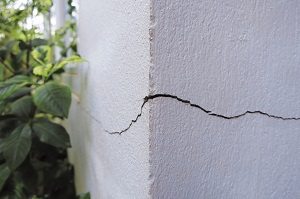
A home that is starting to move or settle incorrectly could cause major issues later on. A home inspector will look for any signs of structural issues, noting even seemingly minor hairline cracks in the concrete slab or on the interior walls. “They may tell you to just watch it to make sure it doesn’t get bigger or expand,” Long says. “But if it’s a horizontal crack with a bulge, they may advise you to get it reviewed right away by a foundation expert.”
Inspectors also may flag issues like misaligned or sticking doors and windows, as well as sagging or slanting floors, which could indicate a possible foundation issue. By being proactive about foundation problems, homeowners may be able to avoid costlier issues later on. For example, repairing minor cracks can cost as little as $500, but more extensive foundation repairs can stretch to $10,000 or higher, according to HomeAdvisor’s 2023 cost data.
Price: The national average for a foundation repair is $2,175–$7,823, but costs can vary widely depending on damage.
A home inspector likely will identify whether aluminum wiring, which is mostly found in homes built between 1965 and 1973, is present. Homes today are wired using copper, and aluminum wiring has been found to deteriorate faster than copper. Aluminum is prone to overheating, which could create a fire hazard. “People who have lived in a home for 50 years, or those who didn’t get a home inspection in prior moves, may not even know they have it,” Long says. “It doesn’t mean a home will catch on fire, but it increases the odds.”
Also, many insurance companies will not insure a home with aluminum wiring present. Therefore, inspectors may advise buyers to talk with their insurance agent. Rewiring a home can be expensive, but buyers could explore other possible solutions, like the use of specialized connectors or applications, to make aluminum wiring safer.
Price: The national average for rewiring a house is $16,000.
Home inspectors will scrutinize electrical panels, where all the wires in the home come together and are distributed. A common issue they spot is when two branch circuit wires are connected to the same breaker—there’s supposed to be only one—which can cause a breaker to trip frequently. “That can be a simple fix,” Long says.
Inspectors also will look at the type of panel installed and may recommend replacement. For example, older Zinsco and Federal Pacific electrical panels, which were installed from the 1950s to 1980s, have been linked to fire hazards from circuit breakers failing over time. Some insurance companies may not insure homes with these panels.
Price: The national average for replacing and installing an electrical panel is $2,400.
Inspectors may note minor to major items regarding the home’s plumbing. “Most with plumbing are minor, like from a hose not being tightened or a leaky faucet,” Long says. “It’s not a red flag, but they’re important because you don’t want a small leak to become a bigger leak and then, later on, even lead to mold.” Long says inspectors also may flag the presence of “Polybutylene Plastic” supply pipes, which were commonly used between 1978 and 1994. They are prone to higher rates of leaks or plumbing line failures compared to more modern piping materials.
Inspectors likely will note the presence of PB pipes as well as cast iron and galvanized piping, which are prone to corrosion. The presence of these pipes don’t necessarily warrant replacement, Long says, but home buyers will need to make that decision. “These are not used in modern homes but older homes,” Long says. Copper is used today and has a longer life cycle than some other materials that homeowners may need to consider replacing after 40 or 60 years, he adds.
Price: The national average for replacing plumbing supply pipes is $1,500 to $15,000, depending on the home’s size and type of pipes installed.
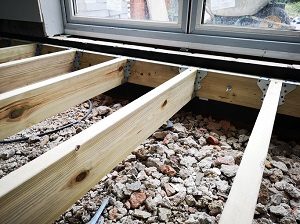
Many homes have wooden tresses in the attic or wooden floor joists. Home inspectors will indicate any rotted wood in these areas. They’ll also note if the homeowner has done anything to the wooden tresses or floor joists that could potentially jeopardize the stability of the home. Homeowners and remodelers may cut into the floor joists—horizontal structures between beams that help distribute the weight of the home—when installing plumbing. “They may think it’s OK to just cut a little notch from the wood, but the floor joists provide support,” Long says. Later on, that could lead to wall cracks, unstable or sloping floors and structural damage.
Price: The national average for repairing floor joists is $12,500, but costs vary based on the extent of the damage and type of joist. Expect to pay $100 to $2,000 per joist.
Many homes are fueled by natural gas, and inspectors will evaluate the heat exchanger and the color of the flame, like whether it’s yellowish red or blue. “If it’s non-blue, it could indicate a bad ratio between fuel and air,” Long says, indicating a possible sign of a cracked heat exchanger. That could lead to a furnace that stops eventually working or even a replacement needed or even a possible carbon monoxide leak.
Price: The national average for an HVAC replacement is $5,000 to $12,000.
Inspectors look for potential safety issues in a home and will flag anything they spot, even if it’s relatively minor. “Home inspectors are looking for tripping hazards, from cracks in a driveway or the steps into the house to missing or loose handrails,” Long says. “They will report these, but they’re usually fairly easy to fix. These are not going to cause a fire or flood, but they could cause injuries in a home.” Inspectors also will document the presence of smoke alarms and carbon monoxide detectors. “Many older homes, especially, may have no carbon monoxide detectors or are missing the right amount of smoke detectors” to comply with today’s building codes, Long says.
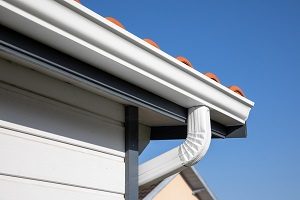
Outside, home inspectors will scrutinize not only the roof but also the home’s drainage systems. They’ll check whether the water is flowing away from the foundation, basement or crawl space. They’ll look for improper gutters, or those that may be overflowing and not large enough for the home’s roof. “Gutters direct water away from the foundation,” Long says. “If a gutter is feeding water out and back toward the home, there may need to be some kind of pipe to keep it away from the house.”
Too often, Long says, he’ll spot issues where homeowners have added landscaping that inadvertently redirects water toward the foundation. Over time, that can cause water to seep into cracks within the home. “These tend to be easy fixes but may need to be addressed” to prevent future damage, Long says.
Price: The national average for installing gutters is $624 to $1,705.
Don’t Panic
After receiving a full report from the home inspector, buyers may be concerned about some of the items that were uncovered and demand that the seller repair each one. But Long says the report is an overview of the home and all of its components. Some items may require further investigation by a specialist—such as an electrician or foundation expert—and some may be flagged for future maintenance.
“Everything is fixable,” Long assures. “None of these items need to be deal-breakers. They may just need further review if they’re spotted in a home inspection report, and they may be potential points for further negotiations.” Either way, the home inspection offers buyers the opportunity to jump into homeownership with a full picture of what they’re buying.
Melissa Dittman Tracey 12/5/2023Houzz, a remodeling website, chimes in with predictions for the most buzzworthy home features in the new year.
Stylish storage, bolder patterns and textures and colors beyond the whites and grays are expected to shake up home design in 2024. Houzz, a home renovation and design platform, weighs in with its predictions for the home trends gaining traction. Here’s Houzz’s list of what to watch.
Blending the Backsplashes
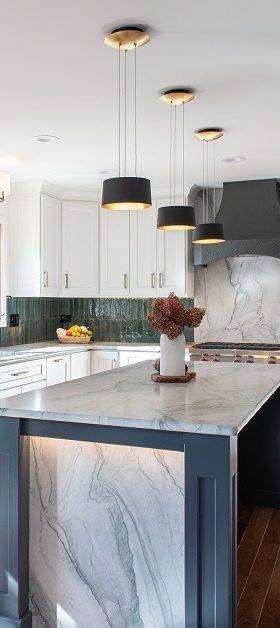
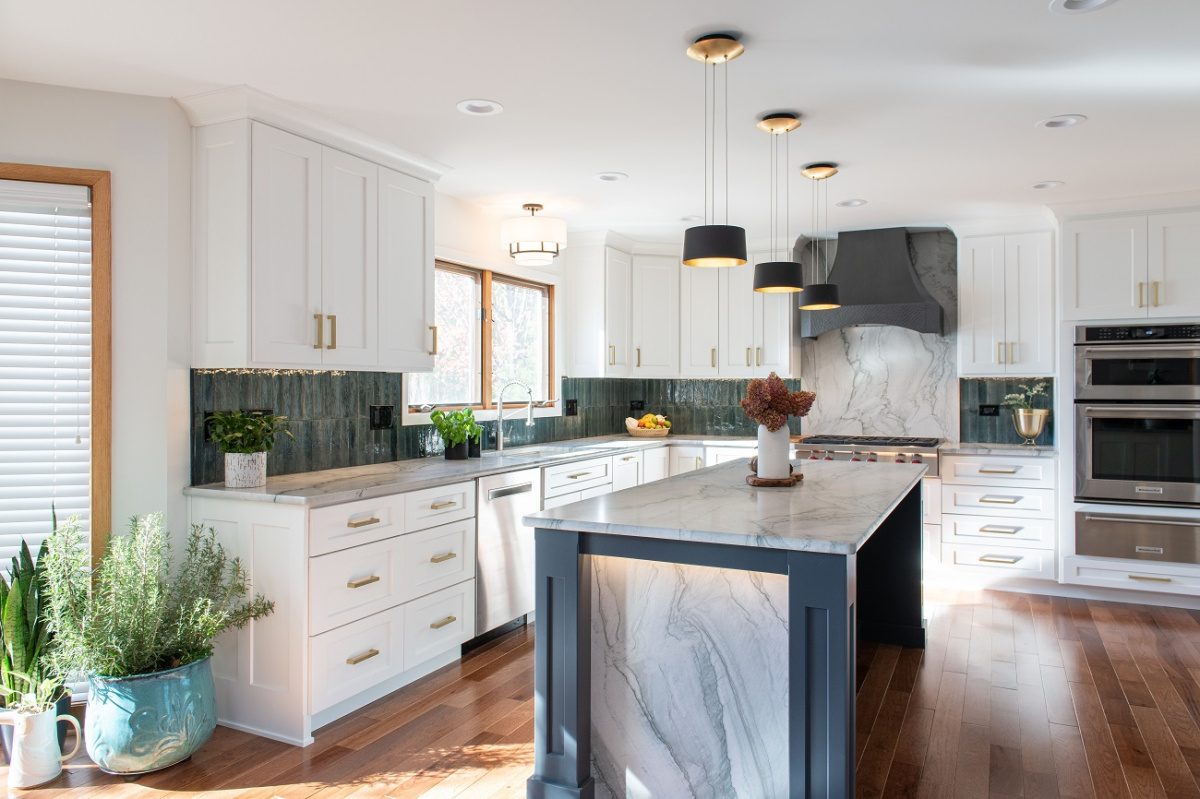
Backsplashes are becoming a bigger kitchen statement and stretching to new heights. In making the backsplash more of a focal point, designers are installing a slab of stone or quartz behind the range or countertop while keeping the surrounding backsplash in tile. The slab backsplash usually will match the kitchen countertop and, in a dramatic display, stretch all the way to the ceiling in a vertical focal point of the stone’s graphic veining.
This texturized detail is accenting bathroom vanities, the backs and sides of kitchen islands and living room furniture. The aesthetic creates a “rough statement-making detail beneath island countertops, bathroom vanities and dining room tables, adding visual texture and interest,” Houzz says.
Say goodbye to cool grays and stark whites. Warm neutrals, such as beiges, creamy off-whites and rich browns, are moving in. Whether in the kitchen or elsewhere in the home, expect more of these softer neutrals to bring a “calmer, more welcoming environment,” the report says. Designers recommend using different tones, as well as textures and patterns, to create a layered look that adds depth to home design.
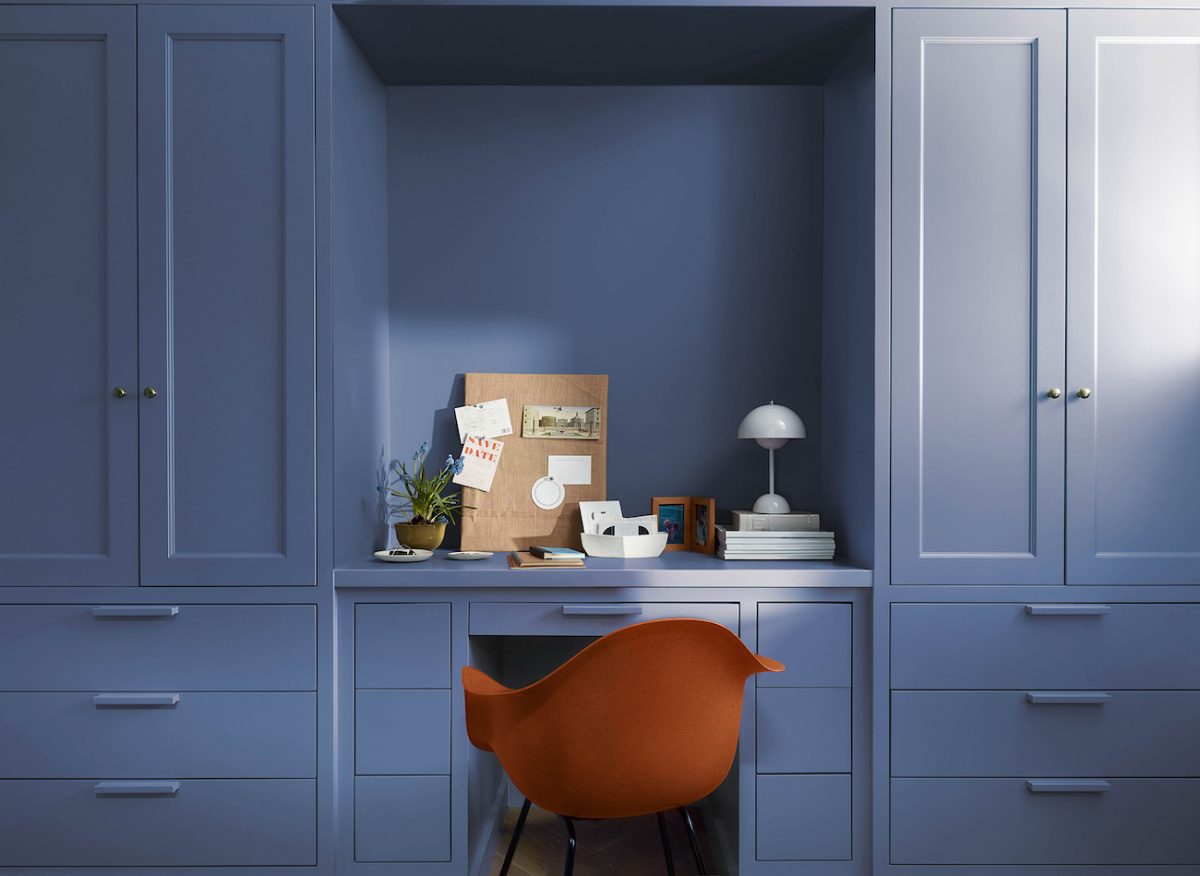
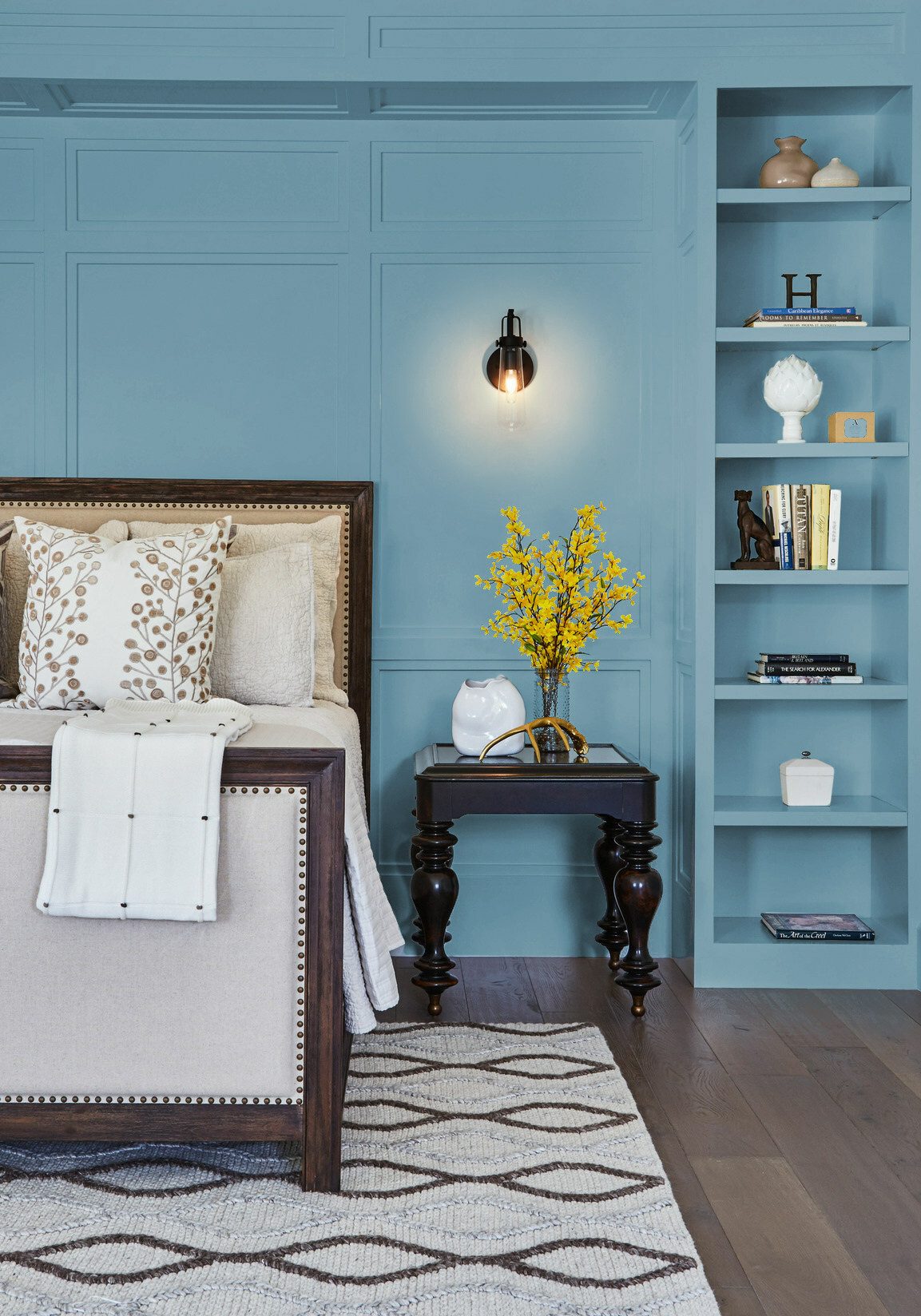
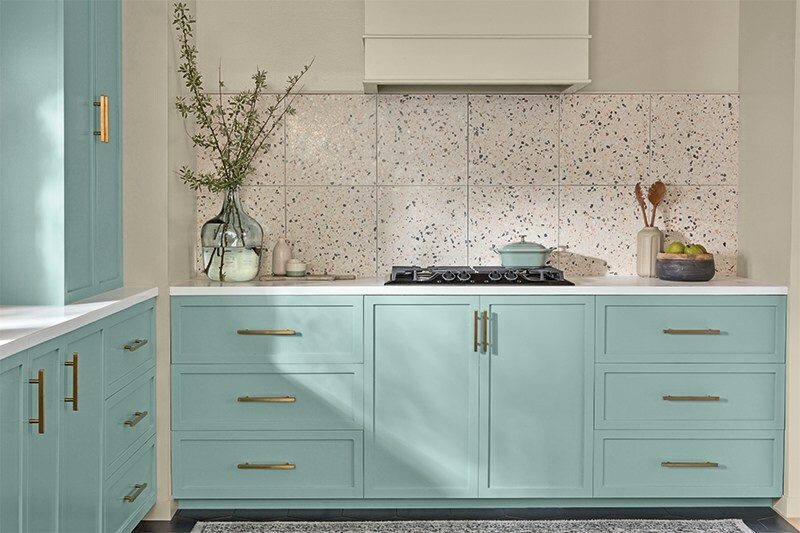
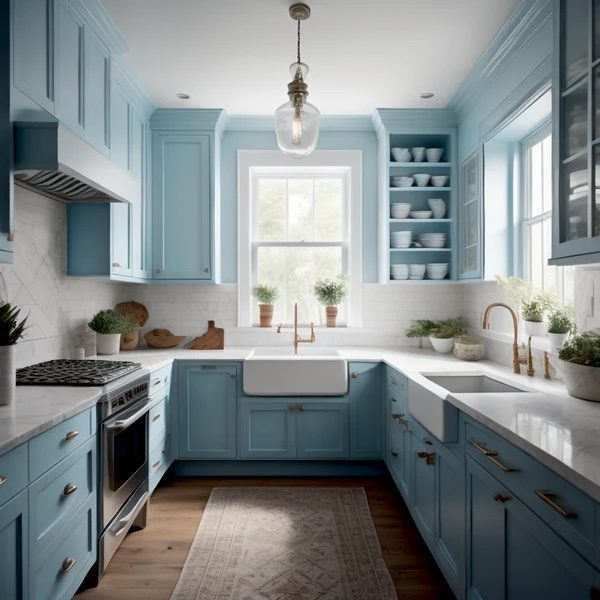
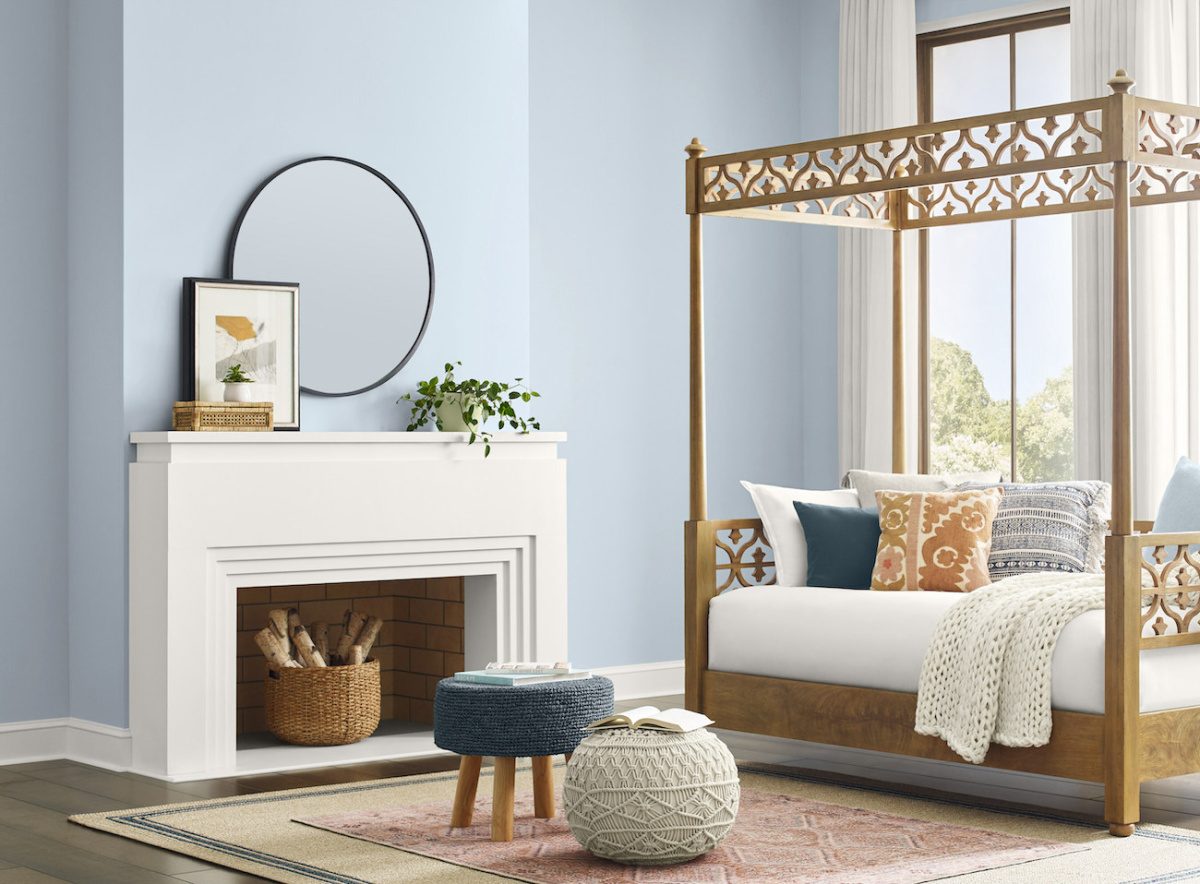
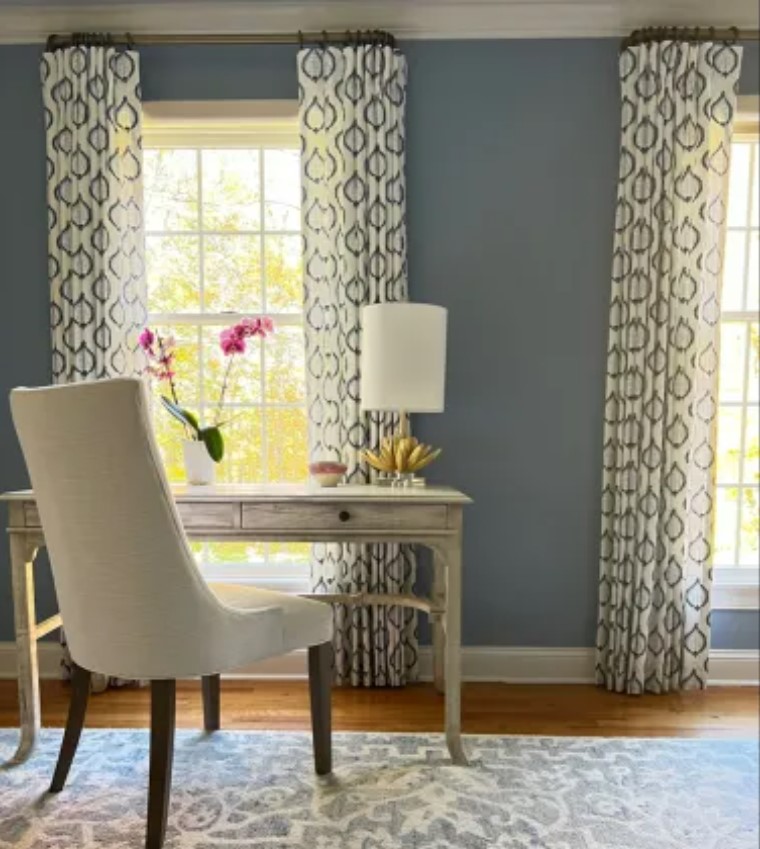
Blue color schemes are a hot trend for 2024. Several paint companies have chosen shades of blue as their 2024 Color of the Year, from Benjamin Moore’s bright “Blue Nova” to Sherwin-Williams’ softer “Upward.” “Whether it’s a sky-inspired hue or deep watery blue color, look for an array of blues to be featured more prominently in decorative materials and housewares in the coming year,” Houzz says.
More homeowners are incorporating more traditional details and materials into their home design, the report says. This not only can create “a timeless style” but also “a sustainable choice during renovations,” the Houzz report adds. “Even modern homes are incorporating ‘old’ elements, such as brick, handmade clay tiles, rustic wood elements and arches that offer ‘quiet luxury.’”
Along with a timeless style, more homeowners also are embracing handmade features and details for a one-of-a-kind look. This could include handmade tiles and custom bathroom vanities. For example, in a separate report, the 2023 Houzz U.S. Bathroom Trends Report found that the majority of renovating homeowners are opting for custom or semi-custom vanities, breaking away from a cookie-cutter look in favor of uniqueness.
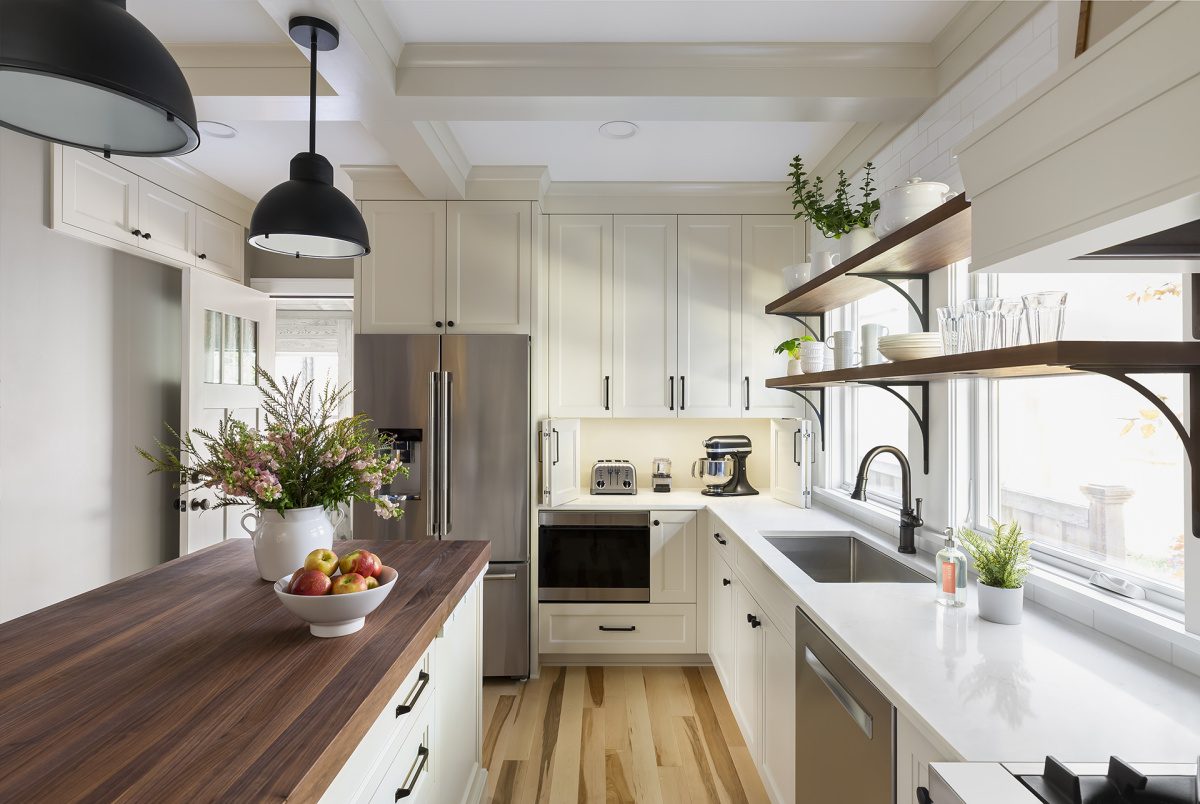
Clever storage solutions are gaining traction as homeowners look to tuck away all those countertop appliances, like the air fryer, coffee makers and blenders. An appliance garage allows easy access while also offering up a sliding cabinet or specialized cabinetry to hide all the gadgets.
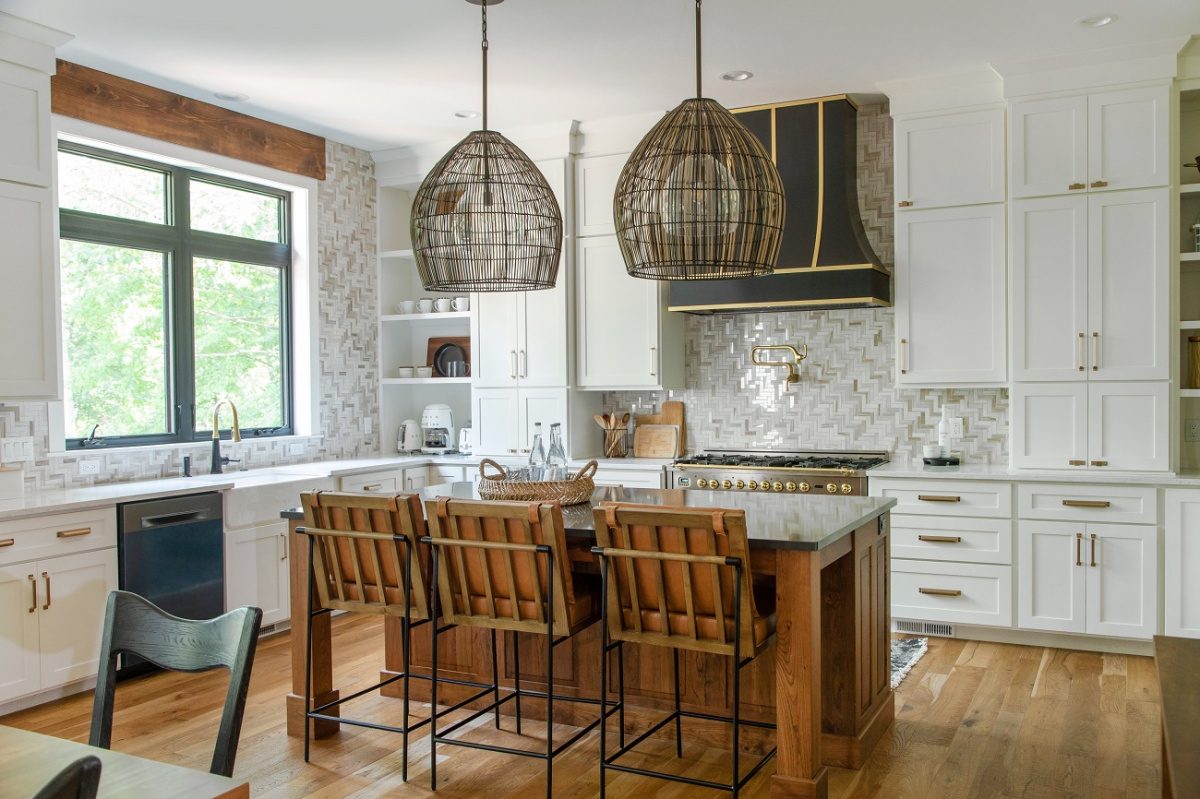
Herringbone patterns are making a comeback, but with a twist. It’s becoming a go-to pattern for kitchens and bathrooms, but the “typically horizontally zigs are beginning to zag in new directions—diagonally or vertically—to create an updated look with visual interest, movement and texture,” the Houzz report says.
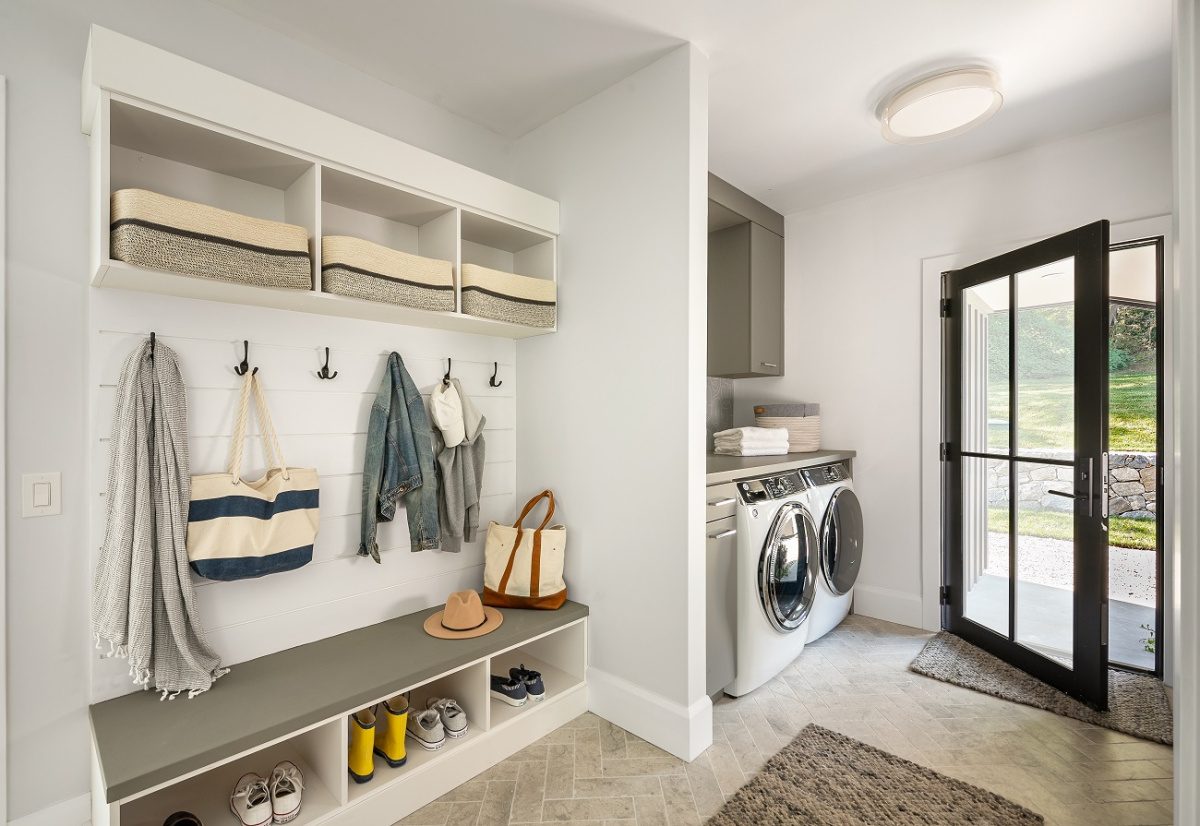
Two areas are getting combined in creating the “mud-laundry room.” The idea is to help tackle the mess at the entry points of a home. “This increasingly popular setup lets homeowners place grimy sports uniforms, sandy beach towels or muddy winter coats directly into the wash before they track dirt further into a home,” the Houzz report says. Some must-haves for the mud-laundry room: a utility sink to soak dirty clothes or muddy boots right away, as well as plenty of cabinets, hooks and cubbies to organize entryway gear, and a bench for taking on and off shoes.
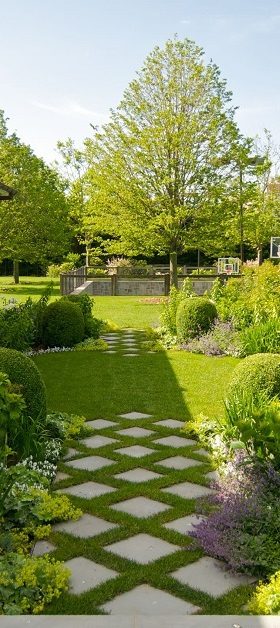
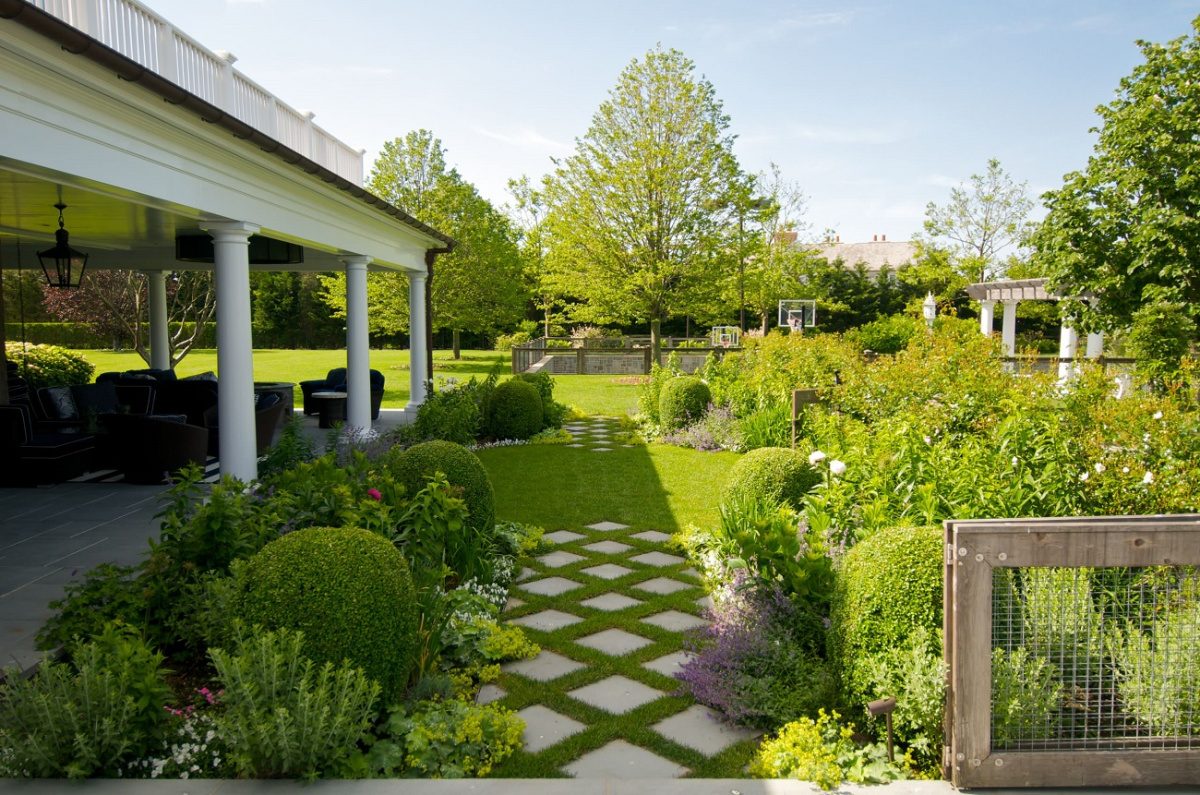
Greenery is getting tucked between outdoor pavers on walkways to add visual interest. “Whether driven by aesthetic requests or as a byproduct of maintaining onsite drainage, we’re seeing increased interest in greenery tucked between pavers,” the Houzz report says. “Garden paths and patios made of pavers, separated by ground cover, have gained popularity due to their natural look, permeability and design versatility. This approach softens pathways, breaks up large expanses of hardscape and generally makes a walkway or patio feel more like a lush, living part of a garden.”
As the nights get colder, our homes should feel cozier. Pinterest is showcasing several trends to do just that. RubyHome Luxury Real Estate in Los Angeles researched the latest search data on Pinterest to uncover trending interior design styles for this winter. They also offer up ideas on how to channel each trend into a home or listing.
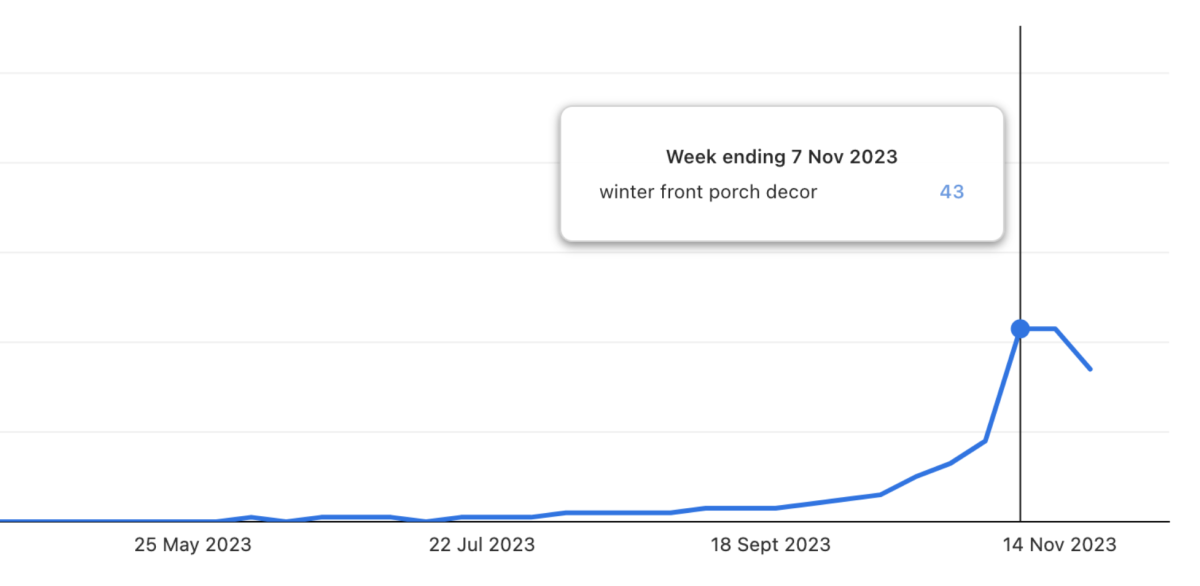
1. Winter front porch decor
Consumer interest for “winter front porch decor” is surging once again on Pinterest, jumping by a whopping 975% since September.
Source: RubyHome Luxury Real Estate
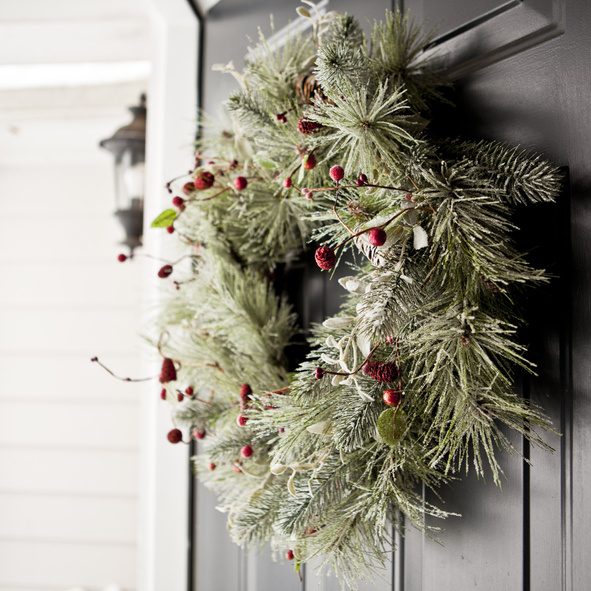
How to channel it: Start with a winter wreath on the front door made of dried leaves, faux flowers or even a combination of seasonal elements, like pinecones, berries and cinnamon. Compliment it with some seasonal plants, like pine and eucalyptus, and add berries and thistle for an added burst of color. Try to incorporate planters or pots in warm, earth tones to fit with the season.
Also, dress up the porch furniture with throw pillows and blankets, like in wintery patterns and colors of burgundy, greens or blues.
Photo credit: Marilyn Nieves / Getty Images
2. Earthy tones for the bedroom
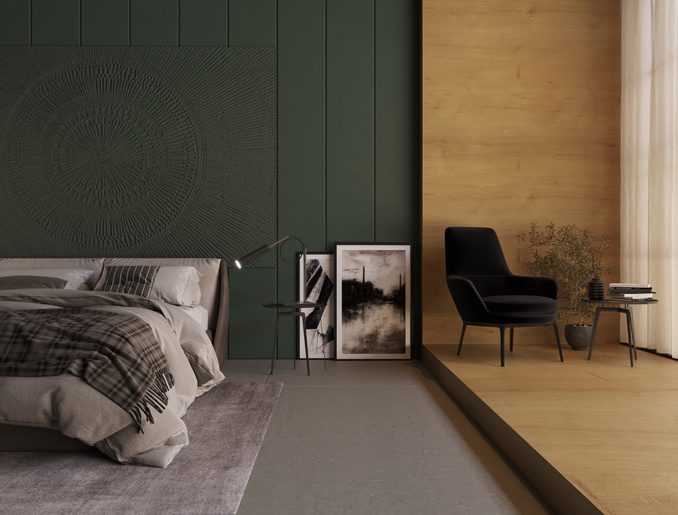
The hues are proving to be popular for wintertime interior styles. They can be woven in with natural design elements that help bring the outdoors inside and add a touch of charm. Pinterest searches for “earthy bedroom” have risen by 113% since July and are expected to continue to spark interest during the winter periods.
How to channel it: Use colors inspired by nature, such as browns, greens, warm grays and muted earthy reds. For example, choose a duvet cover, sheets and pillowcases in natural colors like deep brown, olive green or sandy beige. A neutral linen duvet cover also can add an earthy texture.
Photo credit: Gokcemim / Getty Images
Add throw pillows in various earthy tones and textures to a bed or seating area. Consider using fabrics like jute, burlap or those with nature-inspired patterns, like leaves, branches or animal prints.
If you’re looking to revamp your furniture this winter, design experts recommend incorporating wooden pieces, such as a solid wood bed frame, nightstands or a dresser. Natural wood tends to add warmth and create a connection to nature.
For an extra earthy touch, pots and planters also can add to the theme. For example, succulents, ferns, snake plants or any greenery can bring a refreshing touch of nature to a bedroom.
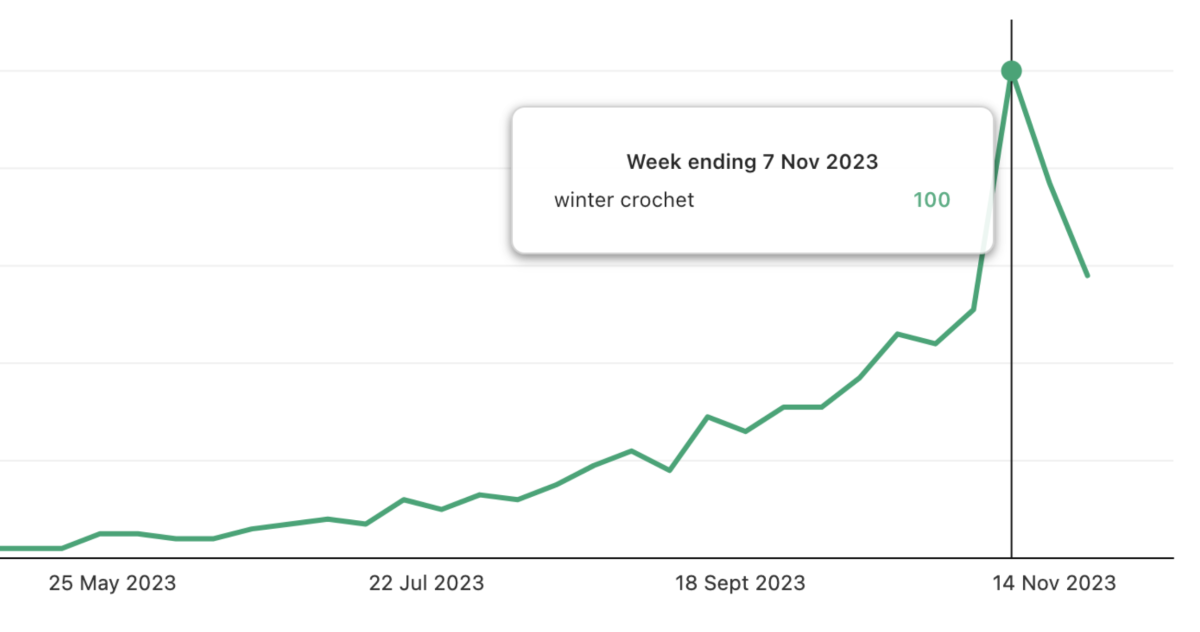
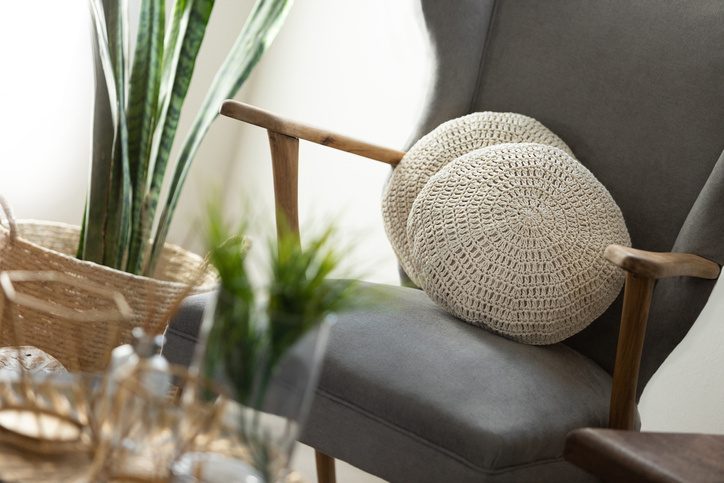
3. Winter crochet
Pinterest searches for “winter crochet” have surged by an eye-popping 1,328% since May.
Source: RubyHome Luxury Real Estate
How to channel it: Crochet patterns for the home can be a way to add warmth to a living space during the winter season. Several items in your home can be adapted to crochet patterns, such as pillow covers, blankets, throws or even photo frames.
Consider crocheted pillow covers that feature seasonal motifs like leaves, acorns or owls. Slip them over existing pillows to change up the décor for the winter season.
Photo credit: Ruizluquepaz / Getty Images
Alternatively, framing pieces of crochet can be a beautiful yet subtle way to incorporate this design trend into a home this winter.
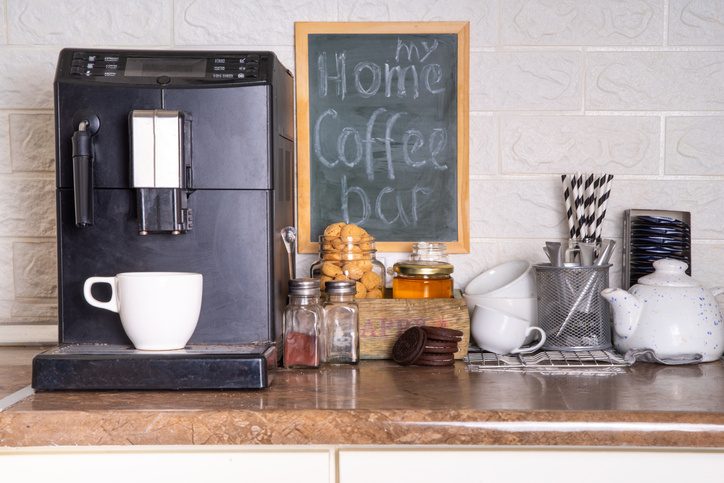
# 4 Winter coffee bar ideas
Pinterest searches for “coffee bar ideas” in the kitchen have surged by 117% since May.
How to channel it: A luxury coffee bar is a great addition to a kitchen this winter. When it comes to decorating a coffee bar, go for warm, earthy colors like deep reds, oranges, browns and yellows. Incorporate the colors for the tablecloths, napkins, mugs and other decor items. Winter-themed mugs are also a fitting addition, such as those that feature snowy mountain designs.
Photo credit: Rimma Bondarenko / Getty Images
Of course, seasonal flavors—such as vanilla, caramel and peppermint—can help add a wintery twist to your drinks. For an added touch and a sweet treat, include toppings like whipped cream, chocolate shavings and cinnamon.
December 4, 2023 Design & Architecture, Design Trends
Many paint companies have chosen a variation of this universal color as their pick for the 2024 Color of the Year.
Several choices for the 2024 Color of the Year are looking a little blue.
Blue tends to mix well with white, beige and gray, which are popular interior colors. So, blue home accessories—or even a blue accent wall—may be the perfect compliment.
Every year, major paint companies make their predictions for the hottest colors in home design in the new year. Many companies chose pink hues and eye-popping shades of reds, following the “Barbiecore” aesthetic, as their 2023 Colors of the Year. However, this color family is nearly absent from the 2024 Colors of the Year, save for HGTV Home’s choice of “Persimmon,” an earthy terracotta shade.
A move away from pinks to blues also could help sellers attract more buyers. After all, studies on color psychology often show that blue is the most popular color worldwide. And in real estate, dressing a home in a “safe bet” color is often a wise strategy for the sale.
Bright Baby Blues
Brighter and lighter blues, rather than navy and darker blues, take most of the spotlight in the 2024 Colors of the Year. Brighter color schemes, in general, are a lasting trend.
Here’s a rundown of the blue hues among the 2024 Colors of the Year.
It’s been quite a year for interior design. As houses are swept off the market in minutes after listing and new homeowners tackle what they want their home to be like, 2023 was marked with white, clean designs along with minimalism, shiplap and fast furniture. The design world has shifted gears for 2024, ushering in an era of quartz, vintage furniture, wallpaper, cozy and divided interiors and bold colors and design. Sharon McCormick of Sharon McCormick Designs shared some tips on what’s hot and what’s not for the new year.
What’s hot for 2024
In the kitchen, it’s all about the quartz. Quartz and quartzite countertops have become all the rage versus granite, marble or laminate. Quartz has earned the top spot for its color selection, durability and scratch resistance.
As far as design in kitchens, wood grain kitchen cabinets, particularly white oak, or cabinets in vibrant colors are taking over from the white kitchens that were in the last few years. Statement hoods also make a big difference. Beverage stations for coffee, smoothies or a wine bar are also becoming popular if you have the space.
Another big change is the flip from open space layouts to more traditionally divided rooms. The allure of smaller, more intimate spaces began with the pandemic and the trend has only become more popular. Cozy, more nurturing spaces are taking over from wide open layouts.
To furnish those rooms, think vintage. Upcycling and acquiring antiques has become very trendy. This keeps furniture out of landfills and also brings character to a home. For that vintage furniture, 2024 is bringing the curves. Curved designs in furniture and lighting are taking over this year. Consider wavy, wood furniture that adds a bit of pizzazz into a room.
When laying out your furniture in a room, maximalism without messiness is in. It plays into the want for cozy spaces. Accessorize as much as you want, but don’t let things get too cluttered or overtaken especially in smaller rooms.
This living room includes some of the warmer neutrals that are coming into style in 2024. (Gordon Beall)
It’s also time to play with colors, fabric and wallpaper. Bold patterns, especially striped and plaid fabrics, are very popular. This year, designers also like checkerboard patterns and tassels, fringe, braids and cords for window treatments and upholstery details.
On the color wheel, neutrals have taken over from gray. Think warm tones like beige, tan, cream, brown, caramel, amber, honey and butter. Beside neutrals, blue is the top color. Vibrant tones especially teal and aqua are hot along with purple, red and earthy greens.
Fringe and other textures are in for 2024. (Urso Photography)
As far as lighting spaces, layered lighting is popular. This can be done with bold, sculptural chandeliers, wall sconces, art lights, decorative ceiling lights and fixtures made of natural materials such as rattan, wicker and leather. If you have to do recessed lighting, canless LEDs are preferred.
Anything that adds character to a room is trending. This can be paneling or wall moldings, or customization and personalization. A big trend coming in for 2024 is decorated ceilings. You can achieve this look with paint, moldings, wallpaper or millwork. Wallpaper on the ceiling? It’s in! Wallpaper can also be used to create murals to bring the outside in.
Blues, especially in vibrant tones, is coming into style in 2024. (Urso Photography)
Did you go out and get a lot of mid century modern furniture while it was trending the last year or two? While mid century modern is falling out of style, you can mix in other styles with existing furniture to make a more eclectic look.
In the bedroom, layers are the key. Take multiple layers of bedding and use pillows, throws, upholstered furniture, wallpaper, art, lamps, moody colors and decorative lampshades. Have fun with it. Off of the bedroom, dressing rooms are becoming more popular, if you have the space. Large walk in closets you can get changed in, dressing rooms are a way to declutter your bedroom and move those things to their own separate space.
What’s on its way out from 2023
Some of the things falling out of favor have been slowly dropping in popularity over the last few years. For example, gray has been consistently dropping in the trends. Also dropping as all-white interiors and mid-century modern.
Other trends that are not so popular anymore include granite countertops, open floor plans and minimalism.
One of the biggest changes in trends is fast furniture or furniture that is cheaply made, easily broken, and short term. These are the pieces most likely to end up in a landfill. The push to sustainability has driven this fast furniture industry out of favor.
Inside, there’s a few design aspects you won’t see as much of. These include boxy furniture, accent walls, matching furniture sets, can lighting and oversized bathtubs.
Also with the push to more individualism in design, sleek, generic, shiplap and impersonal hotel-style bedrooms have fallen from favor.
Overall, the trends are going toward having fun with your home design. Add more of your personality into your home. Don’t be afraid of color or texture.
An El Niño weather pattern is expected this winter, which could bring severe weather to many parts of the country. But cranking up the heat can be a fast-track to high energy bills. After all, heating and cooling account for nearly half of annual energy bills(link is external) for the average American household, according to Energy Star.
So, before you set that thermostat too high, check out these winter energy-saving tips to help keep your home toasty without breaking the bank. Many of these tips can help you save money and use less energy all year long.
1. Lower the Temperature on Your Thermostat
Why? The Department of Energy says you can save energy costs in the winter by setting your thermostat(link is external) between 68 and 70 degrees Fahrenheit while you’re home—and even less when you’re away. Heat loss happens more slowly when the temperature inside your house is low, the department says.
Effort required: Low
Steps to take:
Set your thermostat to a low setting that’s still comfortable for everyone in your home.
Keep your thermostat a few degrees lower than normal when you’re asleep or out of the house.
Ensure your thermostat is located in a high-traffic area inside your home and away from areas with temperature extremes, such as near exterior doors, so it can accurately read the temperature. Depending on your thermostat, you can move it yourself or call an HVAC professional for help if needed.
Consider investing in a smart thermostat to set a schedule and more easily monitor your home’s energy usage.
Consider using small space heaters when you only need to heat a small part of your home.
2. Take Advantage of Natural Heat
Why? Passive heating uses the sun’s natural heat to warm up your home. Methods range from opening the blinds to choosing building materials that can trap heat during the day and release it in the evening. Even if your home wasn’t intentionally built with passive solar design(link is external) in mind, you can still use a few low-effort tricks to harness the sun’s heat.
Effort required: Low
Steps to take:
Open your curtains or blinds during the day to let in the natural heat from the sun.
Close curtains or blinds at night to help insulate heat.
Invest in thermal-insulated curtains to help keep warm air from escaping through windows.
Have ceiling fans rotate clockwise(link is external) at a low speed to redistribute heat and prevent drafts. Doing so will pull cool air up and move warmer air throughout the room.
Avoid planting evergreen trees south of your home, where they can block out the sun during the winter.
3. Monitor Energy Usage for Electronics
Why? The Energy Information Administration found that televisions, computers and other electronics—as well as miscellaneous energy uses, including dishwashers and cooking equipment—make(link is external) up 45.2% of residential energy consumption(link is external). Spending more time indoors during the winter can mean more energy usage for making hot chocolate and coffee, watching classic holiday movies and getting cozy under an electric blanket. Don’t stop the holiday cheer, but consider a few ways to keep energy usage for electronics down.
Effort required: Low
Steps to take:
Set electronics and appliances to low-power or power-saving mode to reduce energy consumption.
Turn electronics off when you’re not using them. If electronics need to be on constantly, set them to low-power mode when you’re not using it.
Unplug devices when you’re away from home, especially when leaving for multiple days.
Plug small electronics into surge protectors or smart plugs to easily turn them off and on.
4. Upgrade Lighting and Lightbulbs
Why? Residential electricity prices in the U.S. grew 10.7% in 2022 and are projected to rise another 4%(link is external) in 2023, according to the EIA. With these rising prices, additional lights—especially costly holiday strings of incandescent bulbs—will cause an increase in your electricity bill. Choosing LED holiday lights can save you up to 75%, since they use a quarter of the energy incandescent lighting does. Even if you aren’t putting up holiday lights, swapping out your home’s regular lights for energy-efficient bulbs can help you consume less electricity. LED lights also can last up to 25 times longer than regular incandescent bulbs.
Effort required: Low
Steps to take:
Turn off lights when you’re not using them.
Replace lightbulbs with energy-efficient LED or CFL light bulbs.
Invest in smart bulbs to put lights on a schedule, monitor usage and easily adjust brightness.
Use energy-efficient holiday lights and follow the manufacturer’s guidelines when stringing multiple strands together.
5. Prioritize Energy-Efficient Choices for Large Appliances
Why? Large appliances, such as washing machines and refrigerators, can consume a lot of energy. The EIA found that refrigerators and freezers were the fifth-largest source of residential energy consumption in 2022. Reducing your usage when possible, using power-saving settings and making energy-efficient upgrades, can keep electricity usage down with these appliances. For example, a household can save about $450 annually(link is external) on energy bills when using products with high Energy Star ratings.
Effort required: Low to medium
Steps to take:
Wash laundry in cold water and reduce the electricity needed to warm the water when possible.
Load appliances like washing machines and dishwashers with full loads—but don’t overfill them—to maximize energy usage.
Keep the oven door closed while food is cooking. The heat loss can result in more energy needed to heat the oven.
Consider using smaller appliances or alternative options whenever possible to reduce energy consumption with large appliances. For example, you can use a slow cooker for some meals instead of the oven, or air dry clothes instead of using the dryer.
When it’s time to replace your appliance, shop for energy-efficient products.
6. Seal Up Air Leaks
Why? Doors, windows and other openings in your home are all potential sources of heat loss—even when closed. According to the DOE, nearly one-third of a home’s heat is lost through windows(link is external). Sealing air leaks can help your home retain heat, thus keeping everyone comfortable and preventing your heater from working overtime.
Effort required: Medium
Steps to take:
Do a visual air leak inspection(link is external) to find apparent signs of leaks. This can include checking for gaps or cracks in existing caulking and weatherstripping or light shining through door and window frames.
Schedule a professional energy assessor or weatherization technician to do a full inspection for air leaks around the house if you suspect leaks in multiple areas of your home.
Weatherstrip doors and windows with noticeable drafts and replace old weatherstripping as needed.
Check the attic and basement for air leaks. You can use foam or caulk for small heat leaks, but you may need to call a professional to install or replace insulation for larger leaks.
Investigate other common spots for air leaks, such as light fixtures, outlets, air conditioning units, utility cupboards and other areas with visible cracks or gaps.
Keep fireplace dampers closed when you’re not using them to avoid inviting in cold air. If you don’t plan to use your chimney this winter, seal the chimney flue(link is external).
Lay down rugs on bare floors to help insulate them.
Schedule a professional inspection if you notice cold air coming through your exhaust fans.
7. Inspect Home Heating Systems
Why? The EIA found that space and water heating were among the four largest categories for residential energy consumption in 2022. Layering up and improving insulation can help keep you warm. But you’ll likely still need to use your HVAC system, chimney, water heater and small space heaters to stay warm—especially in areas that need to prepare for blizzards(link is external) and extreme cold temperatures. Regular maintenance on your home’s heating systems can help ensure they operate properly and efficiently.
Effort required: Medium to high
Steps to take:
Replace furnace and heat pump filters if you haven’t already in the past three months. This will keep them running efficiently and ensure they’re clean from pollutants like dust and pet dander.
Ensure furniture and curtains are not blocking vents and obstructing airflow.
Schedule a tune-up for your HVAC system if you haven’t had one this year or have issues. Common signs can include loud banging or clanking noises, a strong smell or airflow that feels different than normal.
Arrange for a chimney cleaning if you haven’t already scheduled one this year or if you’ve noticed significant build-up.
Flush your hot water heater if you haven’t already this year to minimize sediment buildup and help it run more efficiently.
Consider lowering your water heater temperature to 120 degrees Fahrenheit if it’s suitable for your household. Water heaters maintain a set temperature all day and continuously cycle on and off. Lowering the temperature can help save on heating bills.
Investigate if your water heater is a good candidate for insulation(link is external). If your water heater’s R-value is at least 24 (found on its label) or it feels hot when you touch it, it may benefit from insulation. Check with your utility company and local codes first to see if this is permitted and if your utility company can help with installation.
8. Do a Home Energy Assessment
Why? A home energy assessment involves inspecting each room of your house to identify your home’s energy usage and ways to help your home run more efficiently. This is a great step to take if you want to identify the solutions that will impact your home the most. You can do a simple DIY home energy assessment(link is external) to find issues that are easy to spot, or you can schedule a professional home energy assessment(link is external) with an auditor who can thoroughly evaluate your home. Having an audit completed by a certified auditor is required for those who want to take advantage of tax credits(link is external). An auditor also can help you identify solutions for more complex issues, like if you need to replace the insulation throughout your home.
Schedule the inspection as early in the season as possible—try adding it to your fall maintenance checklist—to avoid potential construction or renovation during the winter.
Make a list of potential issues in your home that either you or your auditor can keep top of mind during the assessment. This can include rooms with drastically different temperatures or drafty windows and doors.
Get a copy of your energy bills to help identify relevant information for the audit. This can include peak usage time in your home, changes in usage between bills and potential causes for spikes or dips (like if you’re housing relatives during the holidays or recently replaced old appliances).
The best color combinations for small spaces will make your place look so much more stylish. The right colors paired together can make a space feel brighter and more inviting, so it’s a good idea to know what they are.
When decorating your small house or apartment, it can be tricky to know where to start in terms of picking colors that complement each other. If you don’t have the budget to keep trying out different ones, it’s a good idea to try and get it right the first time. That’s where our expert advice comes in.
If you’ve been looking through small space decorating ideas and want to know what colors you should be painting and furnishing with, I’ve got you. I’ve spoken to designers to find out the best combos for small spaces that will work in every room.
BEST COLOR COMBINATIONS FOR SMALL SPACES
Ready to get started? These shades are definitely the best paint colors for small spaces. For each combo, I’ve found colors that you can paint with and decor you can style, so you can get started ASAP.
The prices below were correct at the time of publishing this article.
1. LIGHT COLORS WITH BOLD COLORS
(Image credit: @tropicali_heaven)
Light colors are great for making a small space look brighter. You can still use them to do that while bringing in your personality. “Using only light colors can sometimes make the space feel bland and uninviting — that’s where adding a pop of vibrant or bold color comes in,” says Jonathan Faccone, interior designer and founder of HALO Homebuyers.
The contrast between the light background and the bright accent creates depth and adds interest to the space. “Just make sure not to overdo it, as too much bold color can overwhelm the small space,” he adds.
(Image credit: @sundayharris)
For those who love Scandi small living room ideas, this natural combo is the way to go. “Cream, with its soft and light tone, serves as an ideal base, creating an illusion of spaciousness and enhancing natural light,” explains Ana Coddington, lead interior designer at Archival Designs.
She adds that the light wood adds just the right amount of warmth and texture, preventing the space from feeling flat and dull. “When you pair cream with light wood — like birch or maple — you’ve got yourself a beautiful match that perfectly complements each other.”
Ana Coddington
Ana Coddington is the lead interior designer at Archival Designs. She has over 10 years of experience with consultations, CAD software, and space planning, helping to create unique and stylish homes.
3. MONOCHROMATIC COLORS
(Image credit: @mylifeinmulticolor)
Using the same color in varying shades will create a sense of cohesion throughout your home. “For example, this could be using shades of light blue and navy blue in a bedroom or different hues of green in a living room,” says Faccone. “Monochromatic colors create a harmonious and cohesive look, making the room feel more spacious.” This also adds visual interest without being too overwhelming.
When choosing color combinations for each room, there are a few things to remember. “For bedrooms, I recommend using soft and calming colors like light blues, greens, or lavender to create a peaceful environment,” says Ricky Allen, interior designer and founder of Ever Wallpaper. “For living rooms, you can play around with warm and inviting tones like earthy browns, rust oranges, and mustard yellows.” These colors will make the space feel cozy and welcoming.
Ricky Allen
Ricky Allen is the Interior Designer and Director of Ever Wallpaper. It sells high-quality wallpapers and murals, using non-toxic, odorless, and environmentally friendly materials.
4. PASTEL AND WHITE
(Image credit: @picsfromcandice)
Love sugary sweet pastel tones? Pairing them with white will balance them out and make them stand out more. “Pastel colors, like light pink, pale blue, or mint green, are soft and gentle hues that add a touch of elegance to any room,” explains Coddington. “When paired with crisp white accents, they create a fresh and airy feel that can make even the tiniest of spaces look bigger.” This combination is perfect for creating a calming atmosphere in small spaces.
5. SAGE GREEN AND WHITE
(Image credit: @highboyla)
If pastels are not your thing, consider using sage green as the main color for a small space. “This muted green shade is very versatile and can work well with different design styles,” Coddington tells me. “When paired with white accents, it creates a clean and serene look that’s perfect for small spaces.”
She adds that the lightness of white balances out the deepness of sage green, making the room feel more open and spacious. This color combination is also great for bringing a touch of nature indoors, adding a refreshing and organic feel to the space.
FAQS
WHAT IS THE BEST COLOR COMBINATION FOR SMALL SPACES?
The best color combination for small spaces that will showcase style, while making a space look bright and spacious, is white and pastel colors like baby pink and blue.
HOW TO CHOOSE THE BEST COLOR COMBINATION FOR SMALL SPACES?
If you’re painting your small space, do paint swatches of the combinations you want to choose near a natural light source, so you can check they work in the space without painting the whole area.
Now you know the best color combinations for small spaces, you might be wondering what colors you should steer clear of. These are the worst paint colors for small spaces, according to design experts.

 Facebook
 X
X
 Pinterest
 Copy Link