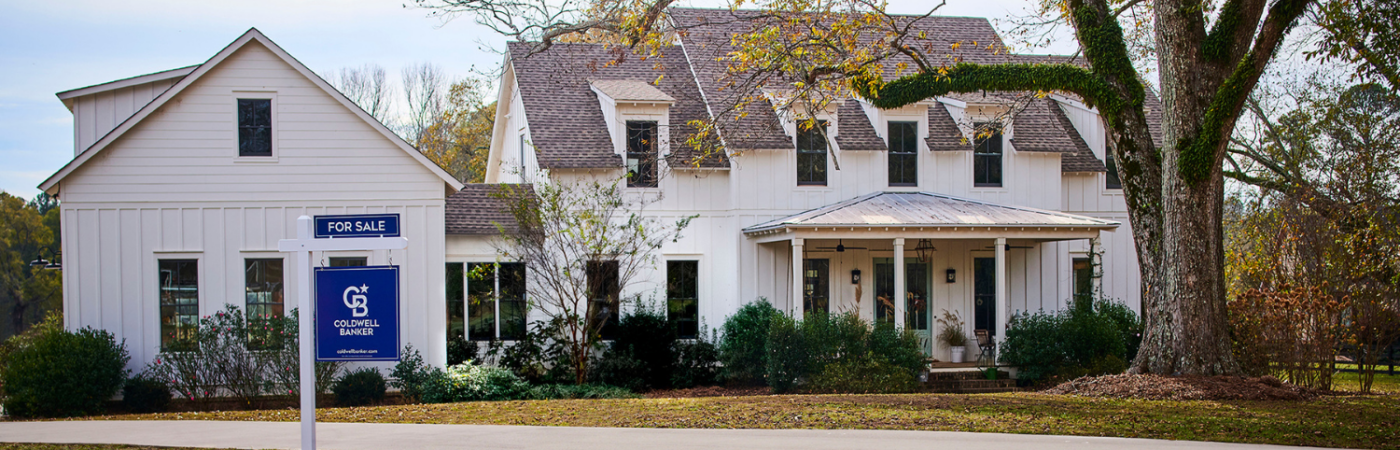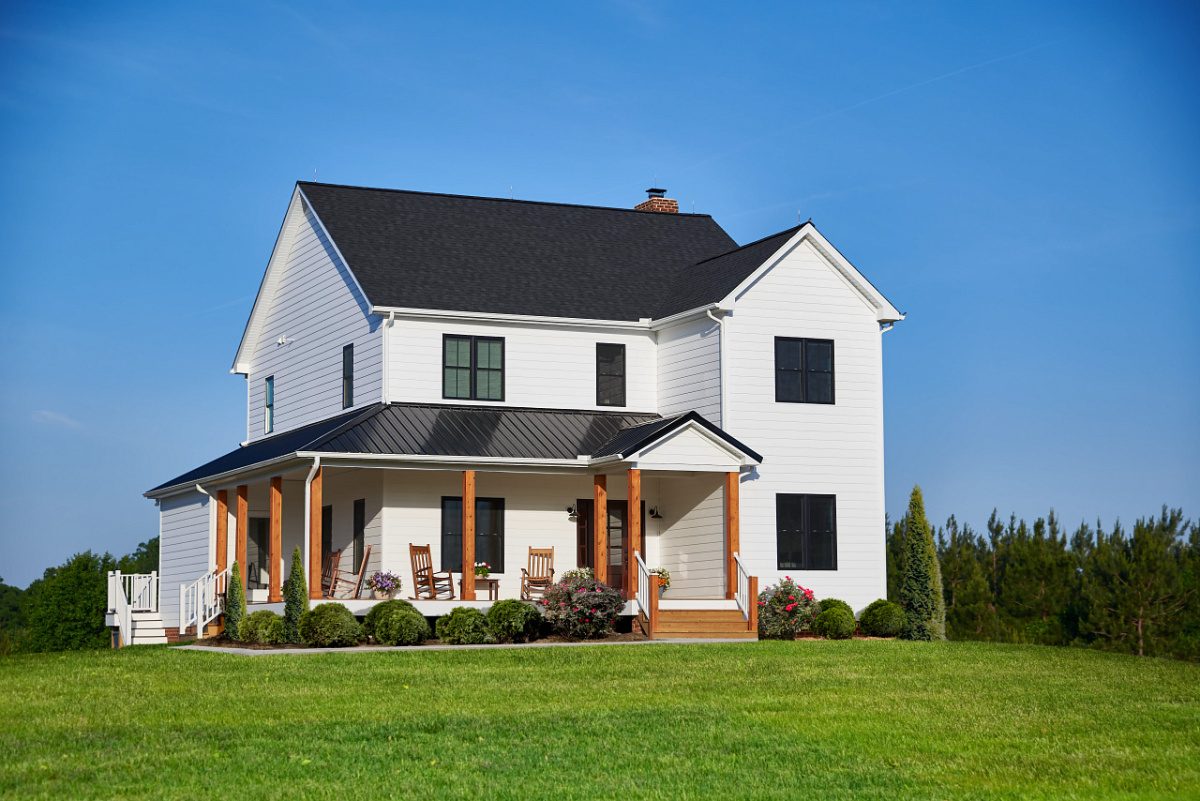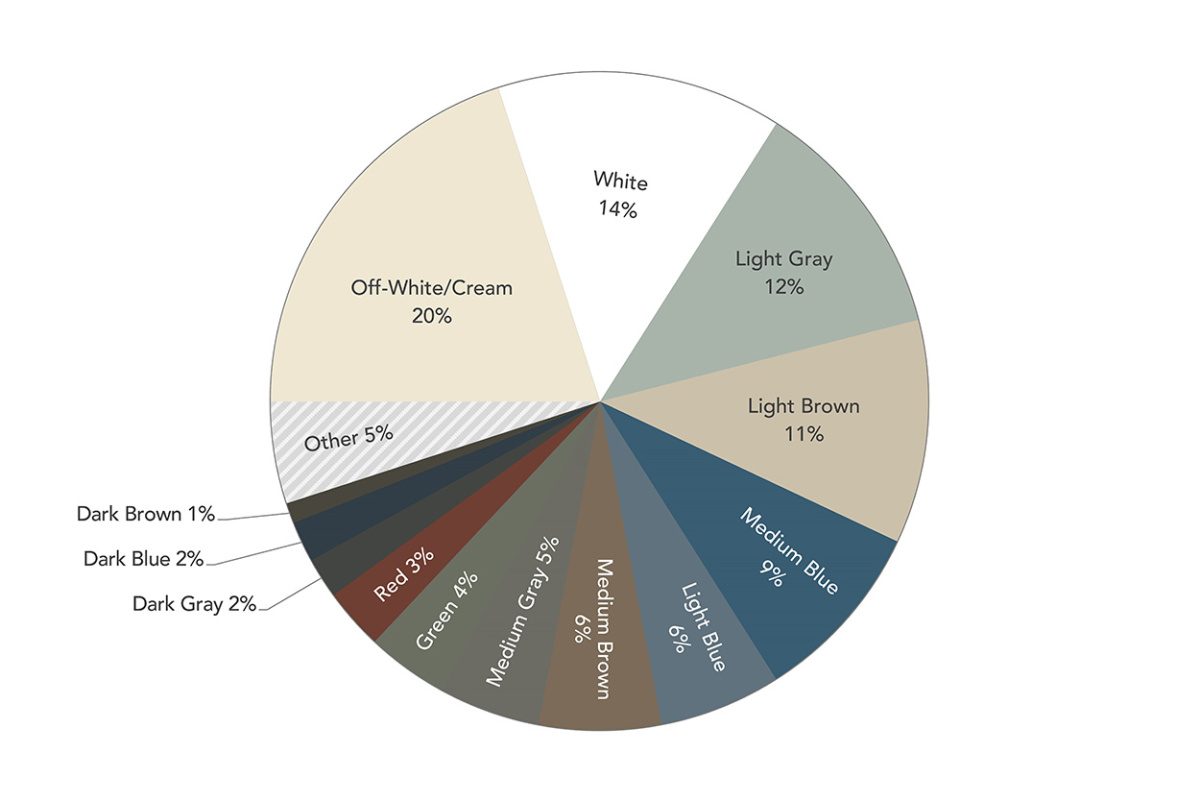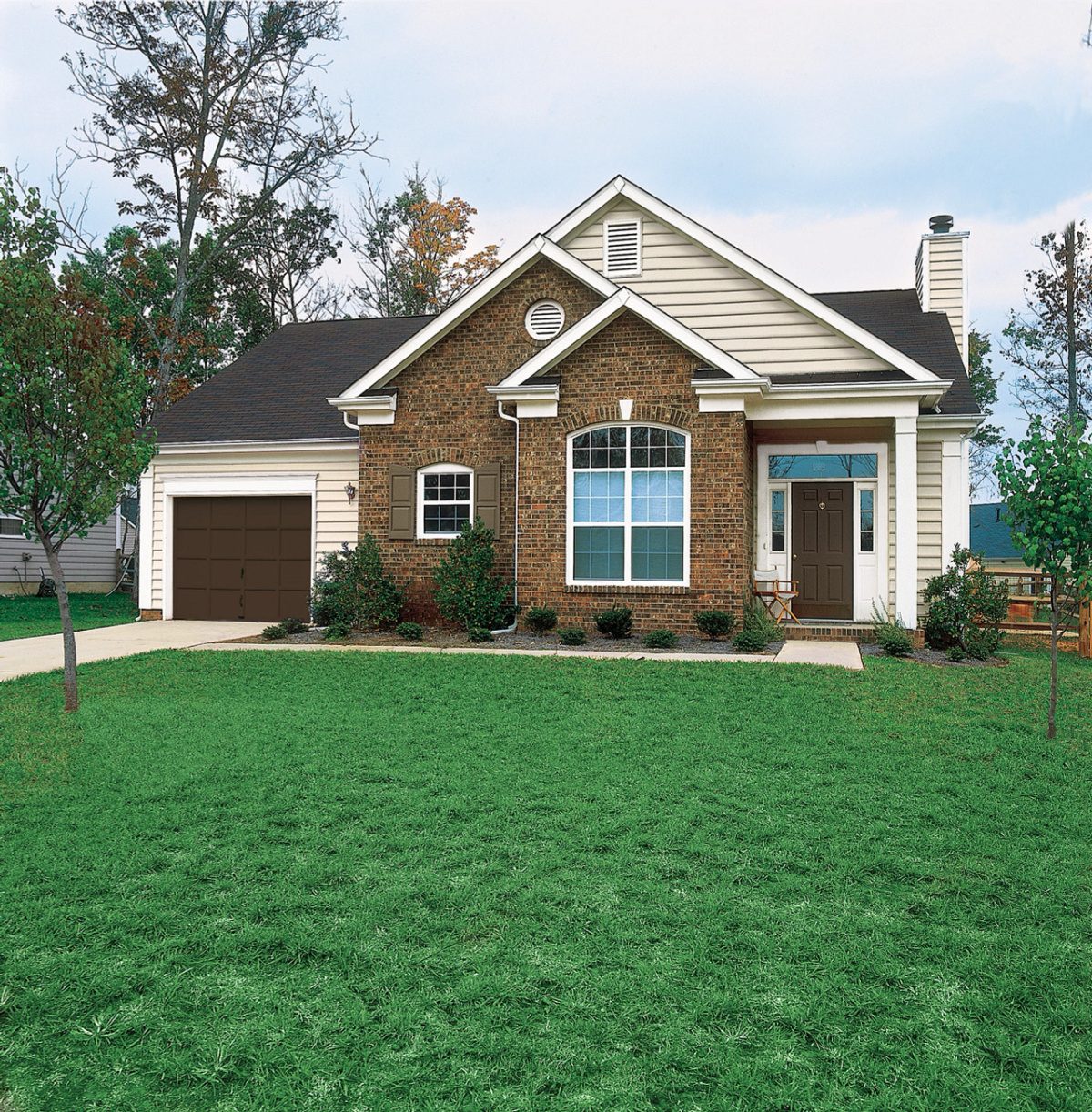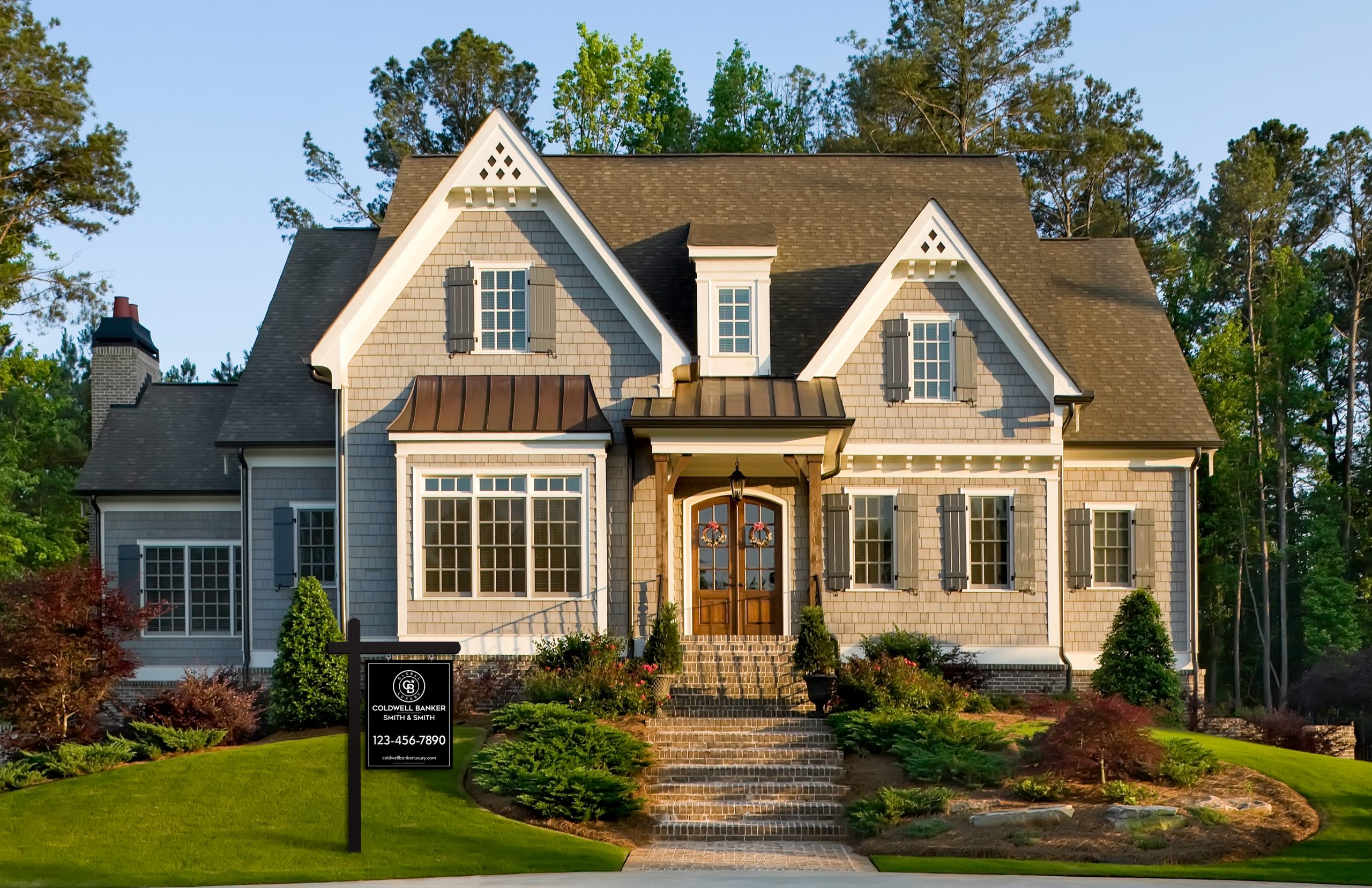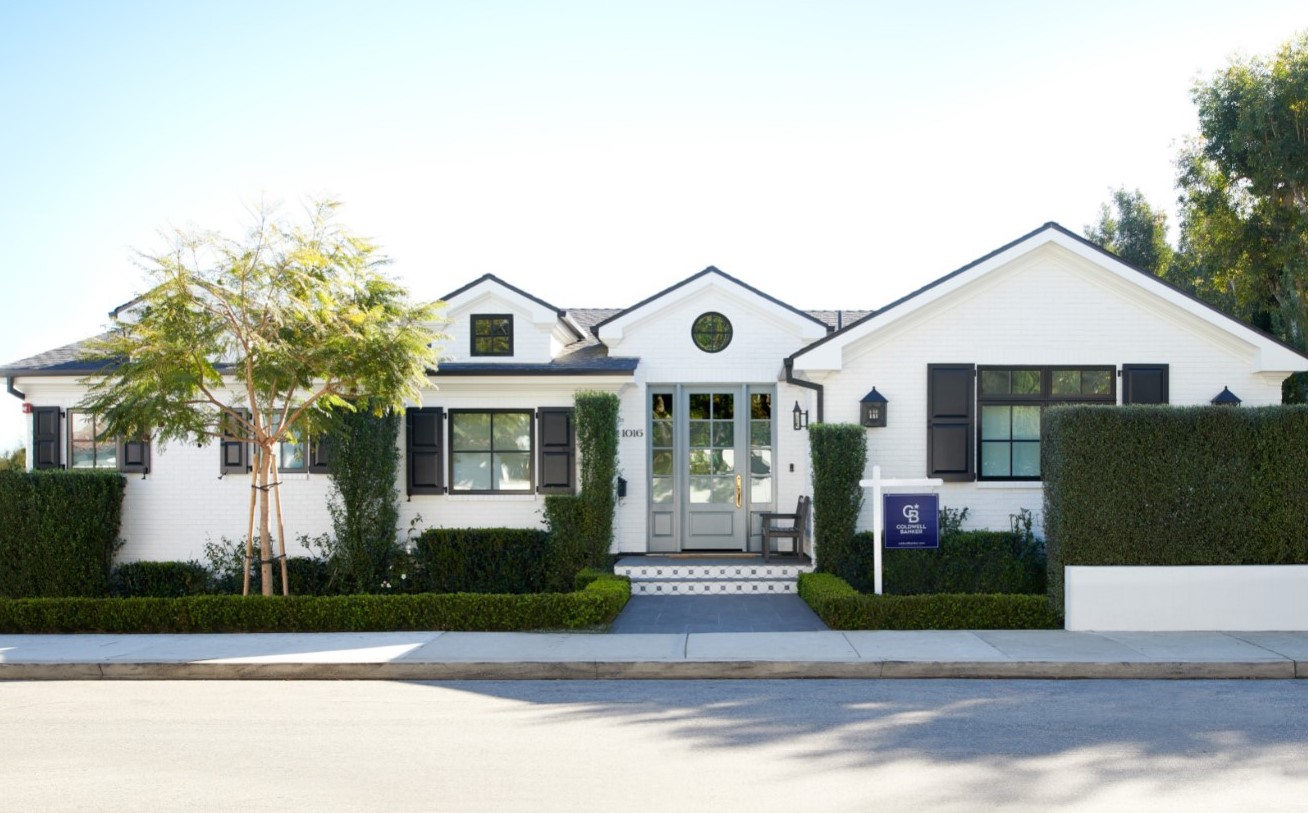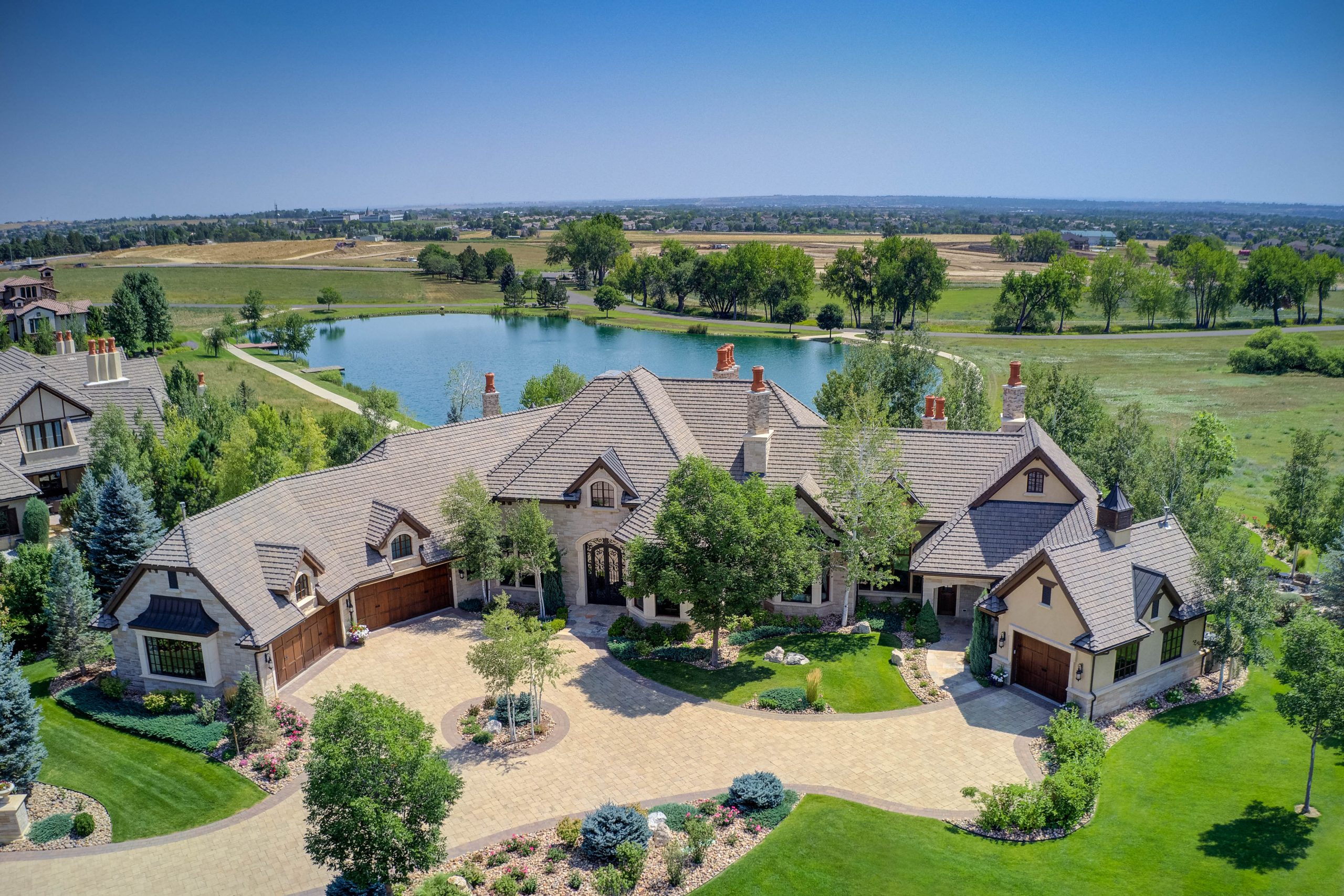
The majority of homeowners say they would like to lighten up their home’s exterior with a neutral color palette, according to a new survey of more than 1,400 respondents conducted by The Harris Poll and commissioned by Alside, an exterior building product firm. The top five most popular siding colors for 2023, as identified by survey respondents, are:
Off-white/cream
White
Light gray
Light brown
Medium blue
“It’s interesting to compare the national survey data to what we’re seeing in the market,” says Chase Creighton, business director of vinyl & composite cladding for homebuilding firm Associated Materials. “The farmhouse trend is driving more of the preference of homeowners choosing white and light colors. It’s possible, too, that cost may be a driver. As building material prices have risen, consumers may have gravitated toward lower cost options and away from premium colors.”
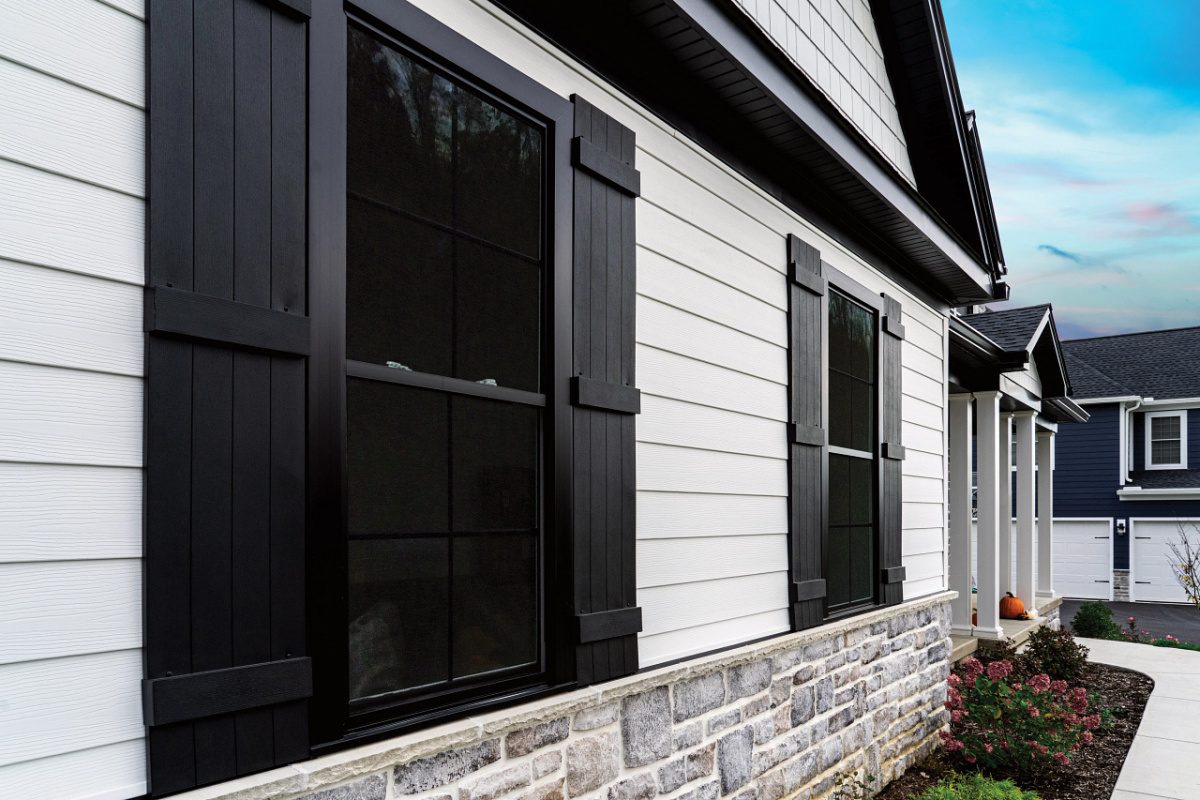
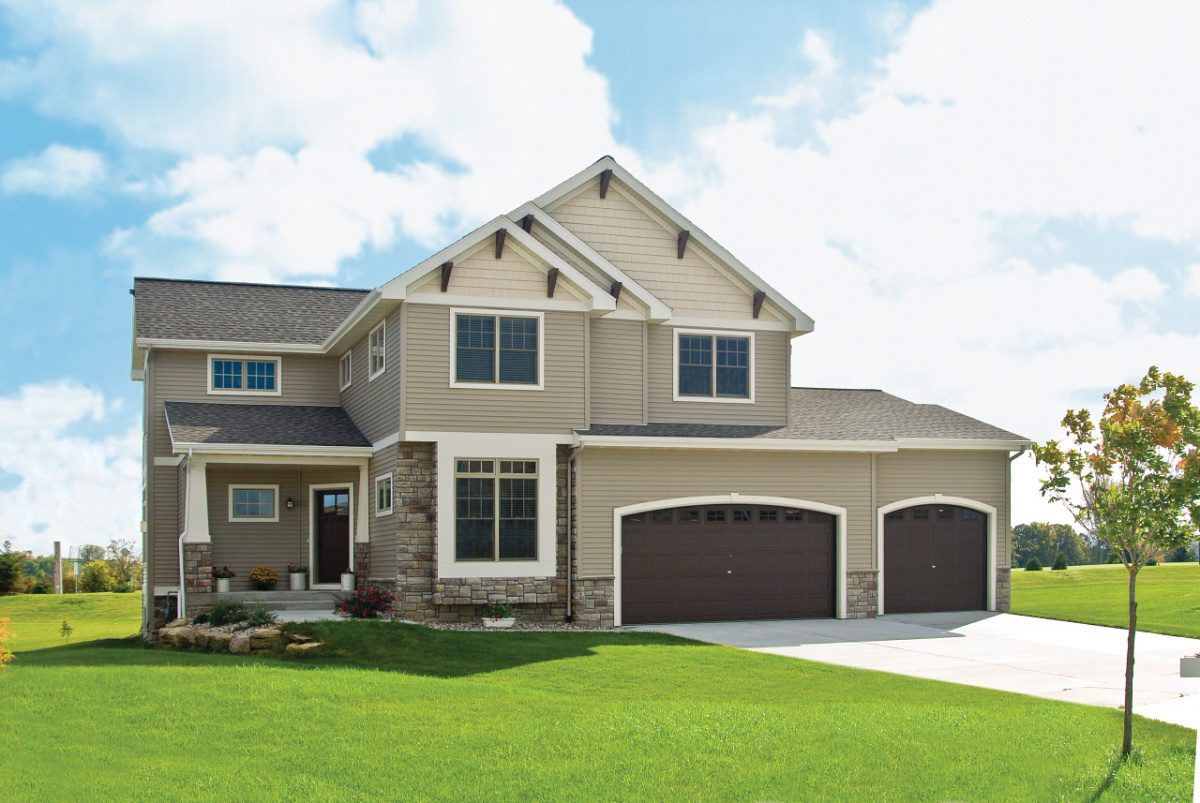
In fact, Alside, in its review of its company’s sales data, found that demand for white siding paint has more than doubled since 2018. View some of the leading siding colors below.
Every house has a unique architectural style, and sometimes it has two or more. Renovations and new, eclectic mixes make fitting a home into one specific category daunting or even impossible. Thankfully, there’s no need to memorize complicated architectural terminology. REALTOR® Magazine has compiled a guide to common residential architectural styles. Read about the details that give a home character, history, and romance.
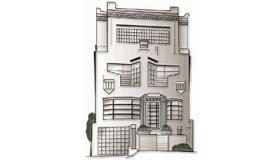
The 1925 Paris Exhibition Internationale des Arts Decoratifs launched the Art Deco style, which echoed the Machine Age with geometric decorative elements and a vertically oriented design. This distinctly urban style was never widely used in residential buildings; it was more widespread in public and commercial buildings of the period.
Towers and other projections above the roofline enhance the vertical emphasis of this style, which was popularized by Hollywood movies of the 1930s. Flat roofs, metal window casements, and smooth stucco walls with rectangular cut-outs mark the exteriors of Art Deco homes. Facades are typically flush with zigzags and other stylized floral, geometric, and “sunrise” motifs. By 1940 the Art Deco style had evolved into “Art Moderne,” which features curved corners, rectangular glass-block windows, and a boat-like appearance. Popularized in the United States by Finnish architect Eliel Saarinen, the style enjoyed a revival in the 1980s.
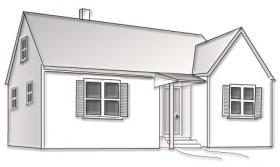
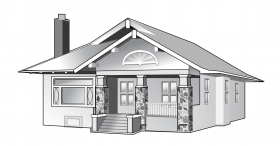
These narrow, rectangular one and one-half story houses originated in California during the 1880s as a reaction to the elaborate decoration of Victorian homes. The style then moved eastward to the Midwest in the early 20th century, where it remained popular until the Great Depression. Bungalows have low-pitched gabled or hipped roofs and small covered porches at the entry. The style became so popular that you could order a bungalow kit from Sears and Roebuck catalog. The name “bungalow” had its origins in India, where it indicated a small, thatched home.
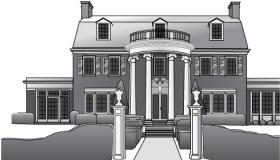
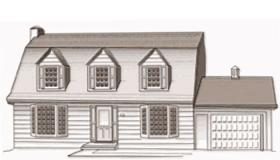
Some of the first houses built in the United States were Cape Cods. The original colonial Cape Cod homes were shingle-sided, one-story cottages with no dormers. During the mid-20th century, the small, uncomplicated Cape Cod shape became popular in suburban developments. A 20th-century Cape Cod is square or rectangular with one or one-and-a-half stories and steeply pitched, gabled roofs. It may have dormers and shutters. The siding is usually clapboard or brick.
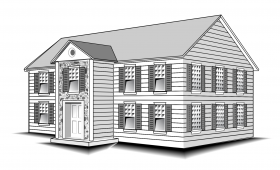
America’s colonial period encompassed a number of housing types and styles. For more information about Colonial styles, see Cape Cod, Saltbox, Georgian, and Dutch Colonial. However, when we speak of the Colonial style, we often are referring to a rectangular, symmetrical home with bedrooms on the second floor. The double-hung windows usually have many small, equally sized square panes.
During the late 1800s and throughout the 20th century, builders borrowed Colonial ideas to create refined Colonial Revival homes with elegant central hallways and elaborate cornices. Unlike the original Colonials, Colonial Revival homes are often sided in white clapboard and trimmed with black or green shutters.
You know them by their odd-sized and often tall windows, their lack of ornamentation, and their unusual mixtures of wall materials—stone, brick, and wood, for instance. Architects designed Contemporary-style homes (in the Modern family) between 1950 and 1970, and created two versions: the flat-roof and gabled types. The latter is often characterized by exposed beams. Both breeds tend to be one-story tall and were designed to incorporate the surrounding landscape into their overall look.
Popularized at the turn of the 20th century by architect and furniture designer Gustav Stickley in his magazine, The Craftsman, the Craftsman-style bungalow reflected, said Stickley, “a house reduced to it’s simplest form… its low, broad proportions and absolute lack of ornamentation gives it a character so natural and unaffected that it seems to… blend with any landscape.”
The style, which was also widely billed as the “California bungalow” by architects such as Charles Sumner Greene and Henry Mather Greene, featured overhanging eaves, a low-slung gabled roof, and wide front porches framed by pedestal-like tapered columns. Material often included stone, rough-hewn wood, and stucco. Many homes have wide front porches across part of the front, supported by columns.
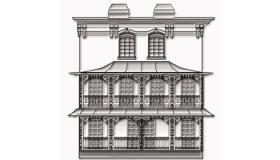
The Creole Cottage, which is mostly found in the South, originated in New Orleans in the 1700s. The homes are distinguished by a front wall that recedes to form a first-story porch and second-story balcony that stretch across the entire front of the structure. Full-length windows open into the balconies, and lacy ironwork characteristically runs across the second-story level. These two- and three-story homes are symmetrical in design with front entrances placed at the center.
“Creole French,” a variation of the basic Creole design, came into vogue in southern states in the 1940s and 1950s.
This American style originated in homes built by German, or “Deutsch” settlers in Pennsylvania as early as the 1600s. A hallmark of the style is a broad gambrel roof with flaring eaves that extend over the porches, creating a barn-like effect. Early homes were a single room, and additions were added to each end, creating a distinctive linear floor plan. End walls are generally of stone, and the chimney is usually located on one or both ends. Double-hung sash windows with outward swinging wood casements, dormers with shed-like overhangs, and a central Dutch double doorway are also common. The double door, which is divided horizontally, was once used to keep livestock out of the home while allowing light and air to filter through the open top. The style enjoyed a revival during the first three decades of the 20th century as the country looked back with nostalgia to its colonial past.
Ubiquitous up and down the East Coast, Federal-style architecture dates from the late 1700s and coincided with a reawakening of interest in classical Greek and Roman culture. Builders began to add swags, garlands, elliptical windows, and other decorative details to rectangular Georgian houses. The style that emerged resembles Georgian, but is more delicate and more formal. Many Federal-style homes have an arched Palladian window on the second story above the front door. The front door usually has sidelights and a semicircular fanlight. Federal-style homes are often called “Adam” after the English brothers who popularized the style.
Balance and symmetry are the ruling characteristics of this formal style. Homes are often brick with detailing in copper or slate. Windows and chimneys are symmetrical and perfectly balanced, at least in original versions of the style. Defining features include a steep, high, hip roof; balcony and porch balustrades; rectangle doors set in arched openings; and double French windows with shutters. Second-story windows usually have a curved head that breaks through the cornice.
The design had its origins in the style of rural manor homes, or chateaus, built by the French nobles during the reign of Louis XIV in the mid-1600s. The French Provincial design was a popular Revival style in the 1920s and again in the 1960s.
Befitting a king—in fact, the style is named for four King Georges of England—Georgian homes are refined and symmetrical with paired chimneys and a decorative crown over the front door. Modeled after the more elaborate homes of England, the Georgian style dominated the British colonies in the 1700s. Most surviving Georgians sport side-gabled roofs, are two to three stories high, and are constructed in brick. Georgian homes almost always feature an orderly row of five windows across the second story. Modern-day builders often combine features of the refined Georgian style with decorative flourishes from the more formal Federal style.
The influence of English romanticism and the mass production of elaborate wooden millwork after the Industrial Revolution fueled the construction of Gothic Revival homes in the mid-1800s. These picturesque structures are marked by “Gothic” windows with distinctive pointed arches; exposed framing timbers; and steep, vaulted roofs with cross-gables. Extravagant features may include towers and verandas. Ornate wooden detailing is generously applied as gable, window, and door trim.
American architects Alexander Jackson Davis and Andrew Jackson Downing championed Gothic in domestic buildings in the 1830s. Most Gothic Revival homes were constructed between 1840 and 1870 in the Northeast.
This style is predominantly found in the Midwest, South, New England, and Midatlantic regions, though you may spot subtypes in parts of California. Its popularity in the 1800s stemmed from archeological findings of the time, indicating that the Grecians had spawned Roman culture. American architects also favored the style for political reasons: the War of 1812 cast England in an unfavorable light; and public sentiment favored the Greeks in their war for independence in the 1820s.
Identify the style by its entry, full-height, or full-building width porches, entryway columns sized in scale to the porch type, and a front door surrounded by narrow rectangular windows. Roofs are generally gabled or hipped. Roof cornices sport a wide trim. The front-gable found in one subtype became a common feature in Midwestern and Northeastern residential architecture well into the 20th century. The townhouse variation is made up of narrow, urban homes that don’t always feature porches. Look for townhouses in Boston, Galveston, Texas., Mobile, Ala., New York, Philadelphia, Richmond, Va., and Savannah, Ga.
Initiated by European architects—such as Mies van der Rohe—in the early 20th century, this is the style that introduced the idea of exposed functional building elements, such as elevator shafts, ground-to-ceiling plate glass windows, and smooth facades.
The style was molded from modern materials—concrete, glass, and steel—and is characterized by an absence of decoration. A steel skeleton typically supports these homes. Meanwhile, interior and exterior walls merely act as design and layout elements, and often feature dramatic, but nonsupporting projecting beams and columns. With its avant-garde elements, naturally the style appeared primarily in the East and in California.
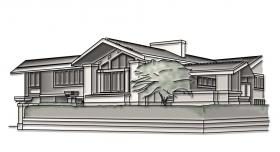
Italianate homes, which appeared in Midwest, East Coast, and San Francisco areas between 1850 and 1880, can be quite ornate despite their solid square shape. Features include symmetrical bay windows in front; small chimneys set in irregular locations; tall, narrow, windows; and towers, in some cases. The elaborate window designs reappear in the supports, columns, and door frames.

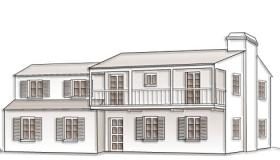
This style emerged in 1853 when Boston merchant Thomas Larkin relocated to Monterey, Calif. The style updates Larkin’s vision of a New England Colonial with an Adobe brick exterior. The Adobe reflected an element of Spanish Colonial houses common in the Monterey area at the time. Later Monterey versions merged Spanish Eclectic with Colonial Revival styles to greater or lesser extents.
Larkin’s design also established a defining feature of Montereys: a second-floor with a balcony. At the time one-story homes dominated the Bay Area.
In today’s Montereys, balcony railings are typically styled in iron or wood; roofs are low pitched or gabled and covered with shingles—variants sometimes feature tiles—and exterior walls are constructed in stucco, brick, or wood.
Born out of the fundamental need for shelter, National-style homes, whose roots are set in Native American and pre-railroad dwellings, remain unadorned and utilitarian. The style is characterized by rectangular shapes with side gabled roofs or square layouts with pyramidal roofs. The gabled-front-and-wing style pictured here is the most prevalent type with a side-gabled wing attached at a right angle to the gabled front. Two subsets of the National style, known as “hall-and-parlor family” and “I-house,” are characterized by layouts that are two rooms wide and one room deep. Massed plan styles, recognized by a layout more than one room deep, often sport side gables and shed-roofed porches. You’ll find National homes throughout the country.
A well-publicized, world-class event can inspire fashion for years. At least that’s the case with the 1893 World’s Columbian Exposition in Chicago, which showcased cutting-edge classical buildings that architects around the country emulated in their own residential and commercial designs. The Neoclassical style remained popular through the 1950s in incarnations from one-story cottages to multilevel manses. Its identifying Ionic or Corinthian columned porches often extend the full height of the house. Also typical: symmetrical facades, elaborate, decorative designs above and around doorways, and roof-line balustrades (low parapet walls).
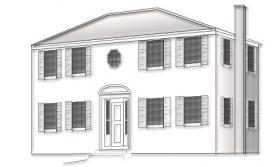
In suburban Chicago in 1893, Frank Lloyd Wright, America’s most famous architect, designed the first Prairie-style house, and it’s still a common style throughout the Midwest. Prairie houses come in two styles—boxy and symmetrical or low-slung and asymmetrical. Roofs are low-pitched, with wide eaves. Brick and clapboard are the most common building materials. Other details: rows of casement windows; one-story porches with massive square supports; and stylized floral and circular geometric terra-cotta or masonry ornamentation around doors, windows, and cornices.
Taking its cues from Native American and Spanish Colonial styles, chunky looking Pueblos emerged around 1900 in California, but proved most popular in Arizona and New Mexico, where many original designs still survive.
The style is characterized by flat roofs, parapet walls with round edges, earth-colored stucco or adobe-brick walls, straight-edge window frames, and roof beams that project through the wall. The interior typically features corner fireplaces, unpainted wood columns, and tile or brick floors.
A sub-style of the late Victorian era, Queen Anne is a collection of coquettish detailing and eclectic materials. Steep cross-gabled roofs, towers, and vertical windows are all typical of a Queen Anne home. Inventive, multistory floor plans often include projecting wings, several porches and balconies, and multiple chimneys with decorative chimney pots.
Wooden “gingerbread” trim in scrolled and rounded “fish-scale” patterns frequently graces gables and porches. Massive cut stone foundations are typical of period houses. Created by English architect Richard Norman Shaw, the style was popularized after the Civil War by architect Henry Hobson Richardson and spread rapidly, especially in the South and West.
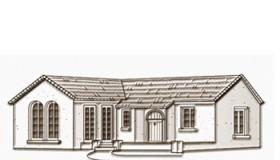
Sometimes called the California ranch style, this home in the Modern family, originated there in 1930s. It emerged as one of the most popular American styles in the 1950s and 60s, when the automobile had replaced early 20th-century forms of transportation, such as streetcars.
Now mobile homebuyers could move to the suburbs into bigger homes on bigger lots. The style takes its cues from Spanish Colonial and Prairie and Craftsman homes, and is characterized by its one-story, pitched-roof construction, built-in garage, wood or brick exterior walls, sliding and picture windows, and sliding doors leading to patios.
Although they borrow from the Georgian’s classic lines, Regency homes eschew ornamentation. They’re symmetrical, two or three stories, and usually built in brick. Typically, they feature an octagonal window over the front door, one chimney at the side of the house, double-hung windows, and a hip roof. They’ve been built in the United States since the early 1800s.
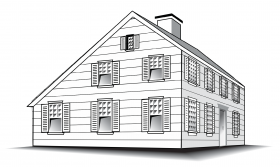
This New England Colonial style got its name because the sharply sloping gable roof that resembled the boxes used for storing salt. The step roofline often plunges from two and one-half stories in front to a single story in the rear. In Colonial times, the lower rear portion was often used as a partially enclosed shed, which was oriented north as a windbreak. These square or rectangular homes typically have a large central chimney and large, double-hung windows with shutters. Exterior walls are made of clapboard or shingles. In the South this style is known as a “cat’s slide” and was a popular in the 1800s.
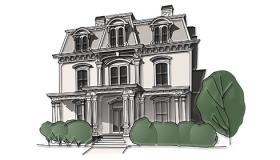
Popular in the Midwest and Northeast, this Victorian style was fashionable for public buildings during Ulysses S. Grant’s presidency, but its elaborate, costly detail fell out of favor in the late 1800s for economic reasons. Second empire homes feature windows, molded cornices, and decorative brackets under the eaves. One subtype sports a rectangular tower at the front and center of the structure.
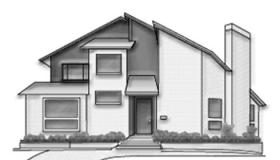
A subset of the Modern style, Shed homes were particular favorites of architects in the 1960s and 1970s. They feature multiple roofs sloping in different directions, which creates multigeometric shapes; wood shingle, board, or brick exterior cladding; recessed and downplayed front doorways; and small windows. There’s virtually no symmetry to the style.
This American style originated in cottages along the trendy, wealthy Northeastern coastal towns of Cape Cod, Long Island, and Newport in the late 19th century. Architectural publishers publicized it, but the style was never as popular around the country as the Queen Anne. Shingle homes borrow wide porches, shingles, and asymmetrical forms from the Queen Anne.
They’re also characterized by unadorned doors, windows, porches, and cornices; continuous wood shingles; a steeply pitched roof line; and large porches. The style hints at towers, but they’re usually just extensions of the roof line.
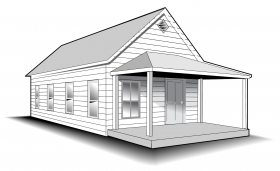
Tradition has it that if you fire a shotgun through the front doorway of this long, narrow home, the bullet will exit directly through the back door. The style is characterized by a single story with a gabled roof. Shotguns are usually only one room wide, with each room leading directly into the next. Exterior features include a vent on the front gable and a full front porch trimmed with gingerbread brackets and ornamentation. Mail-order plans and parts for shotgun homes were widely available at the turn-of-the-century, making it a popular, low-cost structure to build in both urban and suburban settings.
Most common in the Southwest and Florida, Spanish-style architecture takes its cues from the missions of the early Spanish missionaries—such as the one at San Juan Capistrano in California—and includes details from the Moorish, Byzantine, Gothic, and Renaissance architectural styles. The houses usually have low-pitched tiled roofs, white stucco walls, and rounded windows and doors. Other elements may include scalloped windows and balconies with elaborate grillwork, decorative tiles around doorways and windows, and a bell tower or two.
A Modern style that architects created to sequester certain living activities–such as sleeping or socializing–split levels offered an multilevel alternative to the ubiquitous style in the 1950s. The nether parts of a typical design were devoted to a garage and TV room; the midlevel, which usually jutted out from the two-story section, offered “quieter” quarters, such as the living and dining rooms; and the area above the garage was designed for bedrooms.
Found mostly in the East and Midwest, split-levels, like their Ranch counterparts, were constructed with various building materials.
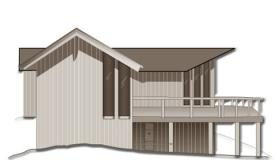
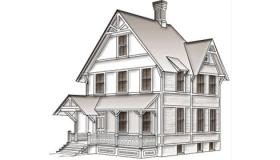
A member of the Victorian family, the Stick house boasts a lot of detailing. However, few Stick homes incorporate all the possible features. Typical characteristics include gabled, steeply pitched roofs with overhangs; wooden shingles covering the exterior walls and roof; horizontal, vertical, or diagonal boards–the “sticks” from which it takes its name–that decorate the cladding; and porches.
You’ll find traditional sticks in the Northeast and their sister, the Western Stick, in California. The Western Stick is rectangular with sliding glass doors, a small chimney, and large panes of glass.
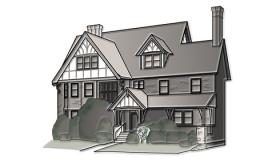
This architecture style was popular in the 1920s and 1930s and continues to be a mainstay in suburbs across the United States. The defining characteristics are half-timbering on bay windows and upper floors, and facades that are dominated by one or more steeply pitched cross gables. Patterned brick or stone walls are common, as are rounded doorways, multi-paned casement windows, and large stone chimneys. A subtype of the Tudor Revival style is the Cotswold Cottage. With a sloping roof and a massive chimney at the front, a Cotswold Cottage may remind you of a picturesque storybook home.
Victorian architecture dates from the second half of the 19th century, when America was exploring new approaches to building and design.
Advancements in machine technology meant that Victorian-era builders could easily incorporate mass-produced ornamentation such as brackets, spindles, and patterned shingles. The last true Victorians were constructed in the early 1900s, but contemporary builders often borrow Victorian ideas, designing eclectic “neo-Victorians.” These homes combine modern materials with 19th century details, such as curved towers and spindled porches. A number of Victorian styles are recreated on the fanciful “Main Street” at Disney theme parks in Florida, California, and Europe.
As Yellowstone fans well know, patriarch John Dutton, played by Academy Award-winning actor Kevin Costner, has spent five seasons trying to hold on to his Dutton Ranch. It’s not hard to see why. I mean, have you seen that place?
In real life, Costner owns a secluded Aspen spread that’s equally beguiling, and it’s just become available for rent for $36,000 per night.
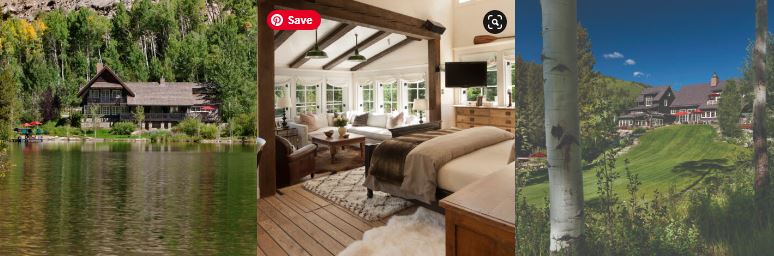
Dunbar Ranch is a dreamy 160-acre compound minutes from downtown yet ensconced in a pine forest that shelters it from view. Layered vistas of sparkling water, towering trees, and snow-covered hills make it look like a movie set background. Here, the Roaring Fork River, Independence Pass, North Star Nature Preserve, and Aspen Mountain are all within sight. This is Aspen in all its glory.
With three separate homes amassing 12 bedrooms and 12 baths in 5,800 square feet, you can accommodate up to 34 guests and pamper them with around-the-clock caretakers. The beautiful main residence sleeps 16 and offers welcoming entertainment spaces dressed by chunky wood beams and rustic luxe décor, a gourmet kitchen, soaring ceilings, and a massive heated outdoor space for entertaining. The primary suite is luxuriously appointed and features an attached sitting room surrounded by lush greenery and some Hollywood-worthy whimsy — in the form of a trap door that leads down a staircase to a private grotto with spa and waterfall.
The serene Lakehouse adds sleeping space for 12, along with a dramatic, double-sided floor-to-ceiling fireplace in the main living area, an exquisite wood and stone kitchen, and ideal indoor-outdoor connection to showcase the lakefront vantage point. Another six people can bunk in the River House, where they’ll enjoy an eat-in kitchen and wraparound windows to drink in the views.
The property doesn’t just allow you to channel your inner Dutton. It also gives you plenty of Kevin Costner vibes. Dunbar Ranch is named after Lt. John Dunbar, Costner’s character in his 1990 Academy Award-winning film Dances with Wolves. And if you meander along the wilderness of Dunbar Ranch, you’ll happen upon a literal Field of Dreams — a private baseball field inspired by Costner’s 1989 hit film, complete with lights and music.
There’s no shortage of other activities to enjoy on the ranch. Go fishing, tubing, paddle boarding, kayaking, or horseback riding. Partake of the sledding hill. Skate on the private ice rink. Do some archery. Or simply gaze out among the spectacular scenery, fulfilling your Yellowstone fantasy.
Dunbar Ranch is listed for rent for $36,000 per day by Amy Mottier of Coldwell Banker Mason Morse-Aspen.
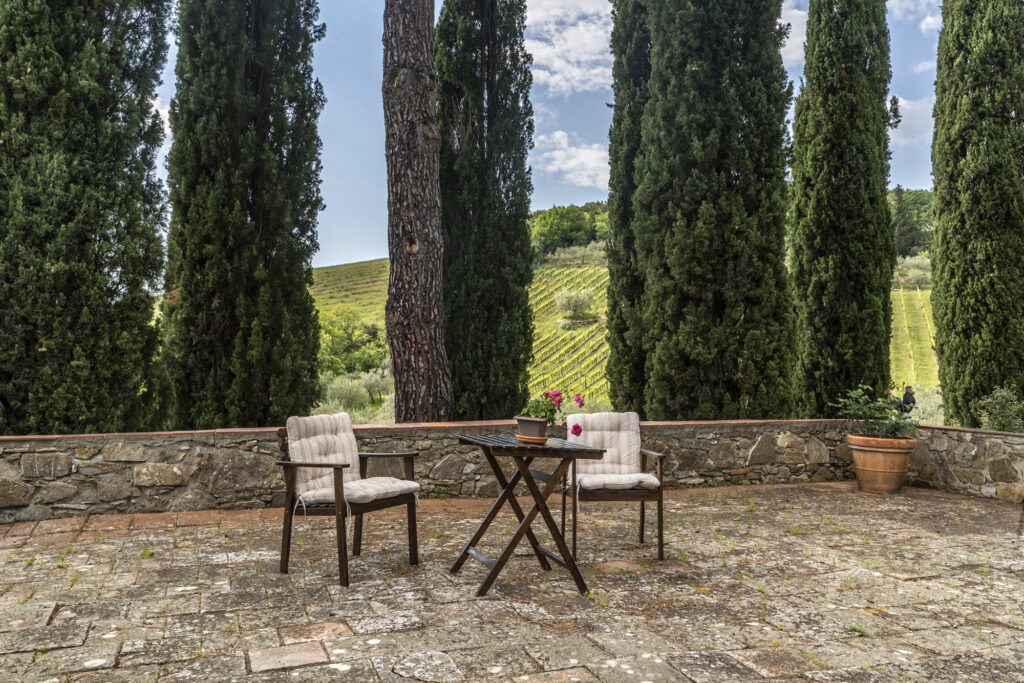
Maybe it’s the influence of The White Lotus, but it seems like everyone is dreaming about “la dolce vita,” these days. And when you start to explore the many regions of Italy and all they have to offer, its no wonder you could have a tough time deciding where to visit or even invest in your next home. For your consideration, may we suggest you look at Siena, a small city of roughly 50,000 within the Tuscany region. Famous for its wine varietals, picturesque villages, and home to the epicenter of Italian Renaissance, Florence (or, Firenze), Tuscany may be the perfect location to start your Italian chapter. Siena has small-town charm with big-city proximity, and you can find the perfect domicile whether it’s a village apartment or a castle or villa nestled amongst the vineyards.
“Our history dates back to the Etruscans and we have one of the largest cathedrals in Europe, among many other Medieval architectural jewels,” boasts Moira Mancini, broker-owner of Coldwell Banker Chianti Heritage. “And of course, The Palio is a famous annual horse race that offers one of the best-known festivals in all of Europe.” Maybe it’s time to pack your bags and explore Siena and all it has to offer. After all, the next Palio race takes place on July 2, 2023; plenty of time to plan your trip and visit the Coldwell Banker Chianti Heritage office!
Where do you live: Siena (Tuscany), Italy
What is the perfect weekend day like: Saturday is a good time for a walk in a historical town, like Pienza, San Gimignano, Val d’Orcia (three of the most beautiful UNESCO world-wide heritage sites) or in a wine kingdom like Montalcino. Have lunch with traditional dishes in al-fresco restaurant placed in a medieval square out in the Chianti area or nearby Montalcino. In the afternoon there are plenty of choices: driving a Vespa or a small car through the Tuscan hills embellished by vineyards and olive trees farms till you reach your own villa to enjoy the evening fresh air with an exquisite glass of wine. Sunday morning in both Siena and Florence offers a wide choice of museums and shopping alternatives. The afternoon is perfect to taste Brunello di Montalcino at some of the many vine cellars located in the area.
What are the common modes of transportation there: It is important to distinguish between downtowns (which are to be visited by walking) and surrounding areas characterized by small villages which have to be reached by a vehicle (car, moto, bus).
Tell us about the foods your area is known for: Tuscan food is based on traditional peasant cuisine strongly re-visited with a modern twist. The most popular dishes are based on homemade soups such as ribollita (soup made with vegetables and bread, usually leftovers!). Meat is also essential and fills the tables of families and restaurants with grilled pork and veal steaks “Fiorentine”. Important restaurants have earned one, two or three Michelin stars as a distinction sign of their superb cuisine and inventiveness.
What is your favorite meal? At home or at a restaurant: Among my favourite food there are “pici” pasta with “Chianina sauce”. They are a handmade pasta, like spaghetti but much thicker and topped with a sauce made from Cinta Senese (a breed of pig native to the Sienese territory). Also, we love “bruschetta,” grilled bread scented with garlic and immersed in extra-virgin olive oil and complemented by a traditional pork cold cut, a grilled steak, or a dish of local pecorino cheese.
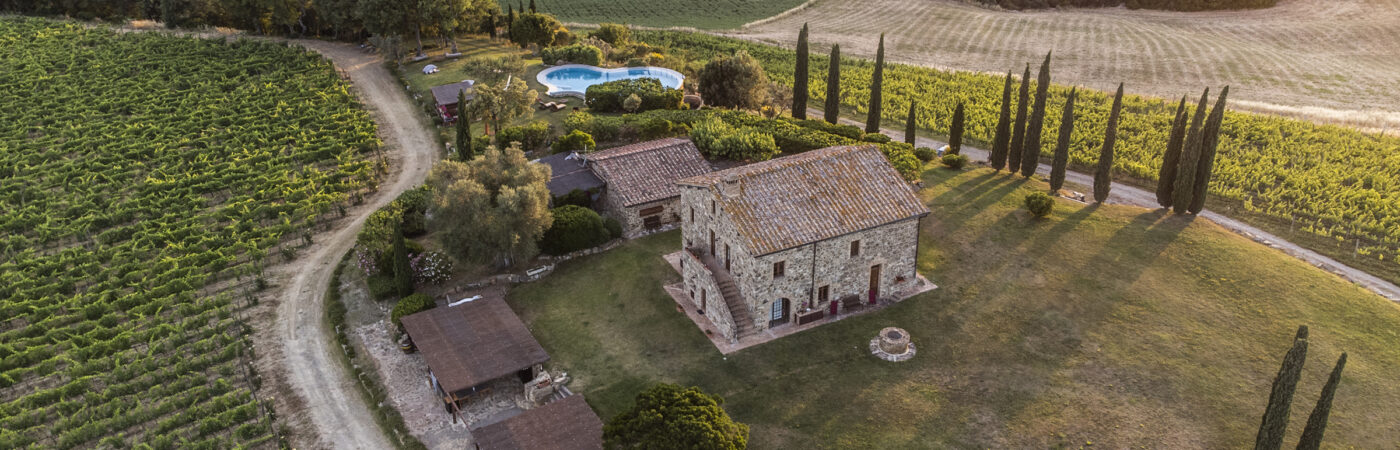
Where do you recommend someone vacation in your region, why: Rent a beautiful villa with a swimming pool located in between Siena and Florence, in the middle of the vineyards and olive groves, a few kilometers away from small villages where you can dine in the evening.
What is your favorite recreational or leisure time activity: Hiking and biking are by far the most popular sport activities, followed by other recreational occupations like horse riding, sightseeing and museum visits.
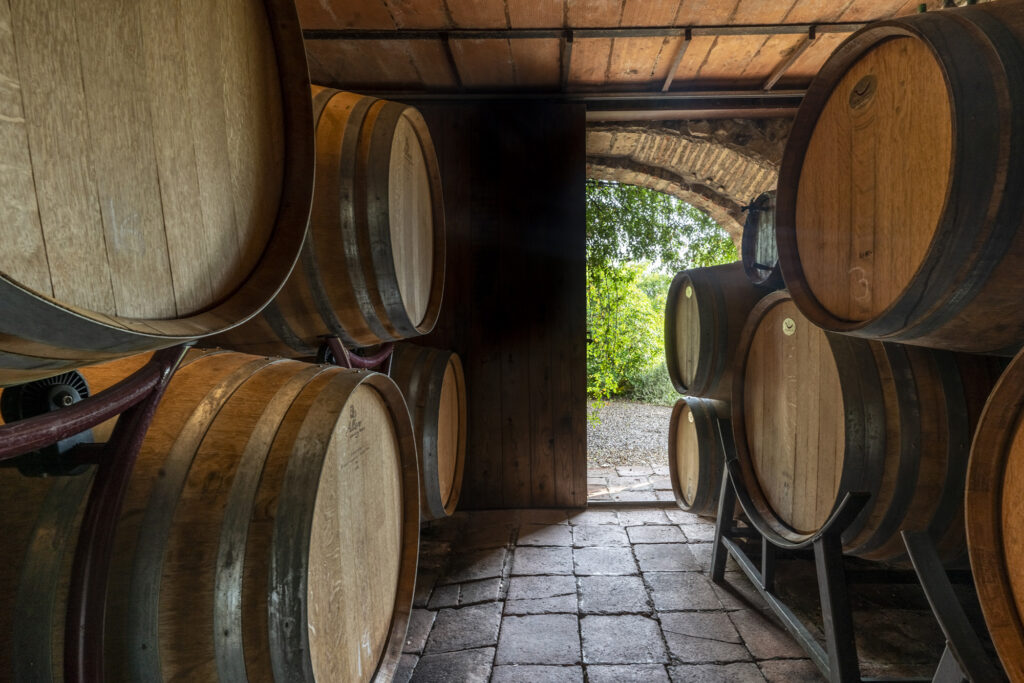
Is there a specialty your area is known for: There are several wine varieties from our region known worldwide: Chianti, Brunello, Nobile di Montepulciano, Morellino di Scansano, Vernaccia di San Gimignano are among the many wines obtained in the area. Another well-known event is Palio di Siena, a horse race which is run In Siena main square twice a year in summer and which gather tens of thousands of people from all over the world.
Share a little known but interesting fact about your area: L’Eroica is a bike race in the Chianti area usually held by the end of the summer. This is a commemorative historical race that passes along various white roads (usually non-asphalt roads) at a controlled pace. Participants wear vintage or historically inspired cycling gear, on historical or vintage-style bikes. An average number of participants is around 10,000 people coming from every corner of the world.
If you were to live in any other region where we have a Coldwell Banker presence, where would it be and why: Apulia is a splendid region, with an astonishing seaside, traditional villages, and wonderful cuisine, which would be a gorgeous place to live as an alternative to Tuscany.
Key Facts:
Population: 3.7 million (2019)
Language(s) Spoken: Italian
Climate: Mediterranean
Currency: Euro
Territory Summary: Tuscany is a region in central Italy with an area of about 23,000 square kilometers (8,900 square miles) and a population of about 3.7 million inhabitants. The regional capital is Florence (Firenze). Tuscany is known for its landscapes, history, artistic legacy, and its influence on high culture. It is regarded as the birthplace of the Italian Renaissance and of the foundations of the Italian language (Dante Alighieri, Niccolo Machiavelli, Petrarch and many other poets had their birthplace in Tuscany). Tuscany is also known for its wines, including Chianti, Vino Nobile di Montepulciano, Morellino di Scansano, Brunello di Montalcino and white Vernaccia di San Gimignano. The gross domestic product (GDP) of the region was 117.5 billion euros in 2018, accounting for 6.7% of Italy’s economic output.
Industry Facts – Siena
Types of Architecture: Houses are built with bricks, sandstone, travertine, and wood for the fixtures. The interior elements that most of all retain the original charm of the house, are the terracotta tiles and the large beams of oak or chestnut wood which are composed of roofs and ceilings.
Price per Square Meter: Average 3,000 Euros per square meter (ranging from 2,200 to 7,000 Euro per square meter)
Average Sales Price: 1.5M Euros (ranging from 300k Euros for an apartment in historical hamlet to over 10M Euros for a castle or villa estate).
What’s one of the fastest and easiest ways to update a room? You guessed it – window treatments. Gone are the days of heavy, dark, drab curtains. Instead, you can refresh just about any space with a variety of modern options to fit every style and budget.
Now Trending Whether you’re creating a home office space, looking to be more eco-friendly or moving into a new home and want to add your own personal touches, window treatments can make all the difference.
If energy efficiency is on your list, you have many options to choose from. High-tech cellular shades offer temperature control capabilities in a variety of innovative designs. Roller shades have a modern, minimal look and provide UV ray protection while allowing ample natural light in. Blinds have also come a long way, now designed with modern patterns, textures and materials to enhance any space.
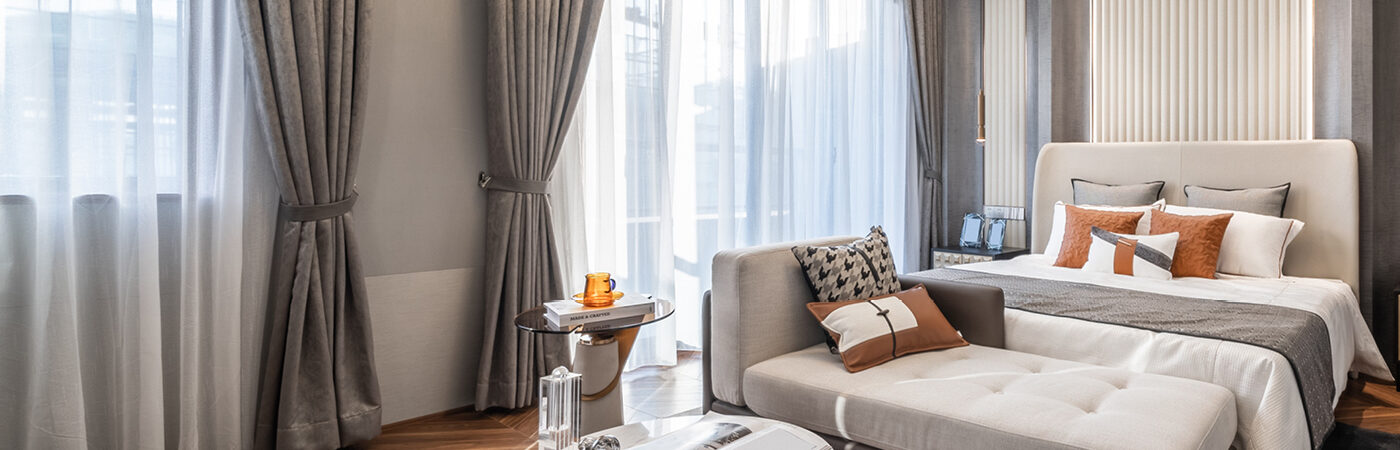
Bring on the Drama If you’re ready to breathe new life into a room and add a little drama, consider luxurious curtains. Depending on how much light you want, a sophisticated, patterned drape can set the mood and make a bold statement.
By introducing a pop of color, like a bold orange or deep red, you can give your space a dramatic new look. Not into vibrant tones? White window treatments can be just as impactful. Layer white shades with a gauzy curtain to create a romantic and whimsical feel. You could also inject a little boho chic into a room by pairing classic woven or bamboo shades with patterned drapery. Whatever you choose, curtains can easily give your home a whole new look in a matter of minutes.
Smart Tech Who would’ve thought that you’d be able to open and close your curtains with the touch of a button? Say hello to smart windows, which let you control your blinds, curtains or shades through either a remote control or handy app. You can easily set up a schedule or use the setting to adjust your window treatments without even having to leave your comfy couch.
Giving your interiors a fresh new look is easier than ever by simply by changing out your window treatments. Whether you’re creating a space that’s soft and serene or bright and bold, these ideas should help set you off on the right path.
With a mixture of the Argentinean, Andean and Bolivian cultures, cuisine influence and traditions, Salta offers the perks of a large city while keeping the pace and comfort of a small town. Mountains and rivers, impressive museums, candlelit cafes, and vibrant peñas (folk-music clubs), Salta has something for everyone.
Subtle sophistication? Check. Unique gastronomy? Check. Plaza-side romance? Check. The most touristed spot in northwest Argentina is calling your name! Commonly known as Salta la Linda, the translation of the name says it all… “Salta the Pretty”. With a mixture of the Argentinean, Andean and Bolivian cultures, cuisine influence and traditions, Salta offers the perks of a large city while keeping the pace and comfort of a small town. Mountains and rivers, impressive museums, candlelit cafes, and vibrant peñas (folk-music clubs), Salta has something for everyone.
In addition to the delicious foods, nature, and personality that the region is known for, Salta is also famous for their excellent quality wines, thanks to the Torrontés grape which is only found in Argentina. Torrontés has flavors of orange peel, peaches, honey, oregano, chamomile and muscat grape. The balance between acidity and fruit flavors make it appear as a sweet wine but turns out to be a magnificent dry wine. Pair your wine with delicious meals, spend a few days touring the sights of Salta, then rent a car to hit the road and explore the northwest. Read on to learn more!
Where do you live: I live in the capital city, Salta, of the Province of Salta (northwest region of Argentina)
What is the perfect weekend day like: A perfect day during the weekend is spent enjoying the great weather, amazing nature between the hills and valleys, local traditions such as gaucho parades and folklore festivals, and delicious regional food with family and friends. When the nighttime strikes, we enjoy the famous peñas (folk-music clubs) that always entertain and surprise with music, traditional dance and typical dishes such as the Argentinean empanadas.
What are the common modes of transportation there: People in Salta move around both in private vehicles and public transport, such as buses, taxis, or Remis (car-hire).
Tell us about the foods your area is known for: Salta is characterized by its amazing regional food. The flavors are combined from the Andean, Spanish and cosmopolitan culture- taking us on a journey of sensations. From typical empanadas and regional dishes to gourmet cuisine with products from the area, Salta has generated its own unique gastronomic identity. Salta provides places such as the San Miguel Market, shops, and warehouses with a variety of typical, healthy, and organic products to sell/use.
What is your favorite meal? At home or at a restaurant: My favorite food is rib roast and empanadas.
Where do you recommend someone vacation in your region, why: I recommend vacationing in our city because we have many local activities, and you can leave for excursions from the city to visit the best places in the region such as the Cafayate region, just two hours away. In the Cafayate region, you can enjoy the excellent wines and amazing weather. A trip not to be missed is El Tren de las Nubes (“the train to the clouds”). The Train to the Clouds is an iconic tourist attraction of the province of Salta. It crosses the plateau until it reaches 4,220 meters above sea level, crossing landscapes of valley and grasslands. This is the third highest railway on the planet and has rigorous international quality and safety standards.
Another town that you cannot miss is Purmamarca in the province of Jujuy, just a two-hour drive from Salta. The most amazing site you can visit in Purmamarca is the Hill of Seven Colors, declared a UNESCO World Heritage Site in 2003. This breathtaking site is a mountain slope with ribbons of earth seemingly painted in distinct hues: brown, purple-brown, pink, red, white, yellow, and green, all of which derive from different types of rocks. The hill is said to be the most beautiful during the first 45 minutes after dawn but welcomes visitors all day long. You will not want to miss this trip.
What is your favorite recreational or leisure time activity: Our favorite activity is exploring the nature between hills, mountains, and rivers in our province.
Is there a specialty your area is known for: Our region is mainly known for tourism, the production of excellent quality wines (Torrontés grape), vegetables, tobacco, and mining production.
Share a little known but interesting fact about the area/region: The feast of our patron saints Lord and Virgin of the Miracle that every day on September 15 the religious procession is held with more than 800,000 faithful who arrive in our city of Salta after walking for several days from all points of our province.
If you were to live in any other region where we have a Coldwell Banker presence, where would it be and why: The region we would like to live in is Madrid, Spain. It is a very beautiful city, and the country of Spain offers greater stability than Argentina.
Key Facts:
Population: Estimated 750,000 inhabitants in city of Salta
Language(s) Spoken: Español
Climate: Warm climate, tropical zone
Currency: Peso Argentino
Industry Facts:
Types of Architecture: In Salta capital, a type of French-style colonial architecture predominates, as well as new building developments, modern premium country constructions, many of which follow the colonial line
Prices per sq. ft/meter: Price per m2 depends on the area and the property but the average is USD $1,000 approx.
Average Sale Price: Average sales price for land: USD $50,000, apartments: USD $80,000, and houses: USD $150,000 approx.
There are many advantages to vacationing in small towns, from friendly locals to surprisingly great food. You’ll also often stumble upon some of the cutest inns and B&Bs you’ll ever see. The only downside? These places can be tiny, and, depending on the season, they fill up fast.
That’s where rental companies like Airbnb and Vrbo come in. They have homes available in almost every U.S. town you can think of (or at least options close by), and some of them are cuter than any boutique hotel you’ll ever find. Need proof? We revisited our list of the most beautiful small towns in America, and searched for the best vacation rental in each of the 26 featured destinations. Our findings—a delightful medley of log cabins, tiny cottages, and beautiful mountain chalets—are gathered below.
As a bonus, all of these selections are run by Superhosts, who each have a rating of 4.8 or above, a record of zero cancellations, and at least a 90 percent response rate, meaning that even though they get tons of requests, they’ll get back to you ASAP.
While we have not stayed in every rental featured, unless otherwise stated, these listings are vetted based on Superhost status, amenities, location, previous guest reviews, and decor.
All products featured on Condé Nast Traveler are independently selected by our editors. However, when you buy something through our retail links, we may earn an affiliate commission.
Nantucket, Massachusetts
This four-bedroom house—affectionately named “Sweet Pea”—has all the makings of an ideal Nantucket getaway: rustic shiplap walls, preppy prints on pillows and ottomans, wicker bedroom furniture, and even an outdoor shower to rinse off after a day at the beach. The entire home (about a 15-minute walk to downtown) was renovated in August 2021, and you can expect brand new bedding and light fixtures tucked between the owner’s collections of antiques.
Block Island is a New England getaway at its best, complete with lighthouses and seagrass-lined beaches. While the small downtown area is a great place to stock up on antiques, you’ll want to spend most of your time near the water—so a beach house is your best bet. This cedar-shingled, three-bedroom house sits above a private rocky beach, which you can see from nearly every angle in the living room. The upper-level bedroom suite provides similar views. On rainy days, take a soak in the clawfoot tub or grab a book and curl up in one of the many plush armchairs.
The town of Leavenworth was modeled after the villages of Bavaria, Germany—fitting, then, that this two-bedroom home looks like something you might find in a Grimm fairytale. Every detail of the log cabin raises the coziness factor, including vaulted wood ceilings, stone fireplaces, handmade velvet curtains, and a clawfoot tub. Enjoy a hot toddy at the outdoor fire pit or covered front porch; if the weather is too cold, bring the fun indoors and watch a movie on the big screen.
While nothing compares to the Rocky Mountains when it comes to sheer beauty, this architectural masterpiece outside of downtown Telluride is a close runner-up. The three-bedroom house was specifically designed to bring the outside in, with 20-foot windows, wood floors and ceilings, and nature-inspired murals and photographs. Enjoy the views of the mountains and aspen groves from the lower-level patios or, better yet, the hot tub.
If you combined the two houses from The Holiday—Kate Winslet’s Surrey cottage and Cameron Diaz’s Los Angeles mansion—it might look something like this charming Carmel-by-the-Sea rental. When you’re craving a cottage experience, you can sip tea in the two-bedroom’s manicured gardens or read a book on the window seat. Then when you’re ready for some high-tech luxury, the large-screen Roku TVs and fully loaded kitchen are there waiting for you. (Jude Law, however, is not included.)
Located on Maui’s North Coast, the town of Paia is all about the beach—so don’t even bother looking for an inland rental. This four-bedroom house is about a minute’s walk from the shore, and you can see the ocean from almost every room (the A-frame windows in the third bedroom are a major selling point). When you’re not actually on the beach looking for sea turtles, enjoy the scenery from the deck or ground-level lanai.
When you visit St. Augustine, you probably are expecting ocean views and gorgeous Spanish architecture—and this two-bedroom house just so happens to provide both. The 1930s home features red roof tiles outside and vaulted ceilings inside, while the rooftop deck (covered with string lights, of course) provides unparalleled views of the marshlands and Atlantic Ocean. There’s also a hot tub where you can watch the sunset with a glass of Rioja in hand.
This 90-year-old, two-bedroom adobe home is a mashup of artsy culture and pure Texas charisma—much like the town of Marfa itself. Take some time to appreciate the custom artwork and photography on the walls, then head outside to take a nap in one of the hammocks or sip drinks around the fire pit. The host also suggests you “start your day slow while listening to Dolly on vinyl,” which sounds pretty darn good to us.
Whitefish was one of Airbnb’s top trending destinations in 2021, so you better believe there are tons of great rental options here. Case in point: this absolutely stunning ski chalet, which is basically the structural personification of hygge. From the hanging wood fireplace to the A-frame living room with walls of windows, this entire three-bedroom home is a luxurious slice of Scandinavia in northwest Montana.
If you really want to get away from it all (which you probably do, if you’ve traveled to Sitka), you can’t do much better than this Japanese-inspired house. The open-concept home was designed to immerse guests in nature, as evidenced by the floor-to-ceiling windows and wraparound deck with sliding glass doors. The three bedrooms are well-lit and peaceful, and there’s even a tea room with traditional Japanese tatami mats.
Located on the water just outside of historic St. Michaels, this five-bedroom house is spacious, bright, and filled with gorgeous antique furniture. It’s hard to find an inch of wall space that isn’t occupied by windows, so you can sit back and enjoy Chesapeake Bay views from almost every room (the floor-to-ceiling windows in the primary suite are particularly fabulous). Be sure to spend at least a couple afternoons in downtown St. Michaels, although we understand if you can’t pull yourself away from your temporary home.
Whether you visit in the fall for leaf peeping or in the winter for skiing, this two-bedroom Vermont chalet—about a 20-minute drive from downtown Montpelier—provides the perfect refuge. The mountain-facing living room has a wall of windows that leads to the sprawling back deck, allowing guests to fully enjoy the gorgeous surroundings (there’s even an outdoor shower if you really can’t pull yourself away from the views). The fireplace and sheepskin rugs provide tons of coziness, and nearly every room has a comfy reading nook.
This Camden property is already booked up through the end of June, and honestly? We’re not surprised. The light-filled, three-bedroom home is not only impeccably designed, but it offers both peaceful seclusion and quick access to downtown Camden. The huge collection of books, colorful artwork, and potted plants in every room make this an absolutely lovely place to spend a few nights.
Why stay near Lake Michigan when you can stay on Lake Michigan? Dubbed the “Floathaus of Saugatuck,” this two-story houseboat is as nice as any landlocked rental, with white shiplap walls and spacious, impeccably decorated rooms. The hosts provide kayaks so guests can explore their watery surroundings; visit in the summer, and you can also take advantage of the marina’s communal swimming pool.
This Beaufort cottage looks tiny from the outside, but it has a bit of a TARDIS effect once you step through the door—probably because of the 11-foot ceilings in every room. While the petite front porch and twinkle lights twisted around the living room’s wood ceiling beams are magical, the best spot in the house is easily the built-in breakfast nook, bookended by a tall window and painted a delightful shade of pea green.
Harpers Ferry is steeped in history and surrounded by magnificent nature, and most rentals here are as traditional as the town itself. That only makes this eclectic two-bedroom Airbnb stand out even more, with its colorful walls and mix of vintage and modern decor (a neon sign hangs over the living room’s antique rug, for example). The back patio is a lovely space to spend a cool evening, and the house’s proximity to downtown Harpers Ferry just seals the deal.
Woodstock is an absurdly quaint town, and many of its buildings date back to the 1700s and 1800s. This two-bedroom house may not be as historic as its surroundings, but it certainly is just as pretty. The pièce de résistance of the home is the A-frame living room, backed by an entire wall of windows overlooking the mountains (just imagine that view in the fall). The large dining area and huge collection of books certainly don’t hurt.
Right in the heart of downtown Bar Harbor, this is certainly one of the most unique accommodations in the entire town. The building served as a convent in the early 1900s, and you can still see remnants of the house’s holy past: think stained glass windows, arched wooden doors, towering beam ceilings, and even the original private entrance to the chapel’s confessional. If you do decide to book this listing, you should also go ahead and invite your entire extended family—the biblical biggie has eight bedrooms and sleeps up to 16 people.
If you can’t find a reasonable rate at one of Sedona’s luxury resorts, this studio is a viable substitute. The upper-level studio has all the necessities—brick fireplace, memory foam mattresses, views of the red rocks—but a stay here goes far beyond sleeping quarters. Guests will also have access to the property’s saltwater pool, dry sauna, hot tub, and aromatherapy steam room, and can even add on a deep-tissue massage, reiki session, or wine tasting class for an extra fee. Note: Be sure to book this listing well ahead of your desired travel dates, as it tends to fill up five to six months in advance.
Eureka Springs is a tiny town tucked away in the Ozark Mountains, one of the Midwest’s most beautiful natural assets. This cabin takes full advantage of its surroundings, with a wraparound porch overlooking a stream and trees, a wood patio topped by twinkle lights, and an outdoor dining area with a fire pit and a picnic table. The one-bedroom cabin’s interior is a bright and breezy contrast, with big windows, white walls, and thoughtful touches of colorful decor.
Taos is known for its thriving arts community, so you’ll want an Airbnb that reflects its creative surroundings. This boho adobe more than fits the bill, complete with indoor hammocks, repurposed wood beams, and decor that includes cow skulls and terracotta tiles. Fun fact: The house used to be the studio of a prominent flamenco dancer. How’s that for artsy?
There’s a lot to love about Cape May, whether you prefer the Victorian charm of the downtown area or the beachy vibes closer to the shore. We chose a rental that embraces the latter—a recently renovated beach house with four bedrooms and two spacious decks overlooking the water. It’s only a five-second walk from the back deck to the ocean, and you might even spot some humpback whales if you time your visit right (viewing season runs from March to December, though June to September are the true peak months).
If you visit the Adirondacks and don’t stay in a log cabin, did you really even visit? This two-bedroom cabin has it all: furniture draped with sheepskin blankets, two wood-burning stoves, a large back deck with Adirondack chairs (duh), a fire pit for roasting marshmallows, and evergreens as far as the eye can see. It’s also located just two miles away from Lake Placid’s Olympic Village.
Magnolia Springs is the epitome of Southern charm, from its oak tree-lined streets to its old churches. This studio apartment is located in Fairhope (about a 25-minute drive from Magnolia Springs), but features all the same appeal. The vaulted ceilings and furniture made from reclaimed materials are full of personality, while the private back porch is the perfect place to finally catch up on that book you’ve been meaning to read.
Lake Geneva is a haven for outdoor sports enthusiasts, and properties close to the water are obviously prime real estate. This downtown apartment is just steps away from the beach, and you can rent boats, jet skis, and paddleboards right across the street. The two-bedroom rental itself is a spacious and comfortable place to rest up between boat tours, and the huge second-floor porch is undoubtedly the star of the show.
Surrounded by trees and overlooking the San Juan Channel, this mid-century modern escape is a great spot for a fun-filled yet relaxing family vacation. It features three bedrooms and spacious common areas, and the wraparound porch provides unobstructed views of the arriving ferries and boats. The house is about a five-minute drive from town, where you can visit the farmers market and great restaurants.
When you think of the Emerald Isle, perhaps you think of breathtaking hills with flocks of sheep, a perfectly poured pint of Guinness, or the sound of live music that can pull on your heartstrings… Or maybe, you’re aware that Coldwell Banker has been growing in Ireland and just opened its newest office outside of Dublin named Coldwell Banker Gate Properties, due to its proximity to the St. Laurence Gate monument. Managing Director Charlotte Lynch says, “Though Gate Properties has been in business for over 20 years, the support and global reach provided by the Coldwell Banker acquisition has positioned CB Gate Properties to become a leader in the industry”.
This boutique office is in Ireland’s largest town, Drogheda, just 30 miles from Dublin. Within the town’s ancient medieval walls, Drogheda is a long-established port town located on the River Boyne with a village feel and a wealth of unique attractions. Quiet lanes feed into bustling roads and shopping areas busy with restaurants, pubs, cafes, and happy locals. Drogheda is the gateway to the famous Boyne Valley region and is rich in heritage but young at heart. Read on to learn more about this historic town and add another reason why it’s time to visit Ireland!
Where do you live: I live in Termonfeckin, a small village in County Louth, just 5kms Northeast of Drogheda (Ireland’s largest town) where CB Gate Properties is situated.
What is the perfect weekend day like: An ideal weekend usually includes a trip to the beach with my dogs, regardless of season. A day spent this way does the head and heart good. I tend to complete a day on the beach with a nice meal and a glass of wine.
What are the common modes of transportation there: Most commonly by car, as I am in a rural community, but in town we have popular rail and bus services. There is growing movement towards cycling as a greener option to get around town.
Tell us about the foods your area is known for: As we are located along the East Coast of Ireland, we are renowned for our fresh fish landed daily. We also have excellent quality beef and pork in the area, together with very good dairy and vegetable produce. I am a total foodie and love to cook/bake as a method of relaxation, so I am looking forward to picking the wild blackberries coming into season shortly to make an apple and blackberry pie.
What is your favorite meal? At home or at a restaurant: This is a hard one for me to decide but most likely a nice piece of fish, whether cooked in a restaurant or at home. Feed me turbot, hake, lobster, or prawns and I am a happy lady.
Where do you recommend someone vacation in your region, why: Vacation would be best spent anywhere along the Boyne Valley region, which extends across all of County Meath and the southern region of County Louth. Both counties are rich with heritage. You should explore Neolithic passage tombs such as Newgrange (a UNESCO World Heritage Site), Knowth, and Dowth, as well as the beautiful scenery along the River Boyne and miles of beach that run along the East Coastline. Our town of Drogheda falls into both Co Meath and Co Louth and should not be forgotten!
Drogheda is famous for its ancient gates and walls which once protected the town during medieval times. Further afield, we have the Mourne Mountain range in Northeast County Louth, which is also very picturesque and popular with hill walkers and mountain climbers. You are sure to take fabulous photographs of the panoramic views down to the coastline.
What is your favorite recreational or leisure time activity: Having grown up with horses as a child, I love attending national hunt horse racing meetings and point to points (amateur racing). That said, I make a hopeless jockey, so I’d better stick to real estate
Is there a specialty your area is known for: Ireland, as many know, is famous for its Guinness- a stout originating from St. James’ Gate Brewery in Dublin. However, in the past 10 years there has been an increase in Gin and Whiskey productions in the locality.
Share a little known but interesting fact about the area/region: Drogheda is a medieval town founded in c. 911 AD. The Irish name for the town is Droichead Atha which means “the bridge of the ford”. The River Boyne runs through the heart of the town until it meets the Irish Sea and was historically utilized to transport heavy stones to build the Newgrange Neolithic tomb in County Meath 5,000 years ago when machinery and transport were basic, yet sophisticated.
If you were to live in any other region where we have a Coldwell Banker presence, where would it be and why: Probably Bretagne in Northwest France where I spent time learning French as a teenager. This is a beautiful area with slightly warmer weather than Ireland. Tuscany, Italy is also an appealing attraction for retirement… but I have another couple of decades to dream about that one!
Key Facts:
Population: 41,000 (Drogheda)
Language(s) Spoken: English
Climate: Temperate oceanic climate (mild and wet)
Currency: Euro
Industry Facts:
Types of Architecture: The town of Drogheda has a blend of the medieval ruins, monuments and associated buildings, as well as Georgian residences (many of which are now used for professional practices such as medical, legal and property firms). Together with more contemporary buildings (both residential and commercial) built in the last couple of decades as the town regenerates itself and its inventory. The greater Drogheda area has seen a significant increase in new developments over the past 20 years.
Average Sale price: €250,000
Average years in house/apt: 20
Types of Financing: Mortgages and cash purchases
Follow Coldwell Banker Gate Properties on social media!
We are proud to support St. Jude Children’s Research Hospital® a place so many kids call home while they fight cancer and other life threating disease. Each year, approximately 16,000 children and teens in the U.S. are diagnosed with cancer. One in five of these children won’t survive. It’s time for that statistic to change.
This September we join St. Jude Children’s Research Hospital® in recognizing Childhood Cancer Awareness Month – thirty days of honoring those impacted by childhood cancer—the children and their families.
Two years ago Coldwell Banker started the CB Supports St. Jude program where agents participating in the program make a donation for every home sale or purchase they complete. In our first year we donated half a million dollars to St. Jude and are on track to match that same amount in 2022. Donations from agents within our Gen Blue network help to cover costs for patients and their families while in treatment.
For almost 60 years, St. Jude has been on the frontlines of research, care and treatment of childhood cancer. Treatments invented at St. Jude have helped push the overall childhood cancer survival rate from 20% when they opened to more than 80% today. While this progress is incredible, 43 children in the U.S. diagnosed with cancer every day, and St. Jude won’t stop until no child dies from cancer, no matter where they live.
Visit stjude.org/together—where you can learn more about Childhood Cancer Awareness Month and how you can get involved in helping St. Jude save kids around the world. And visit coldwellbanker.com/stjude to learn more about the CB Supports St. Jude program and to make a donation.